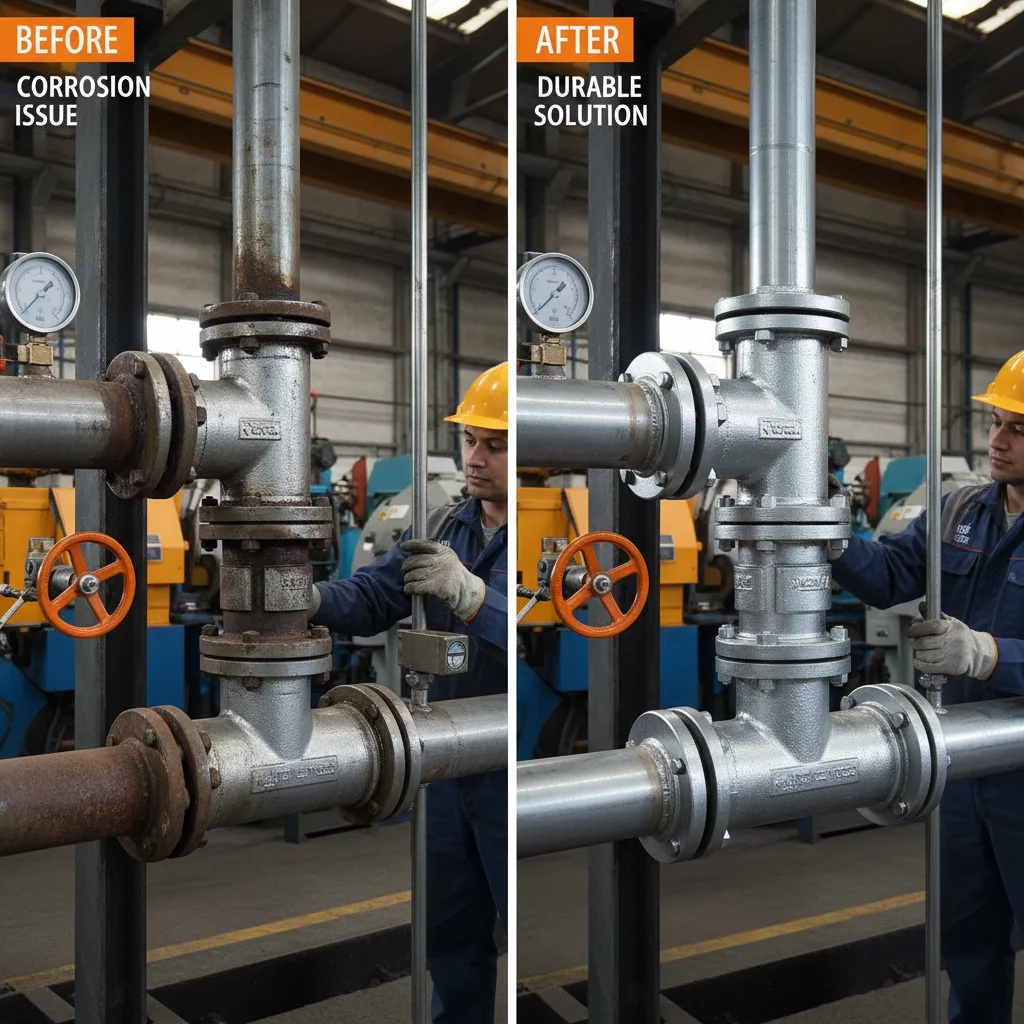

Finding reliable galvanized pipe fittings suppliers is critical for ensuring the structural integrity and corrosion resistance of industrial piping systems. In the specialized sector of ferrous metal smelting and casting, the quality of a fitting often determines the lifespan of the entire network, especially in environments exposed to moisture or chemical agents.
Many procurement managers face the challenge of balancing initial material costs with long-term durability. Substandard galvanization or poor casting quality can lead to premature leaks, costly system downtime, and safety hazards in high-pressure HVAC or fire protection installations.
This guide provides a practical framework for evaluating suppliers, understanding the technical advantages of malleable iron construction, and establishing a procurement standard that prioritizes mechanical strength and rust prevention.

Material Foundations: Malleable Iron vs. Standard Steel

Professional galvanized pipe fittings suppliers often utilize high-strength malleable iron as the base material. Unlike standard cast iron, which can be brittle, malleable iron undergoes a specific heat treatment process that enhances its toughness and ductility. This makes it far more resilient to mechanical shocks and vibration during installation and operation.
From a structural standpoint, an integrally cast one-piece design eliminates the need for welding, reducing potential failure points. When the internal diameter is perfectly matched to the pipe, fluid flow remains smooth, minimizing turbulence and pressure drops within the system.
The Role of Hot-Dip Galvanization in Corrosion Control
The primary value of choosing galvanized pipe fittings lies in the surface treatment. Hot-dip galvanization involves immersing the iron fitting in molten zinc, creating a metallurgical bond that protects the base metal from oxidation. This layer acts as both a physical barrier and a sacrificial anode, meaning the zinc will corrode before the iron does.
For industrial pipelines in building water supply or drainage, this treatment is non-negotiable. It prevents rust from compromising the thread integrity, ensuring that joints remain airtight and watertight over decades of service. Proper galvanization ensures a long service life even in humid or moderately corrosive atmospheres.
Critical Performance Metrics for Industrial Fittings
When evaluating the technical output of galvanized pipe fittings suppliers, buyers must look beyond the surface finish. Thread accuracy is the most critical metric; the use of go/no-go gauges ensures that internal threads match external pipe threads perfectly, preventing leaks and reducing installation time. Dimensional accuracy testing confirms that the fitting fits the designated pipe schedule without gaps.
Pressure resistance is another pillar of quality. High-grade fittings undergo rigorous pressure testing to prove they can handle the operational loads of HVAC or fire protection systems without deformation. This combination of mechanical strength and precise machining defines professional-grade casting.
Evaluation Dimensions for Supplier Selection
Selecting the right partner involves analyzing several operational capabilities. The following chart illustrates a conceptual relative importance index for different supplier evaluation dimensions, helping buyers prioritize their due diligence process.
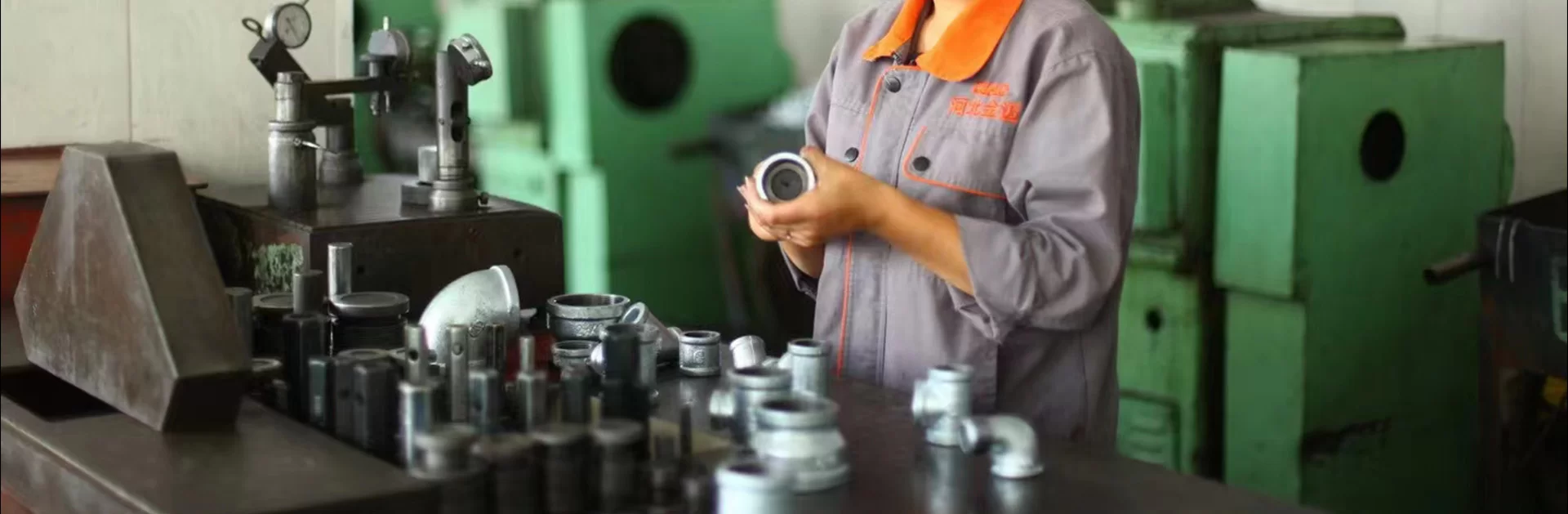
As shown in the relative evaluation framework, Casting Quality and Coating Consistency hold the highest weight. A supplier with a large production area, such as the 40,000 square meter facility operated by Hebei Jinmai Casting Co., Ltd., typically possesses the infrastructure necessary to maintain these standards across high-volume orders.
Application-Specific Implementation Requirements
The deployment of galvanized fittings varies significantly by industry. In HVAC and fire protection systems, the priority is stability under pressure and fire resistance. In these scenarios, the symmetrical design of malleable iron fittings is advantageous as it reduces installation complexity and eliminates directional errors during rapid deployment.
For industrial pipelines, the focus shifts to chemical compatibility and flow efficiency. Because the internal diameter is precision-engineered to match the pipe, these fittings minimize friction. No special welding tools are required, allowing for efficient repair and extension of existing lines without compromising the integrity of the galvanized layer.
Common Procurement Risks and Quality Red Flags
Buyers often encounter risks when dealing with low-cost galvanized pipe fittings suppliers. One common issue is "thin-wall" casting, where the fitting looks correct but lacks the necessary wall thickness to withstand pressure spikes. Another red flag is uneven galvanization, where "zinc voids" leave the iron exposed, leading to rapid localized corrosion.
Furthermore, poor thread machining can lead to "cross-threading," making it impossible to achieve a secure seal. To mitigate these risks, buyers should demand evidence of dimensional accuracy testing and confirmation that the supplier adheres to national pipe fitting standards to ensure interchangeability across different brands of piping.
Supplier Decision Matrix for Piping Projects
To streamline the selection process, the following matrix compares different supplier categories based on their typical focus and suitability for specific project types. This helps in matching the supplier's core strength with the project's technical requirements.
| Supplier Type | Primary Strength | Best Use Case | Main Risk |
|---|---|---|---|
| Large-Scale Foundry | Production Volume | Infrastructure Projects | Lead Time Rigidity |
| Specialized Casting | Material Purity | High-Pressure Systems | Higher Unit Cost |
| General Trading | Product Variety | Small Repairs/Retail | Quality Inconsistency |
| Custom Fabricator | Design Flexibility | Bespoke Industrial Lines | Higher Price Point |
| Budget Manufacturer | Low Initial Cost | Temporary Installations | Short Service Life |
| Certified Expert | Compliance/Standards | Government/Medical | Strict Documentation |
Ultimately, the decision should be based on the total cost of ownership. A supplier that offers a robust, weld-free malleable iron structure with a verified hot-dip galvanized finish will reduce long-term maintenance expenses far more effectively than a low-cost alternative.
Frequently Asked Questions
Malleable iron is heat-treated to remove carbon clusters, making it tougher and less brittle than standard cast iron. This allows the fittings to withstand higher mechanical stress and impact without cracking.
Check for a uniform, matte grey appearance without peeling or bare spots. Professional suppliers use hot-dip galvanization, which creates a thicker, more durable bond than electro-galvanizing.
Most professional galvanized pipe fittings suppliers design their threads to comply with widely recognized national standards to ensure interchangeability with standard threaded pipes.
Depending on the environmental conditions, hot-dip galvanized fittings can last several decades. In indoor, dry environments, they can remain rust-free for 50+ years.
No special tools are required. Because they feature standard internal threads, they can be installed using standard pipe wrenches by simply tightening them onto externally threaded pipes.
Yes, provided they are pressure tested and made from high-strength malleable iron. Their robust structure makes them suitable for fire protection and industrial piping applications.
Conclusion
Selecting the right galvanized pipe fittings suppliers requires a focus on material science—specifically the use of malleable iron—and the quality of the hot-dip galvanization process. By prioritizing thread accuracy, pressure resistance, and structural integrity, procurement officers can ensure their piping systems are durable, leak-free, and cost-effective over their entire lifecycle.
For organizations evaluating high-performance connection solutions, detailed product specifications and manufacturer capabilities can be reviewed at www.jinmaicasting.com to ensure alignment with project engineering requirements.