
Selecting the right galvanized fittings suppliers is often the most critical decision in the early stages of industrial pipeline design. The longevity of a fluid transport system depends not just on the pipe material, but on the integrity of the connection points where corrosion typically begins. For procurement managers and engineers, the challenge lies in distinguishing between basic zinc coatings and high-performance metallurgical bonds that can withstand aggressive environments.
Galvanized malleable iron fittings, particularly those utilized in HVAC and fire protection, require a precise balance of mechanical strength and chemical resistance. When the galvanizing process is flawed, the resulting fittings may suffer from premature oxidation or thread failure, leading to costly system shutdowns and maintenance overheads. Understanding the technical nuances of hot-dip versus electrical galvanizing is essential for ensuring operational safety.
In this analysis, we examine the criteria for evaluating high-capacity manufacturers, the technical advantages of malleable cast iron, and the strategic considerations for sourcing components that meet international threading standards like BS and NPT. By focusing on material density and coating uniformity, enterprises can optimize their infrastructure for long-term reliability.

Evaluating Technical Standards for Galvanized Fitting Procurement

The procurement process for galvanized fittings is frequently oversimplified to a price-per-unit calculation, yet the real cost is determined by the failure rate of the threads and the thickness of the zinc layer. High-quality fittings must adhere to rigorous threading standards—specifically BS and NPT—to ensure a leak-proof seal. A discrepancy of even a few microns in the tapered thread can result in systemic leakage under high-pressure conditions.
Beyond threading, the casting method plays a pivotal role. Malleable iron, produced through a specific annealing process, offers significantly higher ductility than standard grey cast iron. This prevents the fittings from cracking under thermal expansion or mechanical vibration, which is a common failure point in industrial HVAC and plumbing networks.
When vetting suppliers, it is necessary to verify the consistency of the galvanizing process. Whether the factory utilizes hot-dip or electrical galvanizing, the uniformity of the zinc-iron alloy layer determines how the fitting will react to moisture and airborne corrosives over a ten-to-twenty-year lifecycle.
The Metallurgical Advantage of Hot-Dip Galvanized Cast Iron
Hot-dip galvanizing is not merely a surface coating but a chemical reaction that creates a series of zinc-iron alloy layers. This process involves immersing the cast iron fitting into molten zinc, which bonds with the base metal to form a dense, protective barrier. This barrier is inherently more robust than paint or electroplated finishes because it provides sacrificial protection—the zinc corrodes first, shielding the underlying iron from oxidation.
In contrast, electrical galvanizing provides a thinner, more aesthetic finish but lacks the deep-layer protection required for outdoor or subterranean environments. For high-stress applications, the high-temperature hot-dip process is the industry benchmark for preventing deep-pitting corrosion and ensuring the structural stability of hubs, tees, and crosses.
The result is a product that combines the high-strength properties of malleable iron with a surface capable of resisting long-term erosion from water, air, and various industrial media. This duality is what makes galvanized malleable iron the preferred choice for complex multi-point diversion systems.
Critical Application Scenarios for Malleable Iron Fittings
Galvanized fittings are indispensable in environments where moisture and humidity are constant. In building water supply and drainage systems, the corrosion resistance of the zinc layer prevents rust from contaminating the water flow and maintains the internal diameter of the pipe by preventing scale build-up.
Fire protection systems represent another critical application. These systems often remain dormant for long periods but must perform flawlessly during an emergency. The use of precision-machined, galvanized malleable iron ensures that the connections do not seize or leak due to oxidation over years of inactivity, maintaining the systemic pressure required for sprinkler activation.
Furthermore, industrial pipelines involving bidirectional diversion or merging rely on components like the galvanized malleable iron cross. These serve as key hubs for multi-point diversion, allowing for flexible layout in complex HVAC networks where fluid must be distributed across four different directions without sacrificing pressure resistance or structural integrity.
Comparative Analysis of Coating Durability and Performance
When evaluating the efficiency of different coating methods, the industry looks at several performance indicators: corrosion resistance, thread integrity, pressure tolerance, and surface uniformity. Standard black pipe fittings offer no protection against oxidation, making them suitable only for oil or gas lines in controlled environments.
The transition to galvanized fittings significantly raises the threshold for system failure. By comparing industry benchmarks for standard coatings against high-density hot-dip processes, we can observe a marked increase in the operational lifespan of the hardware, particularly in humid or coastal regions.
galvanized fittings suppliers Performance Metrics
As illustrated, the gap in performance is most evident in corrosion resistance and lifespan. While electrical galvanizing improves aesthetics and provides basic protection, the metallurgical bond of hot-dip galvanizing ensures that the fitting remains structurally sound even if the surface is scratched during installation.
Strategic Procurement Guide for Industrial Piping Components
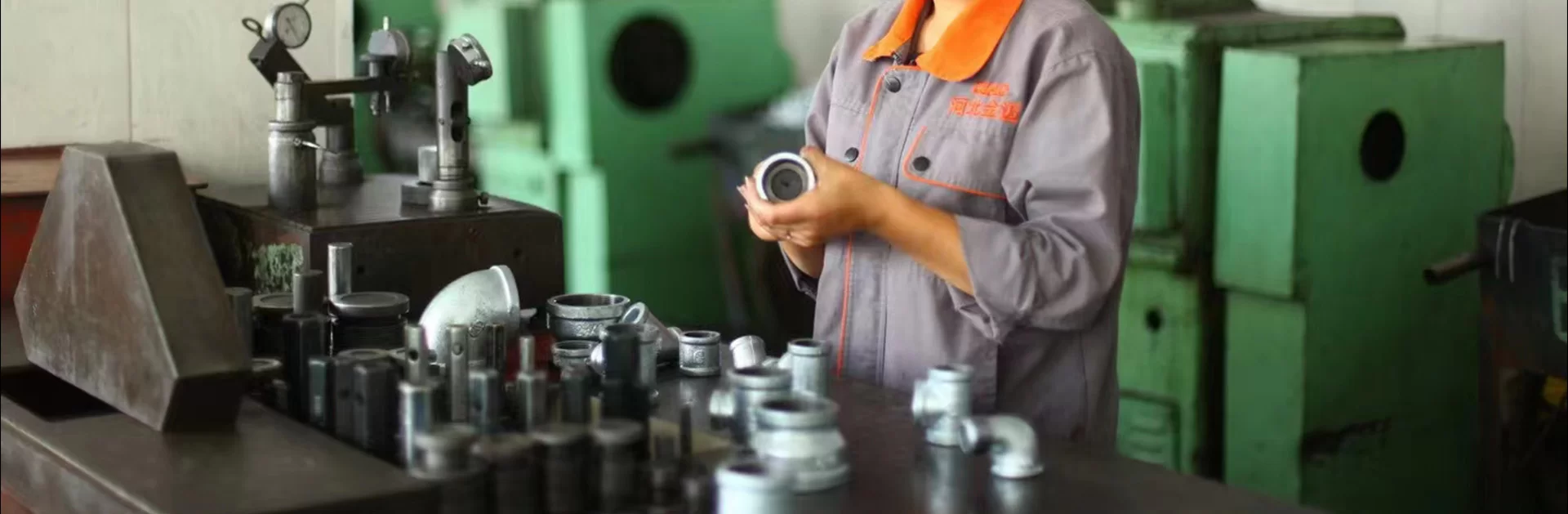
Procuring fittings for large-scale projects requires a shift from "lowest cost" to "lowest total cost of ownership." This involves assessing the supplier's ability to maintain consistency across large batches. A manufacturer with a professional team and extensive facility space—such as a 36,000 square meter plant—is generally better equipped to handle rigorous pressure testing and quality control for diverse sizes from DN15 to DN150.
Key indicators of a reliable supplier include their experience in international markets and their adherence to diverse threading standards. A supplier who has exported to over 50 countries typically possesses the logistical and technical flexibility to meet varying regional codes, reducing the risk of receiving components that are incompatible with existing on-site piping.
Finally, the availability of complementary products—such as electrophoresis pipe fittings or black pipe fittings—allows for a streamlined supply chain. Sourcing all connection points from a single specialized foundry ensures that the material grades and coating qualities are synchronized across the entire network.
Evolution of Corrosion Resistance in Casting Technology
The casting industry is moving toward more precise control of the iron-carbon ratio and enhanced annealing cycles to improve the malleability of the metal. This evolution allows for thinner wall sections that maintain the same pressure rating as thicker, older designs, reducing the overall weight of the pipeline without compromising safety.
Innovation in galvanizing now involves the use of higher-purity zinc and optimized cooling rates to refine the grain structure of the alloy layer. Such advancements could potentially extend the lifespan of fittings in highly acidic or saline environments, further reducing the frequency of replacement cycles in industrial plants.
Looking forward, the integration of automated pressure testing and laser-based thread inspection is likely to become the standard. This shift toward "zero-defect" manufacturing will allow engineers to design more aggressive pipeline layouts with higher confidence in the joint integrity of the system.
Supplier Selection Matrix based on Technical Specifications
To facilitate a data-driven selection process, procurement officers should evaluate candidates based on a matrix of technical capabilities. The following table compares different sourcing strategies based on the operational needs of the project, from basic residential plumbing to high-pressure industrial networks.
Selecting a partner based on the "High-Industrial" profile ensures that the fittings are not only galvanized for rust prevention but are also cast from high-strength malleable iron capable of resisting mechanical deformation.
| Sourcing Profile | Coating Method | Primary Application | Risk Factor |
|---|---|---|---|
| Basic Commercial | Electrical Galv. | Indoor Plumbing | Surface Oxidation |
| Infrastructure | Hot-Dip Galv. | Water Main Lines | Thread Wear |
| High-Industrial | Premium Hot-Dip | Chemical/Oil Hubs | Thermal Stress |
| Fire Safety | Certified Hot-Dip | Sprinkler Systems | Sealing Failure |
| HVAC Systems | Hot-Dip Galv. | Air Conditioning | Vibration Fatigue |
| Marine/Coastal | Thick-Layer Galv. | Port Facilities | Salt Corrosion |
For those evaluating these options, the balance between coating thickness and thread precision is key. Readers seeking components that match these industrial standards can review the professional range and company capabilities available through www.jinmaicasting.com.
Frequently Asked Questions
Conclusion
The decision of which galvanized fittings suppliers to partner with should be based on a rigorous assessment of metallurgical quality, threading precision, and manufacturing scale. As industrial systems become more complex, the reliance on components that can withstand high pressure while resisting environmental decay becomes paramount.
By prioritizing hot-dip galvanizing and malleable iron construction, enterprises can significantly reduce their long-term maintenance costs and enhance the safety of their infrastructure. For detailed technical specifications and high-performance piping solutions, visiting www.jinmaicasting.com provides a comprehensive overview of industrial-grade fittings.