Get a Quote

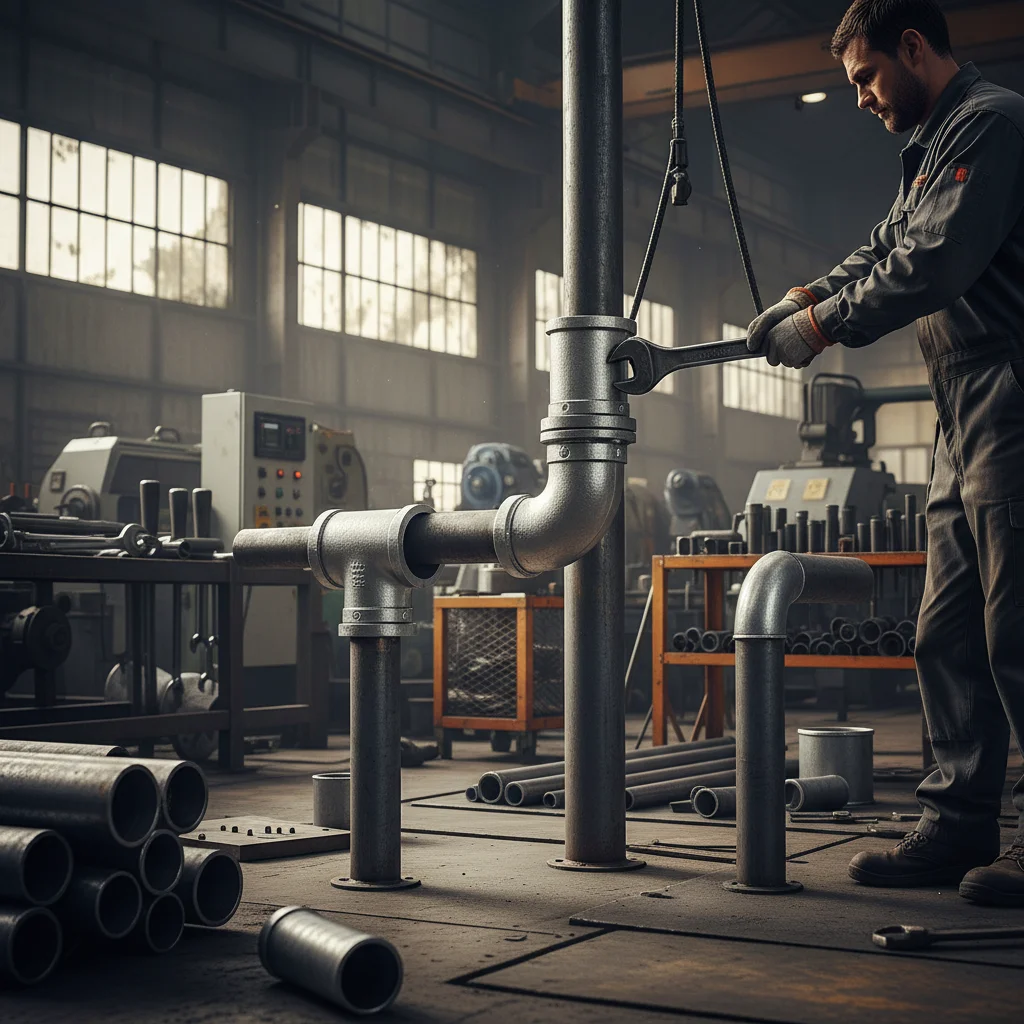
Selecting the right components for complex fluid transport systems often comes down to a trade-off between structural strength and corrosion resistance. In industrial environments where moisture and chemical exposure are constant, the choice of fittings can determine the operational lifespan of the entire network.
The industry has shifted toward materials that offer both ductility and a robust external barrier. Malleable iron, when combined with specialized surface treatments, has emerged as a primary choice for bridging the gap between rigid cast iron and expensive alloys, particularly for branching and diameter transitions.
For engineers and procurement managers looking for reliable galvanized pipe fittings manufacturers, understanding the technical intersection of metallurgy and coating is essential to minimizing long-term maintenance costs.


Unlike standard grey cast iron, which is brittle and prone to cracking under sudden pressure spikes, malleable iron undergoes a specific heat treatment process. This annealing transforms the carbon structure, significantly increasing ductility and impact resistance.
This material property is critical for components that must endure mechanical wear and thermal expansion. When these fittings are sourced from experienced manufacturers, the resulting balance of strength and flexibility ensures that the piping system can absorb vibrations without catastrophic failure.
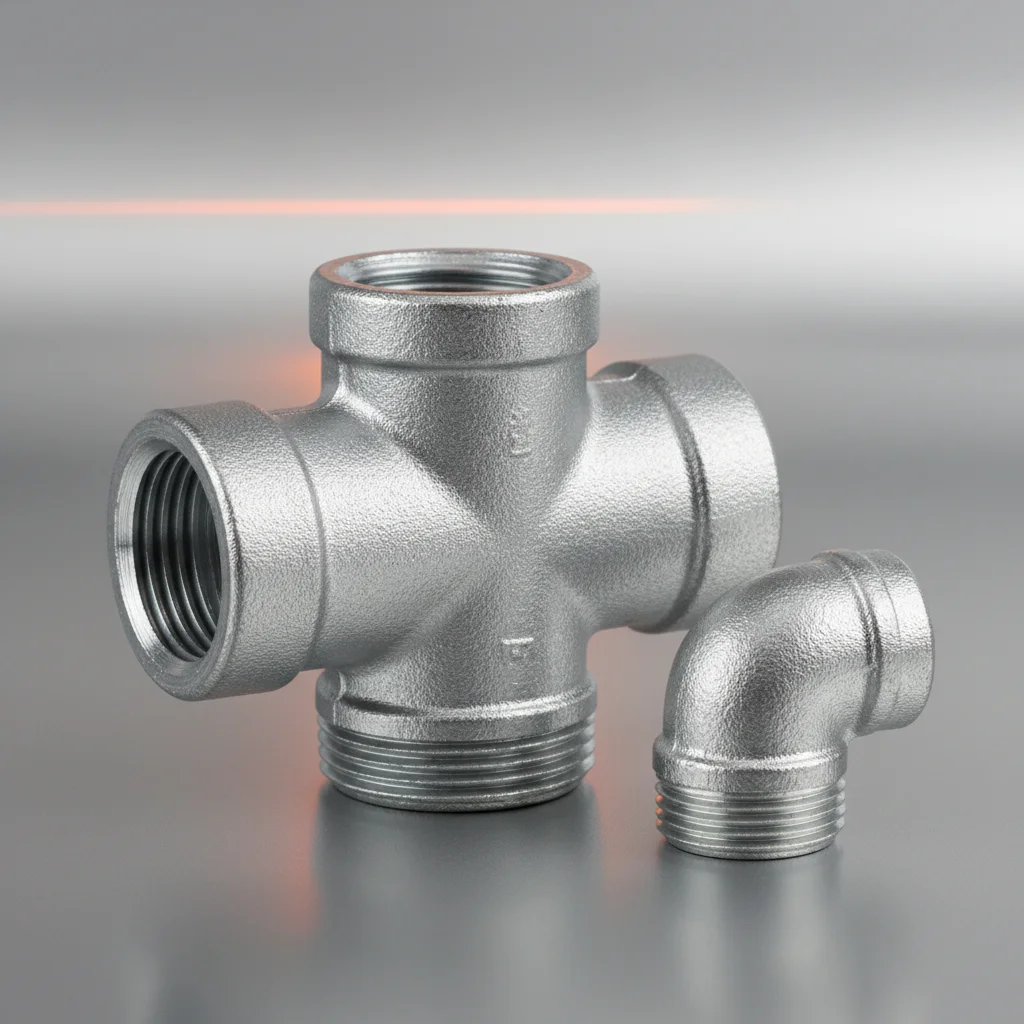
The reducing tee serves as a critical juncture in piping architectures, allowing for a seamless transition from a main header to a smaller branch line. The primary engineering challenge is managing the change in diameter without creating excessive turbulence, which can lead to erosion and pressure drops.
Precision-machined threading is employed to ensure an airtight seal. By integrating the reduction and the tee function into a single component, engineers can eliminate the need for separate reducers and tees, thereby reducing the total number of joints in the system.
From a maintenance perspective, fewer joints translate directly to fewer potential leak points. This integrated design approach is a hallmark of high-performance industrial fittings, optimizing both the installation timeline and the long-term operational reliability.
While malleable iron provides the structural backbone, the environment often dictates the need for advanced surface protection. Hot-dip galvanization involves immersing the iron component in molten zinc, creating a metallurgical bond rather than a simple surface coating.
Hot-dip galvanization creates a sacrificial zinc barrier that protects the underlying iron from oxidation. Even if the surface is scratched, the zinc preferentially corrodes, preventing rust from penetrating the structural core of the fitting.
This process is far more durable than cold galvanizing or painting. In high-humidity environments or industrial settings with mild chemical exposure, this coating extends the service life of the piping network by decades, significantly lowering the total cost of ownership.
The internal geometry of a fitting directly impacts the efficiency of fluid transport. In reducing tees, the transition path is optimized to maintain a low-turbulence flow. High turbulence not only increases energy loss but also accelerates the wear on the internal walls of the fitting.
By analyzing the flow characteristics, it becomes evident that malleable iron fittings with precision internals outperform standard cast alternatives in terms of pressure stability and flow consistency.
In commercial HVAC systems, the ability to branch off main lines with different diameters is a daily requirement. Malleable iron reducing tees are frequently employed here because they can withstand the pressure variations of chilled water or steam lines while resisting the condensation that typically causes rust in untreated steel.
Industrial piping networks in agricultural irrigation or chemical processing also rely on these fittings. The precision-threaded assembly allows for rapid deployment in the field, which is crucial for reducing labor costs during large-scale installations where hundreds of junctions are required.
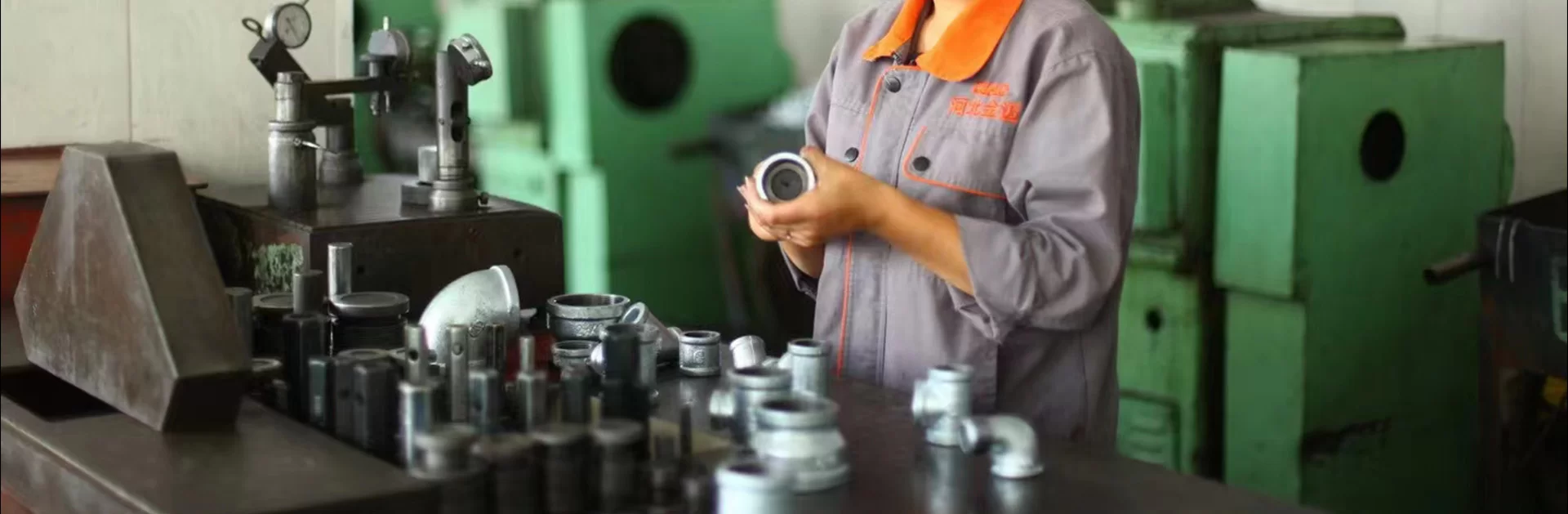
The standards for black metal casting have evolved to emphasize dimensional tolerance and coating uniformity. Modern foundry management now integrates real-time tracking and rigorous pressure testing to ensure every batch meets international safety requirements.
For a company like HEBEI JINMAI CASTING Co., Ltd., which brings nearly three decades of experience to the sector, the focus has shifted from simple production to precision engineering. This includes the implementation of electrophoresis and high-grade galvanization to meet the diverse needs of clients in over 56 countries.
As global infrastructure projects become more complex, the demand for fittings that combine diverse functionalities—such as diameter reduction and high-pressure branching—continues to grow, pushing manufacturers to innovate in casting precision.
When deciding between standard iron fittings and malleable iron reducing tees, the decision should be based on a lifecycle cost analysis rather than initial purchase price. While integrated components may have a higher unit cost, they reduce labor and material waste.
Evaluation factors include the expected lifespan of the installation, the volatility of the fluid pressure, and the aggressiveness of the external environment. A system utilizing hot-dip galvanized malleable iron typically requires significantly fewer interventions over a twenty-year period.
The following framework illustrates the relative suitability of these options based on common industrial requirements.
| Evaluation Factor | Standard Iron Fittings | Malleable Iron Tees | Impact on ROI |
|---|---|---|---|
| Installation Speed | Moderate (Multi-part) | High (Integrated) | Reduced Labor Cost |
| Corrosion Lifespan | Short to Medium | Extended (Galvanized) | Lower Replacement Rate |
| Leakage Risk | Higher (More Joints) | Low (Unified Component) | Reduced Downtime |
| Structural Strength | Brittle/Moderate | High Ductility | Increased Safety |
| Material Waste | Moderate | Minimum | Lower Material Spend |
| Maintenance Needs | Regular/High | Low/Intermittent | OpEx Reduction |
Malleable iron is treated through an annealing process that removes the brittleness associated with standard cast iron. This gives the material superior ductility and strength, allowing it to withstand high pressure variations and mechanical shocks without cracking, which is essential for the structural integrity of branch lines in industrial piping.
Hot-dip galvanization creates a thick metallurgical bond of zinc on the iron surface. This serves two purposes: it provides a physical barrier that prevents oxygen and moisture from reaching the iron, and it acts as a sacrificial anode, meaning the zinc will corrode first to protect the underlying metal even if the coating is compromised.
They are highly effective in HVAC engineering, building water supply and drainage systems, industrial piping networks, and agricultural irrigation. Any environment where moisture is present and high structural strength is required to manage fluid distribution makes these fittings an ideal choice.
Yes, they are specifically engineered for high structural strength and pressure resistance. Their design minimizes internal turbulence and ensures a stable, leak-proof connection, making them suitable for systems with significant pressure variations and multi-directional flow requirements.
By combining a tee and a reducer into a single component, you eliminate the need for additional fittings. This reduces the total number of parts to purchase, decreases the number of potential leakage points (joints), and significantly cuts the man-hours required for threaded assembly.
Tightness is achieved through precision-machined threading that ensures a perfect fit between the pipe and the fitting. This high-tolerance machining, combined with the structural stability of malleable iron, prevents gaps and provides a secure, leak-proof seal under operational pressure.
The integration of high-grade malleable iron and hot-dip galvanization represents a strategic approach to piping infrastructure. By prioritizing material ductility and sacrificial corrosion protection, operators can build systems that are not only efficient in their fluid dynamics but also remarkably resilient against the passage of time and environmental stress.
Ultimately, the value of partnering with professional galvanized pipe fittings manufacturers lies in the ability to secure components that reduce installation complexity and long-term maintenance. As industrial standards continue to tighten, the shift toward precision-engineered, integrated fittings will remain a key driver in operational efficiency.