Get a Quote

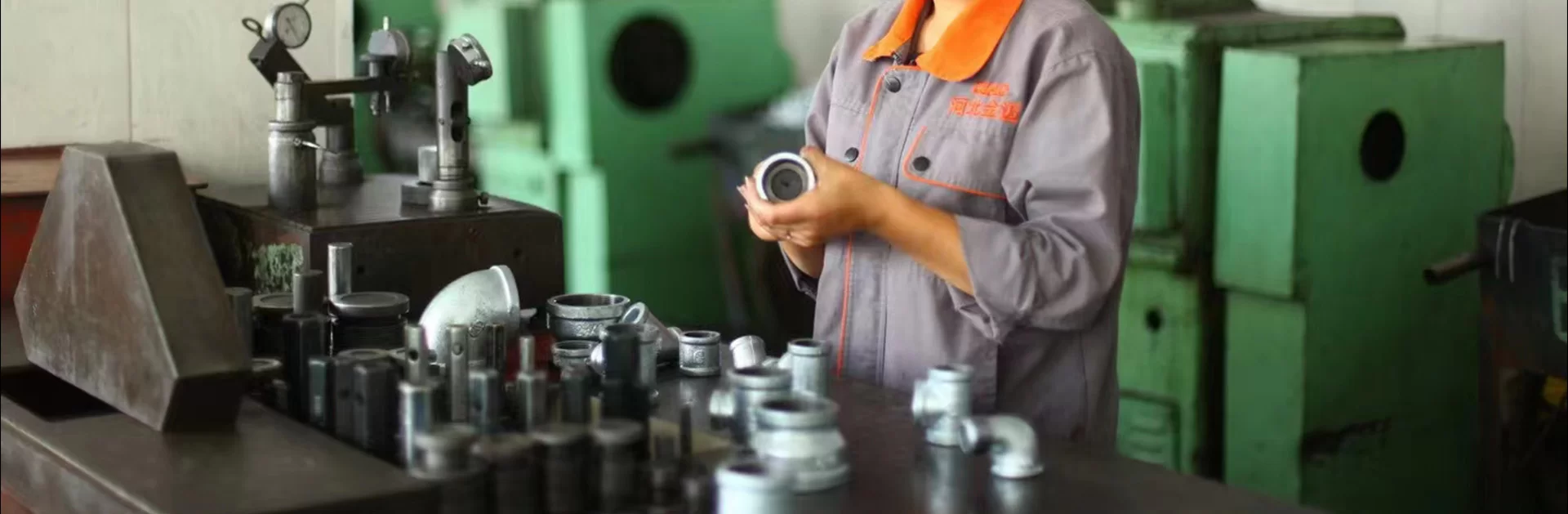
When sourcing components for large-scale industrial piping, engineers and procurement managers often face a conflict between budget constraints and the need for structural integrity. The search for cheap black iron pipe fittings frequently leads to a critical question: can affordability coexist with the rigorous sealing and pressure requirements of a professional HVAC or fire protection system? Choosing a fitting based solely on the lowest price point often overlooks the hidden costs of leakage, corrosion, and premature system failure.
The reliability of these components depends heavily on the casting process and material density. Malleable iron, specifically, offers a necessary balance of ductility and strength that standard cast iron lacks. In the context of Black Pipe Fittings, Electrophoresis Pipe Fittings, and Galvanized Pipe Fittings, the "value" of a product is not found in the initial purchase price, but in its ability to maintain a leak-proof seal under varying thermal and mechanical stresses over a decade of service.
Understanding the technical specifications of high-quality malleable iron helps buyers distinguish between truly economical solutions and low-grade products that risk system integrity. This analysis explores the structural advantages of professional-grade cheap black iron pipe fittings and how precision threading and protective coatings ensure long-term operational safety in complex industrial environments.


Malleable iron fittings are produced through a specialized annealing process that transforms brittle white cast iron into a more ductile material. This transformation is essential for components that must withstand impact or high-pressure fluctuations without cracking. For an industrial system, the structural robustness of the fitting determines the safety margin of the entire pipeline, particularly in high-vibration environments.
The precision of the internal threads is the most critical geometric factor. A high-quality fitting ensures that the internal threads align perfectly with the pipe's external threads, which minimizes the reliance on excessive sealing tape and reduces the risk of cross-threading during installation. This mechanical precision is what separates professional casting from low-grade alternatives.
Sealing integrity in black iron fittings is primarily governed by the interface between the mating threads and the thickness of the fitting walls. A fully enclosed hemispherical or flat-top structure is designed to cover pipe ports completely, ensuring that the pressure is distributed evenly across the sealing surface. When the internal thread geometry is precise, the resulting compression creates a reliable barrier against fluid or gas escape.
True sealing reliability is achieved when precision-cut threads are combined with optional sealing gaskets. This combination allows the system to meet varying pressure levels while eliminating the leakage risks associated with uneven torque during manual tightening.
Furthermore, the material's resistance to deformation under pressure is vital. Malleable iron provides the necessary stiffness to prevent the fitting from "ovaling" under high load, which would otherwise create micro-gaps at the connection point. For operators, this means fewer maintenance shutdowns and a significant reduction in the risk of catastrophic leaks.
When analyzing the procurement of pipe fittings, the initial "cheap" price is often a deceptive metric. A comprehensive Cost of Ownership (COO) analysis includes the cost of installation, the frequency of leak-related repairs, and the eventual replacement cycle. Fittings with superior wall thickness and precise casting typically offer a much longer service life, reducing the total expenditure over a 20-year period.
For instance, a fitting that resists external mechanical damage and corrosion through hot-dip galvanization may cost more upfront but avoids the need for replacement every five years. In industrial settings, the cost of labor to replace a single failed fitting often exceeds the cost of the fitting itself by a factor of ten.
The application of malleable iron fittings spans across diverse sectors including building water supply, fire protection systems, and HVAC engineering. In fire protection, the fittings must maintain absolute integrity under sudden pressure surges. The thick-walled design is essential here to resist impact and ensure that the system activates reliably during an emergency.
In HVAC and industrial pipelines, these fittings are often used as end caps or reserved interface protection. By effectively preventing foreign objects, dust, and moisture from entering the pipeline during construction or maintenance, they protect the internal integrity of the system and prevent contamination that could lead to pump failure or pipe corrosion.
The industry is shifting toward more advanced surface treatments and tighter tolerances. Electrophoresis coatings are becoming more common as they provide a more uniform protective layer than traditional painting, reducing the likelihood of localized corrosion in complex joint geometries.
Automation in the casting and threading process is also reducing the variance between batches. This consistency is critical for large-scale projects where thousands of fittings must be installed by different crews; standardized thread specifications ensure that installation is quick and effort is saved during wrench operation.
We are likely to see a greater emphasis on sustainability in the casting process, focusing on the recyclability of malleable iron and the reduction of waste during the machining of threads, aligning with global industrial green standards.
One of the primary challenges during installation is the risk of over-tightening, which can deform the threads or crack the fitting. Using a top-flat design facilitates better wrench operation, allowing technicians to apply torque more accurately. Training installers to use calibrated tools rather than relying on "feel" significantly increases system reliability.
Another common issue is corrosion at the thread interface. This is typically solved by employing hot-dip galvanized surfaces and high-quality sealing gaskets. The galvanized layer acts as a sacrificial anode, protecting the base iron from oxidation even in humid or chemically aggressive environments.
Finally, compatibility issues often arise when mixing fittings from different manufacturers. Adhering to strict international thread standards ensures that components are removable and reusable, making the system more economical and practical for future upgrades or modifications.
| Feature | Standard Black Iron | Galvanized Malleable | Electrophoresis |
|---|---|---|---|
| Corrosion Resistance | Low | High | Very High |
| Impact Strength | Medium | High | High |
| Sealing Precision | Standard | Precision | Precision |
| Installation Speed | Fast | Fast | Fast |
| Lifespan | Short-Medium | Long | Very Long |
| Initial Cost | Lowest | Moderate | Moderate-High |
Malleable iron undergoes an annealing process that removes the brittleness found in standard cast iron. This makes the fittings more resistant to impact and pressure surges, which is essential for safety in industrial piping systems where vibrations are common.
Ensure that the fitting has precision internal threads that fit tightly with the pipe's external threads. Using optional sealing gaskets and applying appropriate torque with a proper wrench will eliminate leakage risks and maintain system integrity.
Not necessarily. Galvanized fittings are superior in corrosive or humid environments due to their zinc coating. However, for dry environments or specific industrial gas lines where galvanization isn't required, black iron fittings provide a cost-effective and reliable solution.
The hemispherical design is intended to distribute external pressure more evenly across the surface of the cap. This enhances the overall pressure resistance of the port and protects the threaded interface from mechanical damage during handling.
Check the uniformity of the wall thickness and the cleanliness of the threads. Professional-grade fittings have smooth, precise threads without burrs and a consistent surface finish (like hot-dip galvanization) that indicates a controlled manufacturing process.
Yes, malleable iron fittings are generally removable and reusable provided the threads have not been damaged or over-stressed. This makes them more economical and practical for equipment maintenance and system modifications.
Achieving a balance between cost and performance in industrial piping requires a shift in focus from initial purchase price to total lifecycle value. Reliable sealing, impact resistance, and corrosion protection are not optional features but fundamental requirements for any safe piping system. By prioritizing precision-cast malleable iron and appropriate surface treatments, operators can significantly reduce maintenance costs and eliminate the risks associated with system leakage.
Whether you are managing a complex HVAC project or a large-scale industrial facility, choosing the right components is the only way to ensure long-term operational stability. For professional-grade solutions tailored to your specific pressure and environment requirements, we invite you to explore the technical capabilities available at www.jinmaicasting.com to ensure your system's safety and integrity.