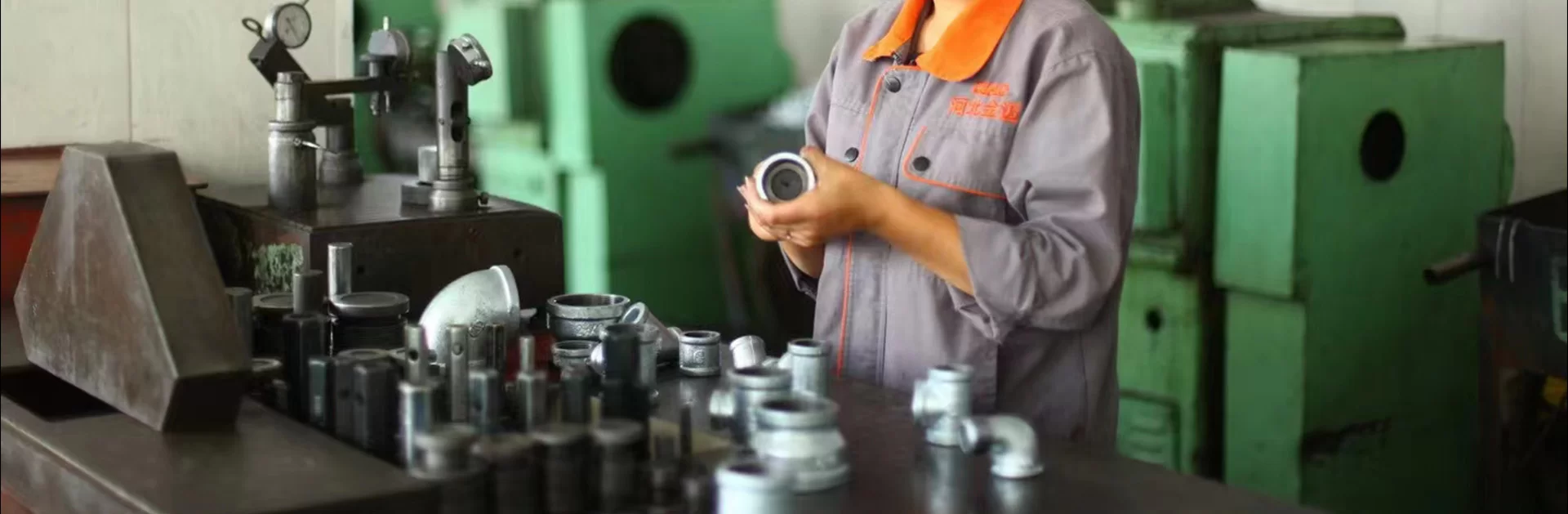
In the demanding landscape of industrial piping, the precision and durability of connectors are paramount to system integrity. High-performance solutions like 1 4 inch galvanized pipe fittings and advanced malleable iron components serve as the backbone for fluid transport in corrosive environments, ensuring that critical infrastructure remains leak-free and efficient over decades of operation.
The global transition toward more sustainable and resilient industrial engineering has placed a spotlight on the materials used in piping systems. While standard fittings have historically sufficed, the modern industry now demands components that can withstand extreme pressure pulses, severe salt spray, and chemical aggression without frequent maintenance or costly downtime.
Understanding the technical evolution from standard galvanized options to specialized electrophoretic coatings is essential for engineers seeking to optimize flow dynamics and structural safety. By integrating advanced manufacturing techniques, such as finite element analysis and X-ray flaw detection, the industry is redefining the reliability of 1 4 inch galvanized pipe fittings and their high-performance counterparts.

Global Relevance of High-Performance Pipe Fittings
On a global scale, the reliability of fluid transport systems is a critical pillar of industrial productivity. From the petrochemical hubs of the Middle East to the marine engineering yards of East Asia, the demand for corrosion-resistant components like 1 4 inch galvanized pipe fittings has surged as companies strive to meet ISO and ASTM standards for safety and longevity.
The challenge lies in the aggressive nature of industrial fluids and atmospheric conditions. Traditional coatings often fail at connection points, leading to catastrophic leaks. This has driven the industry toward integrated designs, such as the malleable iron reducing elbow, which combines functions to eliminate potential failure sites and enhance overall system stability.
Defining the Role of 1 4 inch galvanized pipe fittings
In simple terms, 1 4 inch galvanized pipe fittings are precision-engineered connectors coated in zinc to prevent rust and corrosion. They serve as the vital links in smaller-diameter piping networks, facilitating the movement of water, gas, or chemicals while maintaining a tight seal under varying pressure levels.
Beyond their basic function, these fittings are essential for modern humanitarian and industrial needs. In remote regions or post-disaster relief operations, the ability to quickly deploy durable, corrosion-resistant piping is crucial for establishing clean water access and safe energy distribution, making these components indispensable for global infrastructure.
The evolution of these fittings now includes specialized coatings like black epoxy electrophoresis. This shift represents a move from simple surface protection to a comprehensive chemical bond that ensures 360° coverage, effectively bridging the gap between standard galvanized utility and high-end industrial reliability.
Core Components of Advanced Piping Engineering
The durability of a piping system depends heavily on the material science behind its connectors. While 1 4 inch galvanized pipe fittings provide a strong baseline, the introduction of malleable cast iron combined with PU topcoats elevates the resistance to salt spray to over 1200 hours, ensuring a significantly extended service life.
Fluid dynamics optimization is another core pillar. By implementing a 1.5D curvature radius in reducing elbows, engineers can reduce fluid resistance by up to 40% compared to standard 1 4 inch galvanized pipe fittings. This reduction in turbulence minimizes energy loss and prevents internal erosion.
Structural precision is achieved through Finite Element Analysis (FEA). This allows for the optimization of wall thickness, ensuring that the fitting can handle operating pressures up to 4.0 MPa (PN40) without deformation, providing a level of safety that far exceeds basic industrial requirements.
Performance Metrics and Structural Integrity
To ensure zero-defect reliability, advanced fittings undergo rigorous validation that goes beyond the standard quality checks of 1 4 inch galvanized pipe fittings. This includes 100% X-ray flaw detection to identify internal casting voids and high-pressure water testing at 7.2MPa to guarantee seal integrity.
The integration of a one-piece molded design specifically addresses the vulnerability of joint connections. By removing the need for separate reducers and elbows, the number of potential leak points is halved, which is a critical metric for systems transporting hazardous chemicals or operating in high-vibration environments.
Efficiency Comparison of Piping Fitting Technologies
Global Industrial Applications and Use Cases
In the marine sector, where salt-laden air accelerates oxidation, the use of high-grade 1 4 inch galvanized pipe fittings and electrophoretic coatings is a necessity. These components are widely deployed in cabin layouts and engine room piping where space is limited and the cost of a leak can be catastrophic for vessel safety.
Chemical processing plants and wastewater treatment facilities also rely on these advanced fittings to handle pH levels ranging from 4 to 10. The ability to withstand temperature extremes from -30℃ to 130℃ ensures that the infrastructure remains operational during both cryogenic processing and high-heat sterilization cycles.
Long-Term Value and Economic Advantages
Investing in premium fittings over standard 1 4 inch galvanized pipe fittings results in a significantly lower Life Cycle Cost (LCC). While the initial procurement cost may be higher, the extension of the maintenance cycle—thanks to a 40-45μm coating thickness—reduces the frequency of replacements and labor costs.
The economic impact is most evident in the reduction of "unplanned downtime." By utilizing components that pass 100,000 pressure pulse fatigue tests, industrial operators can avoid the massive financial losses associated with system failures in critical production lines.
Furthermore, the increased flow efficiency gained from optimized curvature leads to lower pumping energy requirements. Over a twenty-year operational window, this energy saving combined with reduced corrosion-related repairs provides a tangible return on investment for the facility owner.
Future Trends in Corrosion Protection Technology
The future of piping technology is moving toward "smart" coatings and carbon-neutral manufacturing. We are seeing a shift where 1 4 inch galvanized pipe fittings are being augmented with nano-ceramic layers that provide even higher resistance to chemical abrasion and thermal shock.
Automation in quality control is also evolving, with AI-driven CMM (Coordinate Measuring Machine) audits providing micron-level accuracy across millions of units. This ensures that every fitting, regardless of the batch, meets the strict tolerances required for zero-leak high-pressure systems.
Sustainability is now a core design driver. The move toward FDA-compliant, eco-friendly coatings for food-grade applications demonstrates how industrial casting is adapting to stricter environmental regulations while maintaining the structural integrity that the industry relies upon.
Comparison of Fitting Technologies and Operational Life
| Fitting Type |
Corrosion Resistance |
Leak Risk Level |
Expected Life (Years) |
| Standard Galvanized |
Moderate |
Medium |
5-10 |
| Epoxy Electrophoretic |
Very High |
Low |
15-25 |
| Integrated Reducing Elbow |
High |
Minimal |
20-30 |
| Malleable Iron (Uncoated) |
Low |
Medium |
3-7 |
| PU Topcoat Hybrid |
Exceptional |
Low |
25+ |
| FDA-Compliant Special |
High (Chemical) |
Low |
15-20 |
FAQS
Electrophoresis provides 360° full coverage, including the interior walls of the fitting, which is often missed by traditional spray painting. It creates a uniform 40-45μm thickness that significantly increases salt spray resistance to ≥1200 hours, making it far superior to standard 1 4 inch galvanized pipe fittings in coastal or chemical environments.
By combining a 90° bend and a diameter reduction into a single molded piece, the design eliminates the need for an additional joint between a separate elbow and reducer. This removes one potential leak point entirely, reducing the total number of connections in the system and enhancing structural stability.
They are ideal for high-corrosion zones such as marine cabin layouts, chemical processing piping, wastewater treatment plants, and coastal industrial facilities. Their ability to withstand a wide pH range (4-10) and temperature extremes (-30℃ to 130℃) makes them a reliable choice for extreme industrial settings.
These fittings are engineered for high-performance use with a standard operating pressure of up to 4.0 MPa (PN40 level). For quality assurance, they are subjected to rigorous water pressure testing at 7.2MPa for 3 minutes to ensure absolute zero-defect reliability before shipment.
Yes. While the standard industrial finish is black epoxy, specialized FDA-compliant coating options are available upon request. These coatings are specifically formulated to meet food-grade safety standards while maintaining the structural strength of the malleable cast iron core.
To prevent scratching the electrophoretic layer, we recommend using a nylon protective wrench during tightening. Additionally, it is professional practice to perform a final system pressure test 48 hours after installation to confirm a perfect seal and ensure the coating remained intact during assembly.
Conclusion
The evolution of piping components, from standard 1 4 inch galvanized pipe fittings to integrated, electrophoretically coated malleable iron solutions, marks a significant leap in industrial reliability. By focusing on the elimination of leak points, the optimization of fluid dynamics via 1.5D curvature, and the implementation of rigorous X-ray and pressure testing, modern engineering can now guarantee system integrity in the most aggressive environments on earth.
As the industry moves toward greater sustainability and higher efficiency, the adoption of these advanced fitting technologies is no longer just an upgrade, but a strategic necessity. For engineers and procurement specialists, prioritizing long-term durability and structural precision over initial cost will lead to safer operations and reduced life-cycle expenditures. Visit our website for more professional solutions: www.jinmaicasting.com