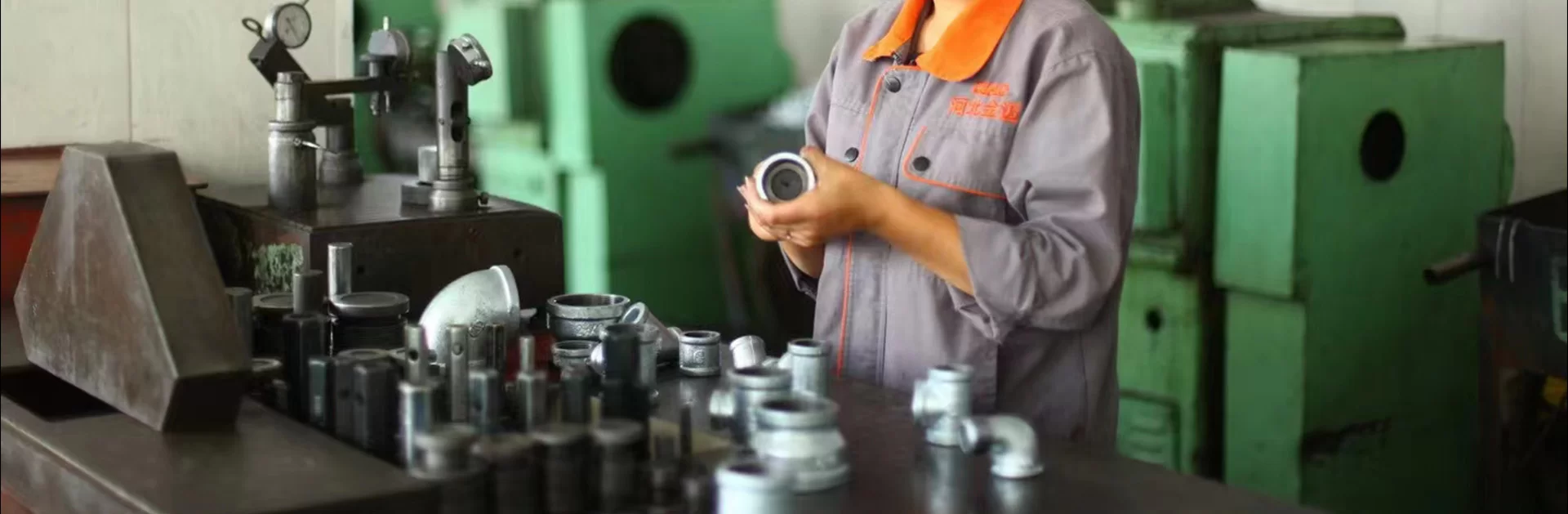
The global infrastructure landscape relies heavily on the reliability of piping systems to transport essential fluids and gases. Within this framework, the demand for high-performance components like 1 galvanized pipe fittings has grown significantly, as industries seek materials that can withstand harsh environments while maintaining structural integrity over decades of use.
Understanding the nuances of material selection, from malleable cast iron to specialized coatings, is critical for engineers and procurement managers. By focusing on the synergy between mechanical strength and corrosion resistance, stakeholders can ensure that their piping networks minimize downtime and reduce the long-term total cost of ownership.
Whether applied in municipal water grids or complex industrial cooling systems, the integration of 1 galvanized pipe fittings ensures a seamless connection that prevents leakages and resists oxidation. This article explores the technical specifications, application scenarios, and value propositions of these essential industrial components.

The Material Excellence of Malleable Cast Iron
The core strength of high-quality 1 galvanized pipe fittings lies in the selection of malleable cast iron. Unlike ordinary grey cast iron, which can be brittle, malleable iron undergoes a specialized heat treatment process that transforms the carbon into tempered graphite nodules. This resulting structure provides a critical balance of high strength and exceptional toughness, allowing the fittings to absorb impact and resist cracking under mechanical stress.
From a technical standpoint, this material superiority translates to enhanced pressure resistance. In environments where piping systems are subject to vibration or thermal expansion, the mechanical properties of malleable iron far exceed standard cast iron, ensuring that elbows, tees, and couplings remain stable and secure throughout their service life.
Corrosion Resistance and Protective Coating Technology
Corrosion is the primary enemy of metallic piping systems, particularly when transporting water or operating in humid industrial zones. To combat this, a unique high-temperature blackening process is utilized to form a dense and stable iron oxide protective layer on the surface of the components. This layer acts as a primary barrier against oxidation, significantly enhancing the rust resistance of the fittings.
One of the most significant advantages of this advanced surface treatment is that it effectively eliminates the need for secondary galvanizing in many applications. By creating a chemically stable surface, the fittings maintain their integrity without the risk of peeling or flaking often associated with lower-quality coatings.
This approach ensures that 1 galvanized pipe fittings and their counterparts provide long-lasting protection. The stability of the oxide layer ensures that the internal and external surfaces of the fittings are shielded from the corrosive elements of the medium they transport, extending the replacement cycle.
Precision Engineering and Sealing Reliability
Leakage in a pipeline can lead to catastrophic failures, loss of resources, and safety hazards. To prevent this, 1 galvanized pipe fittings are manufactured using CNC machine tools. This precision machining ensures that every internal and external thread adheres to strict dimensional tolerances, allowing for a tight, consistent fit between the fitting and the pipe.
The reliability of the seal is further enhanced by the consistency of the thread pitch and depth. Because CNC technology removes the human error associated with manual threading, each fitting provides a guaranteed sealing surface that minimizes the risk of seepage, even in systems subjected to moderate pressure fluctuations.
Furthermore, the variety of connection methods—including internal, external, and combined internal/external threads—allows engineers to design flexible layouts without compromising the airtightness of the system. This precision makes 1 galvanized pipe fittings an essential choice for critical fluid transport.
Economic Viability and Life-Cycle Value
When evaluating the cost of a piping project, the initial purchase price is only one part of the equation. Malleable iron fittings offer a compelling value proposition by providing performance levels comparable to more expensive steel components while remaining significantly more cost-effective. This allows project managers to allocate budgets more efficiently without sacrificing system safety.
The true value is found in the low total life-cycle costs. Due to the superior corrosion resistance and mechanical toughness of these components, the frequency of maintenance and replacement is drastically reduced. This longevity ensures that the investment in 1 galvanized pipe fittings pays dividends over the decades of operation.
Performance Metrics of Pipe Fitting Material Options
Comprehensive Specifications for Diverse Pipelines
A versatile product line is essential for meeting the complex needs of modern construction. Our comprehensive range of 1 galvanized pipe fittings covers everything from DN8 to DN100. This includes standard fittings such as 45° and 90° elbows, tees, crosses, and couplings—both equal and reducing diameters—to facilitate every possible turn and branch in a piping network.
Beyond the basics, special fittings are available to handle unique architectural challenges. Internal and external thread reducers (fillers), round edge or flat head plugs, external thread connectors, and pipe caps provide the necessary flexibility for sealing and diameter reduction, ensuring that no matter the complexity of the blueprint, there is a precise fitting available.
Global Industrial Application Scenarios
The versatility of malleable iron components allows them to be deployed across a vast array of sectors. In the construction industry, they are indispensable for building water supply, drainage, fire sprinkler systems, and HVAC networks. The ability to resist corrosion while maintaining structural strength makes them ideal for the hidden piping within walls and ceilings where maintenance access is limited.
Industrial environments also rely heavily on 1 galvanized pipe fittings for cooling water systems, compressed air lines, and low-pressure steam piping. Their robustness ensures that they can handle the constant thermal cycles and pressure changes inherent in factory operations without compromising the seal.
Furthermore, these fittings are widely used in municipal irrigation networks and hydraulic auxiliary piping for heavy machinery. Whether it is a remote agricultural zone requiring durable water distribution or a precision-engineered pneumatic system in a manufacturing plant, these fittings provide the necessary reliability.
Quality Standards and Installation Best Practices
To ensure global interoperability and safety, we strictly adhere to recognized national standards such as GB/T 3287 and GB/T 3288. Every batch of 1 galvanized pipe fittings undergoes rigorous multi-stage inspections. These checks focus on dimensional accuracy, thread integrity, pressure resistance, and the uniformity of the surface protective layer.
Successful installation is as important as the quality of the fitting itself. We recommend that installers select the appropriate fitting type based on the specific medium, operating pressure, and temperature. Using standard tools to ensure even tightening is critical to avoid over-stressing the threads or causing deformation.
To achieve an optimal seal, the use of high-quality sealing materials, such as PTFE tape or professional-grade sealants, is highly recommended. This combined approach of high-standard manufacturing and precise installation ensures that the piping system reaches its maximum potential lifespan and operational efficiency.
Analysis of Fitting Specifications and Quality Performance
| Fitting Type |
Standard Range |
Pressure Rating |
Durability Score |
| 90° Elbows |
DN8 - DN100 |
High |
9.5 |
| Tees / Crosses |
DN8 - DN100 |
High |
9.2 |
| Couplings |
DN8 - DN100 |
Very High |
9.8 |
| Reducers (Fillers) |
DN8 - DN100 |
Medium-High |
8.7 |
| Plugs / Caps |
DN8 - DN100 |
High |
9.0 |
| Thread Connectors |
DN8 - DN100 |
High |
9.3 |
FAQS
Malleable cast iron undergoes a specific annealing process that removes the brittleness of grey iron. This results in components that possess much higher impact resistance, toughness, and ductility. For 1 galvanized pipe fittings, this means they can withstand sudden pressure spikes and mechanical shocks without cracking, which is critical for safety in industrial piping.
The high-temperature blackening process creates a stable, dense layer of iron oxide on the surface of the fitting. This oxide layer acts as a passive barrier that prevents oxygen and moisture from reaching the base metal, thereby inhibiting rust. It is a highly effective alternative to traditional galvanizing, providing a sleek finish and excellent durability in various environments.
These fittings are specifically designed for low-pressure steam piping and compressed air. While they offer exceptional strength for most industrial applications, for ultra-high-pressure steam systems, you should consult the specific pressure ratings of the GB/T 3287/3288 standards to ensure the fitting meets the safety requirements of your specific operating pressure.
To ensure a perfect seal with 1 galvanized pipe fittings, we recommend using PTFE tape (Teflon tape) or a high-quality pipe sealant on the threads. Tighten the connection evenly using standard pipe wrenches, avoiding over-tightening, which could damage the precision-machined threads.
Yes, our fittings are manufactured to meet GB/T 3287 and GB/T 3288 standards, which ensure high dimensional precision. They are designed to be compatible with standard piping systems across various industries, from DN8 to DN100, providing a universal fit for most commercial and industrial pipe networks.
A reducing coupling is typically used to connect two pipes of different diameters in a straight line. A filler (internal/external thread reducer) is used to adapt the thread size of a fitting or pipe to match another component. Choose based on whether you are joining two pipe lengths or adapting a specific fitting connection.
Conclusion
In summary, the strategic use of 1 galvanized pipe fittings crafted from malleable cast iron provides an unparalleled combination of mechanical toughness, corrosion resistance, and cost-efficiency. By leveraging CNC precision and advanced surface treatments, these components ensure long-term sealing reliability across diverse applications, from municipal water systems to complex industrial cooling networks.
As global infrastructure continues to evolve toward more sustainable and durable models, investing in high-quality, standardized fittings is no longer optional but a necessity for operational safety. We encourage engineers and procurement specialists to prioritize materials that offer low life-cycle costs and proven performance. For premium solutions and customized requirements, visit our website: www.jinmaicasting.com.