
Get a Quote

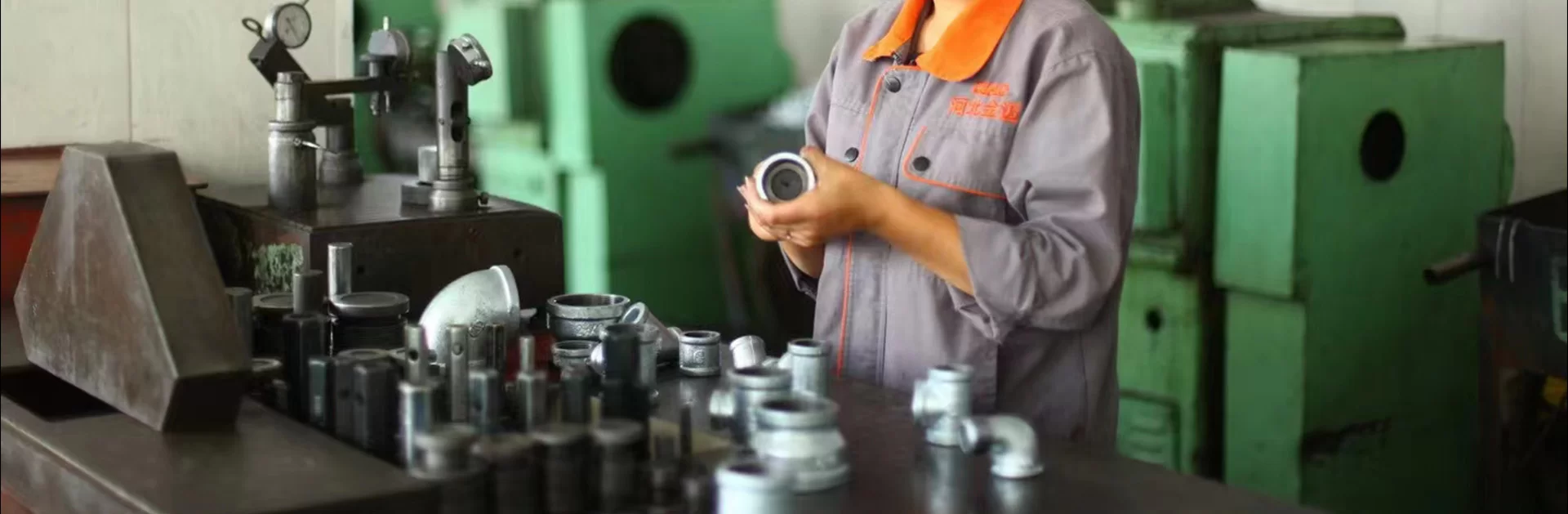
Selecting the right interconnection components for industrial piping often comes down to a critical balance between mechanical strength and atmospheric resilience. In high-moisture or corrosive environments, the choice of fitting materials can determine whether a system lasts for decades or fails within a few years due to oxidation.
Across global infrastructure projects, the demand for reliable China fitting galvanized pipe components has surged as engineers seek cost-effective alternatives to expensive alloys without compromising on safety or leak-proof performance. The integration of malleable iron with advanced surface treatments has redefined how these systems are deployed in municipal and industrial sectors.
This analysis explores the technical shift toward high-performance malleable iron fittings, the critical role of precision machining in sealing, and the evaluation frameworks necessary for procurement professionals to ensure long-term pipeline integrity.


Unlike traditional gray iron, which is brittle and prone to cracking under impact, malleable cast iron undergoes a specific annealing process. This transforms the microstructure, introducing a level of toughness and ductility that allows the fittings to withstand mechanical shocks and pressure fluctuations.
For those sourcing China fitting galvanized pipe solutions, this material transition is key. It provides the structural reliability of steel while maintaining the casting flexibility and cost-efficiency of iron, making it ideal for complex geometries like 45°/90° elbows and tees.
The integrity of a pipeline is only as strong as its weakest connection. In the context of threaded fittings, the margin for error is measured in microns. Inconsistent thread pitch or depth leads to "cross-threading" or gaps that necessitate excessive sealant, which often fails under thermal expansion and contraction.
Modern manufacturing has moved toward CNC machine tools to ensure that internal and external threads are perfectly concentric. This precision ensures that when a fitting is tightened, the contact area between the threads is maximized, creating a natural mechanical seal that significantly reduces the risk of leakage.
By adhering to strict national standards such as GB/T 3287 and GB/T 3288, manufacturers can guarantee interchangeability between components. This means a coupling produced in a controlled facility will fit perfectly with a pipe from a different supplier, reducing installation time and onsite errors.
Corrosion is the primary enemy of ferrous piping systems. While galvanization is the traditional defense, emerging high-temperature blackening processes offer a sophisticated alternative. This process creates a dense, stable iron oxide layer that bonds chemically to the surface.
Effective corrosion resistance in malleable fittings is achieved not just through surface coating, but through the synergy of material purity and the stability of the protective oxide layer, eliminating the need for secondary coatings in many low-to-medium humidity environments.
For environments requiring maximum protection, galvanized coatings provide a sacrificial zinc layer that prevents the underlying iron from oxidizing. The choice between blackening and galvanizing depends entirely on the medium being transported and the ambient atmospheric conditions.
Evaluating a fitting's quality requires looking beyond the visual finish. The critical indices include impact resistance, pressure rating, and thread tolerance. Malleable iron typically outperforms standard cast iron across all these metrics, providing a safety buffer in hydraulic systems.
When comparing different fitting types, we observe a relative performance index based on durability, ease of installation, and cost-efficiency. The following chart illustrates how malleable iron components balance these competing priorities compared to other common industrial options.
In municipal water supply and fire sprinkler systems, the ability of a fitting to resist sudden pressure surges (water hammer) is paramount. Malleable iron's toughness prevents the catastrophic shattering often seen in cheaper casting alternatives, ensuring that the system fails gracefully rather than explosively.
Similarly, in HVAC and industrial cooling water loops, these fittings manage constant thermal cycling. The combination of high-precision CNC threads and corrosion-resistant coatings ensures that joints remain tight over thousands of expansion-contraction cycles, reducing maintenance overhead in large-scale facility management.
The casting industry is currently moving toward "intelligent manufacturing," where real-time monitoring of the annealing process ensures consistent material properties across every batch. This reduces the variance in mechanical performance, allowing engineers to design systems with tighter safety margins.
Another significant trend is the development of hybrid coatings. By combining the sacrificial protection of zinc with the stability of iron oxide, manufacturers are creating fittings that can withstand more aggressive chemical environments without the weight or cost of full stainless steel.
Sustainability is also driving the adoption of recycled ferrous scrap in the melting process, provided that impurity levels are strictly controlled to maintain the tensile strength required for pressure-bearing pipe fittings.
When selecting a supplier for China fitting galvanized pipe, procurement officers must look beyond the unit price. The total life-cycle cost includes the cost of installation, the frequency of leak repairs, and the eventual replacement interval.
A robust evaluation should prioritize the manufacturer's adherence to dimensional standards and their quality control process for pressure testing. Fittings that lack consistent thread depth will lead to higher labor costs during installation and an increased risk of failure during commissioning.
The following table provides a relative suitability matrix to help buyers choose the correct fitting material based on their specific operational environment and technical requirements.
| Environment | Malleable Iron | Gray Cast Iron | Forged Steel | Suitability Note |
|---|---|---|---|---|
| Indoor HVAC | High | Medium | High | Cost-efficient balance |
| Fire Sprinkler | High | Low | High | Impact resistance key |
| Municipal Water | High | Medium | Medium | Corrosion defense focus |
| High Pressure Gas | Medium | Low | High | Steel is preferred |
| Irrigation Nets | High | High | Medium | Economical choice |
| Cooling Water | High | Medium | High | Thermal cycle stability |
Malleable iron is created by heat-treating (annealing) white cast iron, which removes the internal stresses and transforms the carbon into temper carbon. This results in a material that is significantly tougher and more ductile than standard gray iron, allowing it to withstand impact and high pressure without cracking, making it far more reliable for structural piping.
The most critical factor is the precision of the threads. Use fittings machined via CNC tools to ensure accurate dimensions. During installation, apply a high-quality sealing material such as PTFE tape or specialized pipe sealant and tighten evenly with standard tools. Avoid over-tightening, which can distort the threads and actually create new leak paths.
It depends on the environment. High-temperature blackening creates a stable oxide layer that is excellent for rust resistance in moderate conditions and is more aesthetically consistent. Galvanizing provides a sacrificial zinc layer that is superior for highly corrosive or outdoor environments. For many indoor industrial applications, blackening is a cost-effective and durable alternative.
You should verify that the manufacturer adheres to recognized national and international standards. In China, GB/T 3287 and GB/T 3288 are the primary standards for malleable iron pipe fittings. These ensure the components meet specific requirements for dimensions, material strength, and pressure testing, ensuring compatibility with global piping systems.
A comprehensive product line typically covers specifications from DN8 up to DN100. This range allows for the construction of everything from small-diameter auxiliary pneumatic lines to larger municipal water distribution branches, covering elbows, tees, couplings, and special reducers to meet almost any pipeline configuration.
Malleable iron offers mechanical properties that are comparable to some steel components in low-to-medium pressure applications but can be produced via casting. This reduces the amount of expensive machining and raw material waste associated with forging, resulting in a lower total life-cycle cost while maintaining sufficient robustness for most industrial uses.
The reliability of industrial fluid transport depends on the synergy between material science and machining precision. By transitioning from brittle cast irons to high-toughness malleable iron and adopting CNC-driven thread production, the industry has significantly reduced the risk of system failure in critical infrastructure.
Whether prioritizing corrosion resistance through galvanization or seeking the cost-efficiency of high-temperature blackening, the goal remains the same: a secure, leak-proof connection that minimizes maintenance. For procurement teams, focusing on standardized certifications and material purity remains the safest path to ensuring long-term operational stability.