
Get a Quote

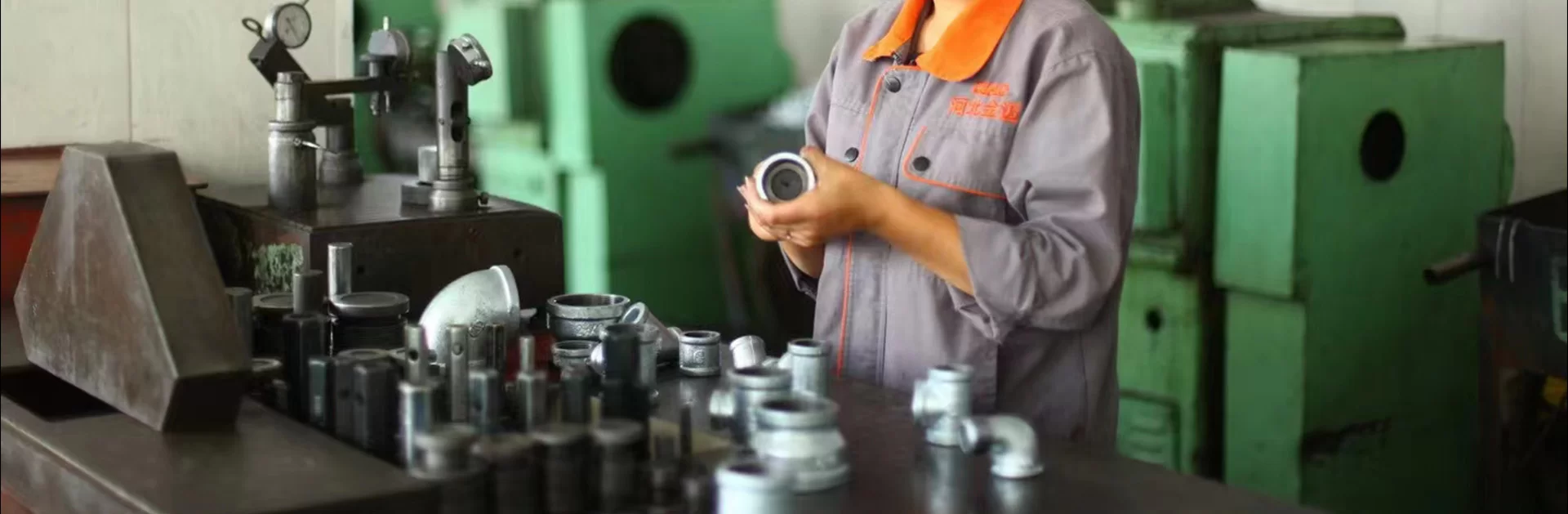
The global industrial piping sector is currently witnessing a critical re-evaluation of material reliability, particularly in high-stress fluid transport systems. As infrastructure projects demand longer lifecycles and lower maintenance overheads, the strategic sourcing of China black malleable iron pipe fittings has become a focal point for engineers seeking a balance between structural toughness and cost-efficiency.
The primary technical challenge lies in ensuring that fittings can withstand significant mechanical stress and corrosive environments without the brittleness typically associated with standard cast iron. This requirement is especially acute in HVAC, fire protection, and industrial water systems where weld-free, secure connections are mandatory to prevent catastrophic leakage and system downtime.
This analysis explores the engineering advantages of integrally cast malleable iron, examining how specific manufacturing processes and surface treatments impact long-term durability. By evaluating technical specifications and deployment scenarios, we provide a framework for procurement professionals to optimize their piping architecture using high-strength connection solutions.


Unlike standard gray iron, which is prone to fracturing under tension, the malleabilizing process transforms the microstructure into a tempered form. This creates a robust, one-piece sturdy structure that is integrally cast, eliminating the need for weld seams which are often the weakest points in a piping network.
This architectural integrity ensures that the fittings maintain mechanical strength and toughness even when subjected to vibration or thermal expansion, making them an essential component in heavy-duty industrial environments.
For engineering procurement, the focus is not just on dimensions but on the precision of the internal thread design. Standard internal threads allow for direct screwing onto externally threaded pipes, which minimizes the risk of misalignment and ensures a leak-proof seal when tightened to specified torque.
Furthermore, the internal diameter must perfectly match the pipe specifications to maintain a smooth fluid flow. Any discrepancy in the bore can lead to turbulence and increased pressure drops, which reduces the overall energy efficiency of the pumping system.
Dimensional accuracy testing and the use of go/no-go gauges during the inspection phase are critical. These quality assurance steps ensure interchangeability across different batches, preventing installation delays on large-scale construction sites.
Traditional piping installations often rely on welding, which introduces heat-affected zones (HAZ) that can compromise the base material's properties. Switching to a threaded malleable iron system shifts the assembly logic from thermal fusion to mechanical interference.
This approach is particularly beneficial in retrofit projects where introducing an open flame for welding is prohibited due to safety regulations or the presence of flammable materials in the vicinity.
When evaluating the reliability of China black malleable iron pipe fittings, engineers often use a normalized assessment to compare mechanical properties against application needs.
The following rating illustrates the relative performance of malleable iron in key engineering dimensions, such as impact resistance and installation speed, compared to baseline industrial standards.
Typical deployment occurs in environments requiring straight connections of pipes with identical diameters. This includes building water supply and drainage networks, where the fittings serve as critical junctions for pipe extension and repair. In HVAC systems, these components facilitate the complex routing of coolant and heating lines through structural walls.
Furthermore, in industrial fire protection systems, the pressure-tested reliability of malleable iron is paramount. The ability to maintain a stable seal under sudden pressure surges makes these fittings a preferred choice for safety-critical piping infrastructure in warehouses and manufacturing plants.
While black malleable iron provides the necessary strength, its susceptibility to oxidation in humid environments requires advanced surface treatment. The industry has shifted towards hot-dip galvanizing, which creates a metallurgical bond between the zinc and the iron base.
This zinc coating acts as a sacrificial anode, protecting the underlying iron from rust and corrosion even if the surface is scratched. This significantly extends the service life of the piping system, reducing the frequency of expensive replacements in subterranean or outdoor installations.
For specialized environments, electrophoresis pipe fittings offer an alternative, providing a more uniform coating thickness and enhanced chemical resistance. The selection between black, galvanized, or electrophoresis finishes depends entirely on the atmospheric conditions and the fluid characteristics of the application.
Selecting the correct fitting configuration requires a detailed understanding of the operating pressure and the environmental exposure of the piping system. Engineers must align the material grade with the specific mechanical loads of the project.
The following matrix provides a guide for selecting the appropriate configuration based on the application profile, comparing standard industry baselines with high-duty requirements.
By utilizing this framework, procurement teams can ensure that the selected components meet the necessary safety margins without over-specifying, thereby optimizing the project's material budget.
| Configuration Type | Surface Treatment | Mechanical Load | Recommended Use Case |
|---|---|---|---|
| Basic Configuration | Black Finish | Low to Medium | Indoor Dry Utility Lines |
| Standard Configuration | Hot-dip Galvanized | Medium | General Water Supply |
| High-Duty Configuration | Heavy Galvanized | High | Industrial Fire Protection |
| Precision Configuration | Electrophoresis | Medium | HVAC Precision Cooling |
| Industrial Baseline | Standard Zinc | Medium | Building Drainage Systems |
| Extreme Environment | Specialized Coating | High | Chemical Plant Utilities |
The primary difference lies in the microstructure. Standard cast iron is brittle and can crack under impact or tension. Malleable iron undergoes a heat-treatment process called annealing, which transforms the carbon into temper carbon nodules. This results in a material that is significantly tougher and more ductile, allowing it to withstand mechanical shocks and high-pressure fluctuations without fracturing.
Compatibility is ensured by adhering to national and international thread standards. High-quality fittings are inspected with go/no-go gauges to verify thread precision. When sourcing China black malleable iron pipe fittings, verify that the manufacturer complies with the specific threading standard (such as BSP or NPT) required for your regional piping infrastructure to ensure a seamless fit.
Hot-dip galvanizing significantly extends the lifespan by providing a thick, durable layer of zinc. This layer protects the iron from oxidation through both a physical barrier and cathodic protection. In moderately corrosive environments, a galvanized fitting can last several times longer than a black iron fitting, which would require frequent painting or replacement due to surface rust.
Malleable iron is suitable for many pressure applications, but its use in high-pressure gas lines depends on the specific pressure rating of the fitting and local safety codes. Always refer to the manufacturer's pressure test certification and the national pipe fitting standards to ensure the fitting's working pressure exceeds the maximum system surge pressure.
Common signs include weeping at the threaded joints, localized pitting corrosion on the exterior surface, and hairline fractures around the stress points of the casting. Regular inspection using ultrasonic testing or simple pressure-drop monitoring can identify these issues before they lead to total system failure, allowing for targeted maintenance and replacement.
Choose black fittings for indoor applications where corrosion is not a risk, such as natural gas lines or certain oil-based systems. Choose galvanized fittings for water supply, HVAC, and any environment exposed to moisture, humidity, or outdoor elements. For high-end aesthetic or chemical-resistant requirements, electrophoresis coatings are the most appropriate choice.
The transition toward integrally cast, weld-free connection systems represents a significant optimization in industrial piping. By leveraging the mechanical toughness of malleable iron and the protective properties of advanced coatings, engineers can build systems that are not only faster to install but substantially more resilient to the stresses of long-term operation.
Ultimately, the reliability of a piping network is determined by its weakest link. Investing in precision-engineered China black malleable iron pipe fittings ensures that the connection points provide a durable and stable foundation for critical fluid transport, reducing lifecycle costs and enhancing system safety.