

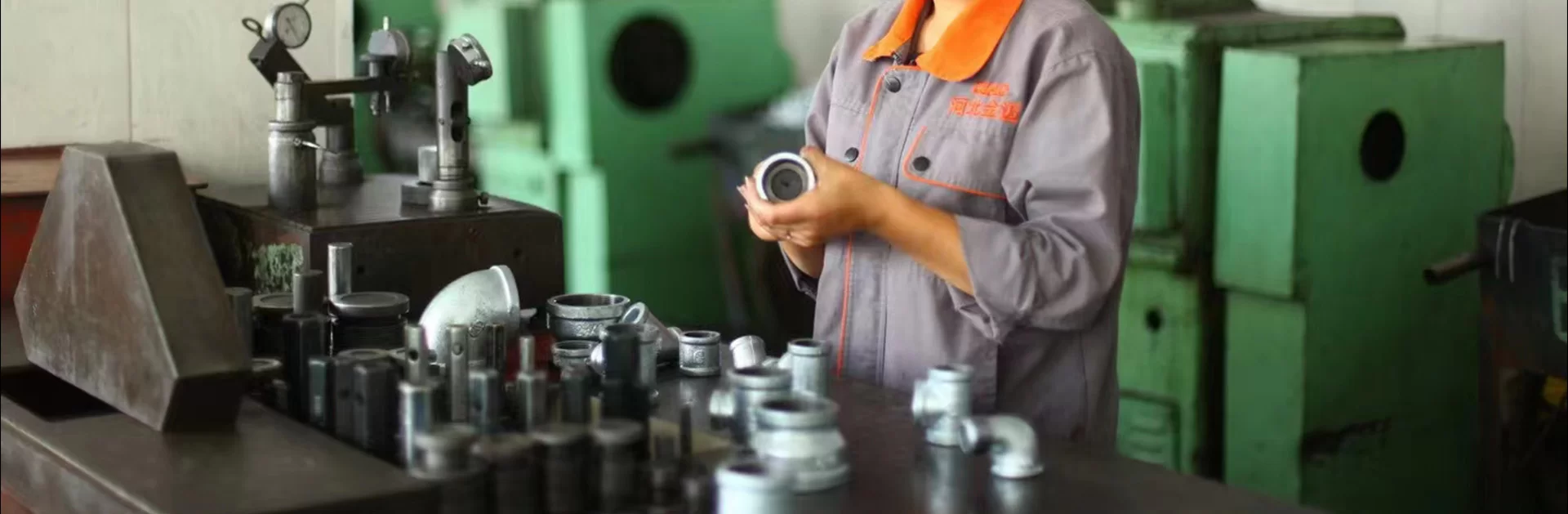

Malleable iron components represent a critical intersection of durability and versatility in industrial piping. Unlike standard gray iron, these materials undergo a specific annealing process that removes carbon in the form of graphite clusters, resulting in a metal that can be bent or pressed without fracturing. This technical characteristic makes China malleable cast iron pipe fittings an essential choice for systems requiring high impact resistance and structural integrity under pressure.
In challenging industrial environments—ranging from coastal offshore platforms to chemical processing plants—the failure of a single fitting can lead to catastrophic system downtime. The primary challenge for engineers is balancing tensile strength with long-term corrosion resistance. While traditional galvanizing has been the industry standard, modern advancements in electrophoretic coating and CFD-optimized geometries are redefining the expected lifecycle of these components, shifting the focus from simple connectivity to long-term operational reliability.
This technical guide explores the engineering specifications, coating technologies, and selection frameworks necessary for implementing high-performance piping solutions. Readers will gain insights into how substrate strength, coating adhesion, and precision machining converge to reduce maintenance cycles and overall ownership costs. By analyzing the relationship between material science and practical application, we provide a roadmap for procuring components that meet stringent international standards like ISO 49 and GB/T 3287.
Engineering Fundamentals of Malleable Iron
To understand the value of China malleable cast iron pipe fittings, one must first examine the metallurgical transformation they undergo. The process begins with white cast iron, which is inherently brittle due to its cementite structure. Through a prolonged heat treatment known as annealing, the cementite decomposes into temper carbon (graphite), which provides the material with its characteristic malleability and ductility. This structural shift allows the fittings to withstand sudden shocks and vibrations that would cause conventional cast iron to crack.
From a commercial perspective, this material is preferred in B2B procurement because it combines the ease of casting complex shapes with the mechanical properties of forged steel. In modern manufacturing, the focus has shifted toward enhancing the surface chemistry. Since iron is naturally susceptible to oxidation, the integration of advanced polymers and epoxy resins via electrophoresis ensures that the internal structure is protected from the outside in. This evolution ensures that the mechanical strength of the base metal is not compromised by environmental degradation, which is critical for piping networks in saline or acidic atmospheres.
Technical Analysis of High-Performance Fittings
Selecting the right piping component requires an analysis of three primary vectors: substrate mechanical properties, surface protection longevity, and geometric efficiency. When these factors are optimized, the resulting fitting provides not only a leak-proof connection but also a significant reduction in the total cost of ownership over a 15-year maintenance cycle.
Material Strength and Substrate Base
The foundation of a reliable fitting is its tensile strength. High-grade malleable iron is engineered to achieve a tensile strength of ≥350MPa, ensuring that the component can handle significant mechanical loads. This base material prevents deformation during high-torque installations and maintains its structural integrity during temperature cycling from -30℃ to 130℃. The use of a high-strength base reduces the risk of burst failures in high-pressure lines.
| Performance Metric | Technical Requirement | Impact on System | Evaluation Method |
|---|---|---|---|
| Tensile Strength | ≥350MPa | Prevents structural rupture | Mechanical Testing |
| Burst Pressure | ≥9MPa | Increases safety margin | Hydrostatic Test |
| Working Pressure | 4.5MPa (PN40) | Standard operational limit | Pressure Cycle Test |
| Surface Roughness | Ra ≤6.3μm | Reduces fluid turbulence | Profilometry |
| Thread Accuracy | 6H Level | Ensures leak-proof seal | Go/No-Go Gauge |
| Fatigue Life | 1 Million Cycles | Vibration resistance | Dynamic Loading Test |
The Triple Protection Coating System
Surface degradation is the leading cause of fitting failure. A sophisticated "Triple Protection System" addresses this by layering different chemical barriers. First, an epoxy resin electrophoretic layer (35-40μm) provides 360° coverage, including internal corners where traditional dipping often fails. Second, the cathode electrophoresis process ensures maximum adhesion (Grade 0). Finally, a polyurethane transparent topcoat adds a layer of UV and aging resistance, preventing the epoxy from degrading under sunlight in outdoor coastal installations.
CFD-Optimized Fluid Dynamics
Efficiency in piping is often lost at the points of diameter reduction. By employing Computational Fluid Dynamics (CFD) simulation, the transition curves in reducing couplings are optimized to minimize pressure drops and turbulence. When combined with precision internal machining (Ra≤6.3μm), this reduces the erosion caused by high-velocity fluids, effectively extending the internal life of the fitting and improving the overall energy efficiency of the pumping system.
Corrosion Resistance Benchmarks
In harsh environments, salt spray resistance is the gold standard for quality. While standard hot-dip galvanizing provides basic protection, electrophoretic coatings can achieve salt spray resistance of ≥1000 hours. This is approximately three times the performance of traditional methods. This level of protection is verified through pH 3.2 acetic acid solution tests, ensuring that the fittings remain rust-free even in mildly corrosive chemical environments or wastewater treatment plants.
Pressure Ratings and Safety Margins
For B2B procurement, the distinction between working pressure and burst pressure is vital for safety compliance. A PN40 rated fitting designed for 4.5MPa working pressure with a burst pressure of ≥9MPa provides a 2:1 safety factor. This margin is critical for handling "water hammer" effects or sudden pressure surges in industrial piping, ensuring that the fitting is the strongest point of the connection rather than the weakest.
Industry-Specific Application Scenarios
The application of these fittings varies by environment. In coastal engineering, the focus is on the UV-resistant topcoat to prevent salt-air corrosion. In chemical environments, the epoxy layer's chemical inertness is paramount for transporting mildly corrosive gases. For high-end commercial buildings, such as laboratories or hospitals, the precision of the 6H level threads and the clean finish of the electrophoretic coating meet strict hygienic and aesthetic standards.
Procurement and Selection Criteria
Buyers should evaluate suppliers based on their ability to provide documented verification of the coating thickness and substrate chemistry. Key questions include: Does the supplier use a 1000-hour salt spray test? Is the coating thickness measured at multiple points per piece? HEBEI JINMAI CASTING, for instance, utilizes a professional team and 28 years of experience to ensure that every batch meets the GB/T 3287 and ISO 49 standards, providing a verifiable quality trail for the end-user.
FAQ
What is the primary difference between malleable iron and gray cast iron fittings?
The primary difference lies in the microstructure. Gray iron is brittle and prone to cracking under impact. Malleable iron undergoes an annealing process that transforms the carbon into graphite nodules, allowing the material to deform slightly under stress rather than fracturing. This makes it far more suitable for high-pressure industrial applications and environments with significant vibration.
How does electrophoretic coating compare to hot-dip galvanizing?
Electrophoretic coating provides superior uniformity, especially in complex geometries like threads and internal corners, where galvanizing often leaves thin spots. Technically, it offers salt spray resistance of ≥1000 hours, which is roughly 3x higher than traditional galvanizing. This results in a service life extension of 2-3 times and maintenance cycles extended up to 15 years.
What should I check when verifying the quality of a batch of pipe fittings?
Buyers should request three specific documents: 1) A chemical analysis report of the substrate to confirm the iron grade. 2) A coating thickness report showing multi-point measurements (at least 12 points per piece) to ensure the 35-40μm specification is met. 3) Results from a salt spray test (pH 3.2) to verify the corrosion resistance duration.
Can these fittings be used in coastal or offshore environments?
Yes, they are specifically designed for such environments. The combination of the epoxy resin electrophoretic layer and a UV-resistant polyurethane topcoat creates a barrier against salt-laden air and direct sunlight. This prevents the common "pitting" corrosion seen in offshore piping systems, provided the installation follows proper torque and sealant guidelines.
What is the recommended installation method to avoid coating damage?
To maintain the integrity of the protective layer, installers should ensure pipe ends are flat and burr-free. It is critical to use matching protective gaskets and a torque wrench according to the product manual. Additionally, using a specialized sealant instead of thick Teflon tape prevents debris from compromising the 6H level thread precision and the coating's seal.
How do these fittings impact the overall project budget?
While the initial procurement cost may be slightly higher than basic galvanized fittings, the total cost of ownership is typically reduced by 30%. This saving comes from the drastic reduction in replacement frequency and the extension of the maintenance cycle to 15 years, which minimizes expensive operational downtime in industrial plants.
References and further reading
- ISO 49: Malleable cast iron fittings - Specifications
- GB/T 3287: Technical standards for malleable iron pipe components
- Materials Science and Engineering: Properties of Annealed Cast Iron
Related Articles


