

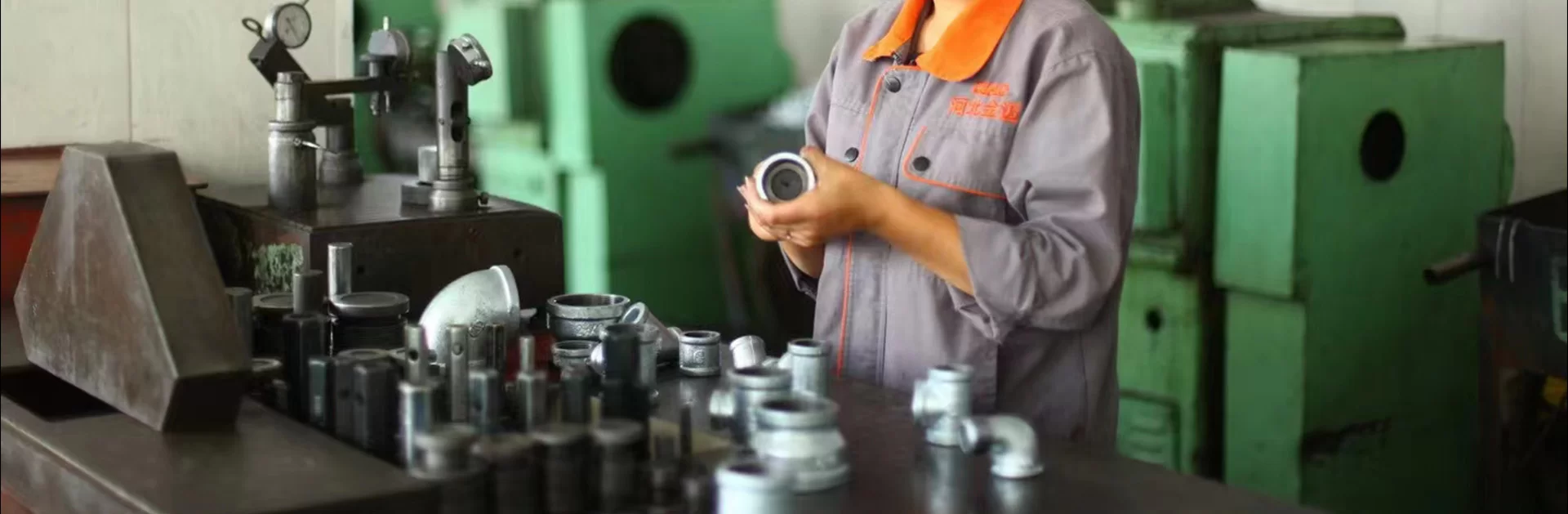
High Performance China galvanized steel elbow for Industrial Piping
Navigating the complexities of modern industrial piping requires components that balance spatial efficiency with extreme durability. For engineers dealing with constrained machine rooms or intricate factory corridors, the traditional planar tee often proves too bulky. This is where the innovation of 3D orthogonal design becomes critical, allowing for a 90°×90° configuration that significantly reduces the footprint of the installation. By utilizing high-grade malleable cast iron and advanced protective coatings, these specialized fittings ensure long-term operational stability in harsh environments.
Whether you are upgrading a legacy system or designing a new multi-directional pipe interface, understanding the synergy between material strength and fluid dynamics is essential. The integration of China galvanized steel elbow technology—specifically through electrophoretic coating systems—provides a robust defense against corrosion while maintaining precise flow separation. This approach not only saves up to 60% of installation space but also reduces turbulence by 45%, optimizing the overall efficiency of the fluid transport network.

Engineering the Three-Dimensional Orthogonal Flow Structure
The core innovation of these advanced fittings lies in their unique three-dimensional structure. Unlike standard elbows, the 90°×90° orthogonal design allows three interface centerlines to converge at a single point. This geometric precision achieves true three-dimensional flow separation, which is indispensable for equipment integration where multi-directional interfaces are required in a compact layout.
From a fluid dynamics perspective, the internal flow channels are scientifically optimized. By smoothing the transition zones and reducing internal friction, the design effectively lowers turbulence by 45%. This reduction in turbulence prevents pressure drops and minimizes wear on the internal walls of the pipe, extending the lifecycle of the entire system. For technical buyers, this means fewer maintenance cycles and more consistent flow rates across complex networks.
Furthermore, the structural integrity is bolstered by localized reinforcement technology. Key components are strengthened to increase pressure resistance by 50%, ensuring that the fitting can withstand the stresses of high-pressure industrial operations. The addition of scientifically distributed external wall reinforcing ribs provides excellent torsional resistance, preventing deformation during the tightening of bolts or under the weight of heavy piping arrays.

Advanced Full Immersion Electrophoresis Protection
Corrosion is the primary enemy of metal piping systems, especially in environments with fluctuating pH levels or high humidity. To combat this, a Full Immersion Electrophoresis System is employed, ensuring a 360° no-dead-angle coating. The resulting epoxy resin layer, typically between 45-55μm thick, creates an impenetrable barrier that is chemically resistant and compatible with pH 3 environments.
The protective layer is not merely a surface paint but a deeply bonded polyurethane protective layer combined with black epoxy electrophoresis. This dual-layer approach has been rigorously tested, passing 1500 hours of salt spray testing to achieve a Level 9 corrosion resistance standard. Such performance is critical for installations in -11°C environments or coastal industrial zones where salt-laden air can rapidly degrade unprotected metals.
By utilizing China galvanized steel elbow principles enhanced with modern electrophoresis, the fittings achieve a superior balance of flexibility and hardness. The flanged mounting surface further ensures a stable installation, preventing leaks at the connection points and maintaining the airtightness of the system even under thermal expansion and contraction from -25℃ to 120℃.
Strategic Application Scenarios and Installation Logic
These 3D fittings are specifically engineered for scenarios where space is at a premium. In factory pipe corridors, the three-dimensional cross-connection allows for a much denser layout than traditional tees, enabling the integration of more lines within the same physical area. This is particularly valuable for machine room upgrades where adding new capacity without expanding the walls is a priority.
For equipment integration, the multi-directional interfaces allow a complete set of equipment to be connected with minimal piping runs. This simplifies the overall architecture and reduces the number of potential leak points in the system. The transformation from planar to 3D layouts often results in a cleaner, more professional installation that is easier to inspect and maintain over time.
Professional installation follows a strict spatial logic: first, the 3D spatial coordinates must be determined to mark the flow directions. Using a level to ensure the reference surface is horizontal is non-negotiable. Engineers are advised to start installation from the bottommost interface and tighten bolts in a diagonal sequence to ensure even pressure distribution. Finally, a 3D pressure test is performed to validate the 100% airtightness of the assembly.
Technical Specifications and Selection Framework
| Selection Model | Typical Application | Pressure Capacity | Recommended Interface |
|---|---|---|---|
| Standard Side Outlet | Equal diameter diversion | 3.5MPa | 1", 1-1/4" |
| Differentiating Outlet | Main pipe to smaller branch | 3.5MPa | 1-1/2", 2" |
| Thickened Variant | High-pressure environments | Up to 7.0MPa | Customizable |
| Non-Standard Angle | Special spatial coordinates | 3.5MPa | Application-specific |
| Electrophoretic Special | Corrosive/pH 3 environments | 3.5MPa | Standard interfaces |
Quality Assurance and Precision Control Standards
To ensure every component meets industrial safety standards, a rigorous quality control protocol is implemented. The first stage involves 3D coordinate detection, where the position accuracy is held to a strict tolerance of ±0.3mm. This precision ensures that when the fittings arrive at the job site, they align perfectly with the pre-planned piping architecture, eliminating the need for costly on-site modifications.
Pressure testing is the most critical safety gate. Each unit undergoes a 7.0MPa pressure test, holding the pressure for a full 10 minutes to ensure there are no microscopic fractures or casting voids. This is followed by a 100% airtightness test at 0.6MPa, ensuring that the sealing surfaces and threads are flawless. These tests guarantee that the fittings can safely operate at their rated working pressure of 3.5MPa with a significant safety margin.
Finally, the coating uniformity is verified. Using a coefficient of variation ≤0.15, the team ensures that the electrophoretic layer is consistent across the entire geometry of the part. This prevents "thin spots" that could become initiation points for corrosion, ensuring that the Level 9 corrosion resistance is uniform across the entire fitting, from the internal channels to the external reinforcing ribs.
Procurement Considerations for Industrial Pipe Networks
When sourcing these components, procurement managers should focus on the trade-off between standard specifications and customized requirements. For most general industrial applications, standard interfaces (1" to 2") are sufficient. However, in high-pressure environments, the thickened side outlet variants are necessary to maintain a safety factor. It is important to verify the coating type, as the polyurethane protective layer is essential for outdoor or chemically aggressive environments.
Evaluating the supplier's manufacturing depth is also key. A supplier with extensive experience in malleable cast iron—such as those with decades of specialized production—is more likely to provide consistent wall thickness and precise threading. This consistency reduces installation time and minimizes the risk of thread galling or misalignment during assembly.
Looking forward, the trend in piping is moving toward "intelligence in space," where the goal is to maximize throughput while minimizing the physical footprint. Moving from traditional 2D tees to 3D orthogonal fittings is a strategic step in this direction. By prioritizing fittings that offer both structural reinforcement and advanced chemical protection, companies can reduce their long-term TCO (Total Cost of Ownership) through decreased downtime and extended asset life.
Technical FAQ: 3D Malleable Iron Fittings
What is the main advantage of a 3D orthogonal design over a standard tee?
The 3D orthogonal design allows three interfaces to converge at a single point in a 90°×90° configuration, which can save up to 60% of installation space compared to traditional planar layouts. It is ideal for compact machine rooms and complex pipe corridors.
How does the electrophoretic coating improve the fitting's lifespan?
The full immersion electrophoretic system provides a 360° no-dead-angle coating of epoxy resin and polyurethane. This protects the malleable iron from corrosion, resists pH 3 environments, and passes 1500 hours of salt spray testing (Level 9 standard).
What is the maximum working pressure and temperature range for these fittings?
The standard working pressure is 3.5MPa, though thickened versions are tested up to 7.0MPa. The operational temperature range is from -25℃ to 120℃, making them suitable for a wide variety of industrial climates.
Can these fittings be customized for non-standard angles?
Yes, non-standard angle side outlet elbows can be customized to meet specific 3D spatial coordinates and project requirements, provided the technical specifications are defined during the procurement phase.
What are the critical steps for ensuring a leak-proof installation?
Critical steps include accurately marking 3D coordinates, using a level for horizontal reference, installing from the bottommost interface, tightening bolts in a diagonal sequence, and performing a final 3D pressure test.
Why is the reduction in turbulence important for industrial piping?
Reducing turbulence by 45% optimizes fluid dynamics, which minimizes pressure drops and reduces internal erosion. This leads to higher system efficiency and a longer service life for the piping network.
Technical References
- Malleable Iron Properties and Casting Standards
- Principles of Electrophoretic Coating Systems
- Industrial Pipe Fitting Design and Fluid Dynamics
- Materials Science: Corrosion Resistance in Industrial Metals
For professionals seeking to optimize their piping architecture through 3D intelligence and superior protective coatings, choosing a manufacturer with deep casting expertise is the first step toward operational excellence.
Related Articles


