

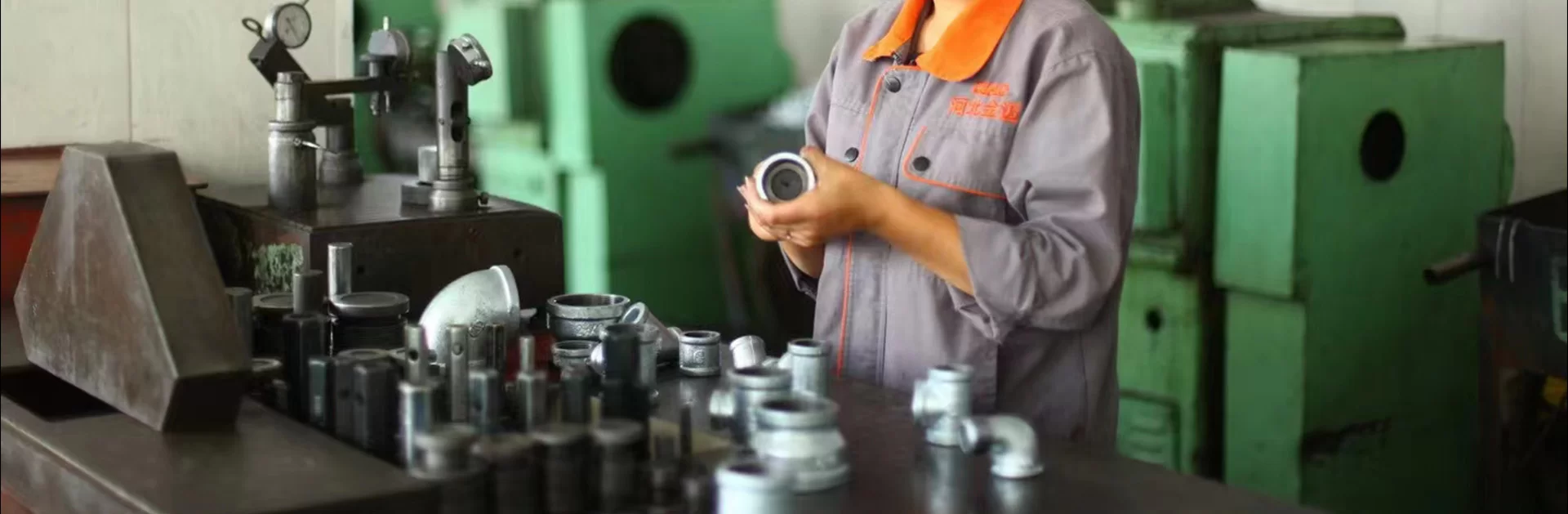

In industrial piping infrastructure, the selection of fittings is a critical decision that balances structural integrity, environmental resistance, and long-term operational costs. Malleable iron pipe fittings are engineered to provide a robust solution for sealing ports and connecting lines in high-stress environments. This article examines the technical specifications and procurement logic required to source high-performance components without compromising system safety.
For procurement managers and engineers, the challenge lies in identifying components that offer both mechanical durability and chemical stability. While many search for black iron pipe fittings cheap, the actual value is determined by the metallurgical quality and the precision of the threading, which prevents costly leakages and system downtime in HVAC, fire protection, and water supply networks.
Readers will gain a comprehensive understanding of why malleable iron is preferred over standard cast iron, how hot-dip galvanization extends service life, and the specific criteria for evaluating a manufacturer's production capacity to ensure consistency across bulk industrial orders.
Evaluating Malleable Iron Fittings in B2B Procurement
The procurement of industrial pipe fittings is rarely about the lowest unit price alone, but rather the Total Cost of Ownership (TCO). Malleable iron is produced through a specialized annealing process that transforms brittle white cast iron into a tougher, more ductile material. This transition is vital for B2B applications where components are subject to mechanical shocks, vibration, and pressure surges. Unlike gray iron, which may crack under impact, malleable iron absorbs energy, making it the industry standard for structural piping. From a procurement perspective, verifying the annealing quality and the thickness of the casting walls is essential to ensure the components meet international safety standards and can withstand the operational rigors of municipal and industrial water systems.
Technical Analysis and Selection Framework
Optimizing a piping system requires a deep dive into the relationship between material science, surface treatment, and mechanical design. The following analysis breaks down the key technical dimensions that influence the performance and reliability of malleable iron fittings.
Material Properties: Malleable vs. Gray Iron
The primary differentiator between these two materials is the carbon structure. Malleable iron undergoes heat treatment to remove carbon in the form of graphite nodules, significantly increasing impact resistance. This makes it far more reliable for high-pressure interfaces than the brittle structure of gray cast iron.
| Material Type | Mechanical Property | Failure Risk | Best Application |
|---|---|---|---|
| Standard Gray Iron | Brittle/Low Ductility | Prone to cracking | Low-stress static lines |
| Malleable Iron | Impact Resistant | Ductile deformation | High-pressure HVAC |
| Galvanized Malleable | Corrosion Resistant | Surface oxidation | Outdoor water supply |
| Ductile Iron | High Tensile Strength | Limited versatility | Heavy industrial mains |
| Wrought Iron | Highly Malleable | Lower pressure rating | Legacy systems |
| Stainless Steel | Extreme Corrosion Resistance | High cost/Over-spec | Chemical processing |
Corrosion Mitigation via Hot-Dip Galvanization
To prevent oxidation in humid or corrosive environments, hot-dip galvanizing is employed. This process creates a metallurgical bond of zinc over the iron, providing both a physical barrier and cathodic protection. For industrial users, this translates to a significantly extended lifespan and reduced maintenance frequency, as the zinc layer prevents rust from penetrating the core casting.
Thread Precision and Leak Prevention
The integrity of a piping system is only as strong as its weakest joint. Precision internal threads are mandatory to eliminate leakage risks. High-quality fittings utilize standardized international thread specs to ensure a tight fit, reducing the reliance on excessive sealing tapes and ensuring a professional-grade seal across all pipe ports.
Pressure Distribution in Hemispherical Designs
When selecting caps for pipe ends, the geometry plays a role in safety. Hemispherical designs are superior for pressure distribution compared to flat-top caps, as they reduce stress concentration. This design choice increases the overall strength of the seal under heavy load, making them ideal for high-pressure industrial pipelines.
Industrial Application Scenarios
These fittings are widely deployed in HVAC engineering, firefighting systems, and municipal water networks. Their ability to block contaminants, moisture, and foreign objects makes them essential for reserved interface protection during equipment maintenance and system expansions in large-scale manufacturing plants.
Operational Life Cycle and Maintenance
The reusability of malleable iron fittings contributes to lower long-term costs. Because they are fully removable and resistant to mechanical damage, they can be reused during system reconfiguration. This reduces replacement waste and lowers the operational expenditure associated with routine piping maintenance.
Supplier Capability Assessment
When auditing a supplier, buyers should look for established manufacturing experience and scale. For instance, HEBEI JINMAI CASTING Co., Ltd. leverages 28 years of experience and a 36,000 square meter facility to maintain consistency. A professional team and a track record of exporting to 56 countries indicate the ability to handle bulk logistics and adhere to strict metallurgical standards.
FAQ
What is the primary difference between malleable iron and gray cast iron fittings?
The primary difference is the heat treatment process. Malleable iron undergoes annealing to remove carbon and transform its structure, making it significantly tougher and more resistant to impact and shock compared to the inherent brittleness of gray cast iron.
How does hot-dip galvanizing protect these pipe fittings from rust?
Hot-dip galvanizing creates a thick, metallurgical bond of zinc over the iron. This provides a dual layer of protection: a physical barrier that blocks moisture and oxygen, and cathodic protection, where the zinc corrodes preferentially to protect the underlying iron.
Can these fittings be used for high-pressure industrial applications?
Yes, malleable iron fittings are designed for pressure resistance. However, for extreme pressure levels, it is recommended to use optional sealing gaskets to enhance security and ensure a complete leak-proof professional seal.
Are these pipe fittings compatible with standard international plumbing threads?
Absolutely. Professional manufacturers use standard international thread specifications to ensure full compatibility with most industrial and commercial piping systems globally, facilitating rapid installation and easy replacement.
Why should I choose a hemispherical cap over a flat cap?
A hemispherical design is superior for pressure distribution. By curving the surface, the fitting reduces stress concentration at the edges, thereby increasing the overall strength and stability of the seal under heavy internal load.
What industries most commonly utilize malleable iron pipe fittings?
They are most commonly used in HVAC engineering, municipal water supply and drainage, fire protection systems, and heavy industrial manufacturing plants where durability and leak prevention are paramount.
References and further reading
- International Standards for Malleable Iron Pipe Fittings - Technical Specifications.
- ASTM A197 / A197M Standard Specification for Cupola-Malleable Iron.
- Guide to Hot-Dip Galvanizing for Industrial Piping Infrastructure.


