

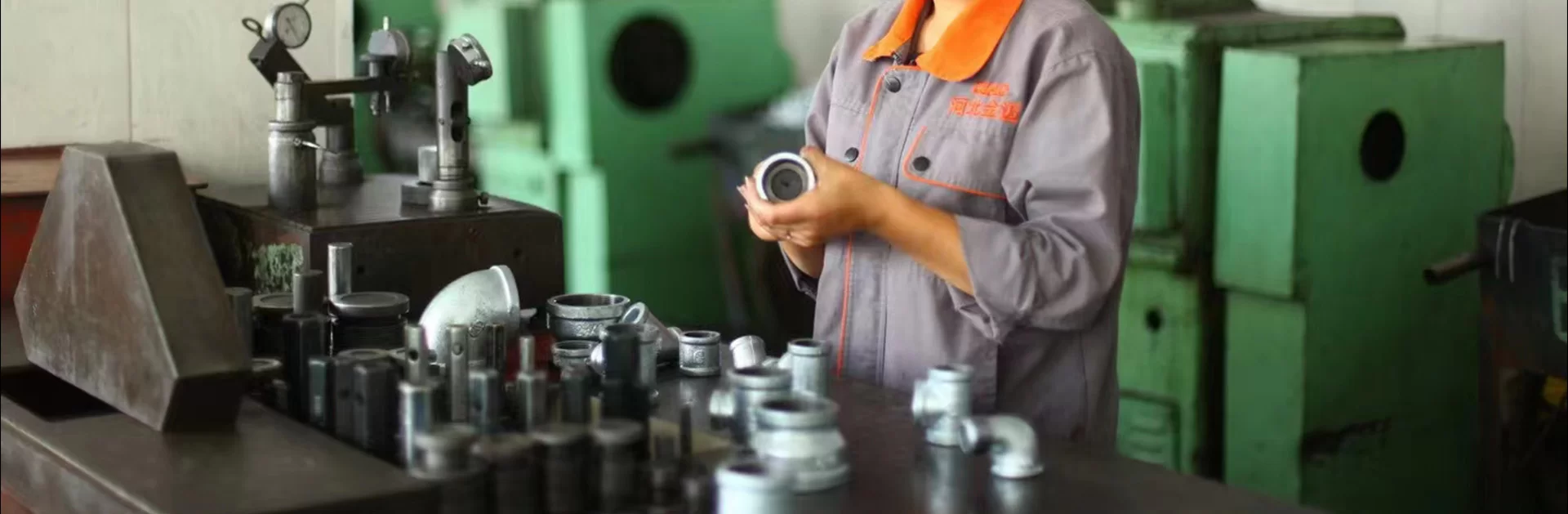
Selecting the right piping components is rarely about the size alone, but rather how that size interacts with environmental stress and flow dynamics. For professionals managing mid-sized fluid networks, 1.5 galvanized pipe fittings represent a critical intersection of load-bearing strength and corrosion resistance.
Whether deployed in HVAC systems or industrial water lines, the 1.5-inch specification is often the "sweet spot" for balancing throughput with structural stability. However, the longevity of these systems depends entirely on the quality of the malleable iron casting and the integrity of the zinc coating.
This guide examines the technical nuances of these fittings, moving beyond basic dimensions to analyze why precise angle designs and metallurgical standards are the primary drivers of system reliability in demanding environments.

Understanding the Engineering Behind 1.5 Galvanized Fittings

At its core, a 1.5-inch galvanized fitting is more than a connector; it is a pressure-containing vessel designed to maintain a seal under fluctuating thermal and mechanical loads. The use of malleable iron allows the fitting to withstand significant impact and tension without the brittleness associated with standard cast iron.
The "galvanized" aspect refers to the hot-dip zinc process, which creates a metallurgical bond between the zinc and the iron. This layer acts as a sacrificial anode, meaning the zinc will corrode before the base metal is ever reached, which is essential for systems carrying potable water or operating in humid environments.
For engineers, the 1.5-inch size is frequently utilized in secondary distribution lines. The precision of the threading and the internal smoothness of the casting are what ultimately determine if the system will suffer from premature turbulence or localized erosion.
Technical Advantages of Malleable Iron and Zinc Coating
The mechanical superiority of these fittings stems from the annealing process of the malleable iron. Unlike grey iron, which can crack under sudden pressure spikes, malleable iron possesses a graphite structure that absorbs energy, ensuring that joints remain secure even in high-vibration industrial settings.
Beyond the material, the design of the interface is paramount. A double-thread interface—featuring both internal and external threading—provides the versatility needed to connect disparate components like valves and pipes quickly without requiring excessive adapters, which would otherwise introduce more potential leak points.
Furthermore, the precision-machined threads ensure a tighter seal. When paired with appropriate sealing materials, these fittings effectively eliminate the risk of seepage at 45° or 90° corners, which are the most common failure points in traditional pipeline routing.
Critical Application Scenarios in Industrial and Civil Piping
In civil construction, 1.5 galvanized pipe fittings are indispensable for hot and cold water distribution. Their ability to resist oxidation makes them the primary choice for basements and utility rooms where moisture levels are consistently high and ventilation is limited.
Within the HVAC sector, these components are used for condenser water lines and chilled water systems. The robust nature of the malleable iron casting ensures that the piping can handle the weight of the system and the stresses of thermal expansion and contraction without compromising the integrity of the connection.
Industrial applications often see these fittings used in solar energy equipment piping and general process piping. In these scenarios, the 45° bend design is particularly valuable, as it reduces the fluid resistance compared to standard right-angle elbows, thereby optimizing the efficiency of the pump systems.
Evaluating Flow Efficiency and Pressure Loss Metrics
Fluid dynamics dictate that every change in direction introduces a pressure drop. In a 1.5-inch system, the geometry of the fitting directly impacts the energy required to move the medium through the pipe. Right-angle elbows create high turbulence, whereas crescent or 45° bends streamline the flow.
By analyzing the internal surface roughness and the angle of the bend, we can quantify the reduction in head loss. A smoother internal casting reduces the boundary layer friction, allowing for a higher flow rate at the same pressure level compared to lower-grade cast fittings.
1.5 galvanized pipe fittings Performance Metrics
The data suggests that utilizing precision-engineered 45° bends significantly enhances system longevity by reducing the "scouring" effect of high-velocity fluids hitting a 90° wall, which often leads to premature thinning of the galvanized layer.
Procurement Standards for High-Performance Pipe Components
Procuring 1.5-inch fittings requires a focus on metallurgical consistency. Buyers should prioritize manufacturers who utilize a controlled annealing process, as this ensures the "malleable" property is uniform across the entire batch, preventing unexpected failures in the field.
Inspect the galvanization thickness. A thin or uneven zinc coat may look acceptable upon delivery but will fail rapidly in corrosive environments. High-quality fittings exhibit a smooth, matte grey finish without excessive "zinc spikes" or bare spots in the threaded areas.
Additionally, verify the thread tolerances. In a 1.5-inch system, even a fractional deviation in thread pitch can lead to "cross-threading" or a seal that requires excessive torque, which can overstress the malleable iron and create micro-fractures.
Future Trends in Protective Coatings and Casting Precision
The industry is likely to see a shift toward hybrid coating systems. While hot-dip galvanizing remains the gold standard for durability, the integration of electrophoresis coatings may offer an additional layer of precision, especially for fittings used in specialized chemical transport.
Automation in the casting process is also expected to reduce the internal "casting skin" thickness. Thinner, more precise walls could allow for slightly larger internal diameters within the same 1.5-inch external footprint, further reducing pressure loss across complex networks.
As sustainable building standards evolve, the demand for recyclable and long-lifecycle materials will grow. Malleable iron, being highly recyclable and exceptionally durable, is well-positioned to remain the preferred choice over shorter-lived polymer alternatives in heavy-duty applications.
Comparative Selection Guide for Galvanized Fitting Types
Choosing between different fitting geometries depends on the specific goals of the pipeline—whether the priority is maximum flow, space optimization, or ease of installation. The following matrix compares the most common 1.5-inch configurations.
It is important to note that while 90° elbows are standard, the transition to 45° crescent bends is the most effective way to lower the energy footprint of a pumping system by reducing turbulence.
| Fitting Type | Flow Efficiency | Space Requirement | Primary Use Case |
|---|---|---|---|
| 45° Crescent Bend | Very High | Moderate | High-velocity fluid lines |
| 90° Standard Elbow | Moderate | Low | Tight corner routing |
| Tee Junction | Low | Moderate | System branching/splitting |
| Union Fitting | High | High | Maintenance-heavy sections |
| Reducing Coupling | Moderate | Low | Changing pipe diameters |
| Cap/Plug | N/A | Very Low | System termination/testing |
For those evaluating these components for a specific project, the technical specifications and range of available malleable iron products can be further reviewed via www.jinmaicasting.com.
Frequently Asked Questions
Conclusion
The reliability of a piping system is only as strong as its weakest connection. For 1.5-inch networks, the combination of malleable iron's structural toughness and the chemical protection of galvanization provides a durable solution for a wide array of industrial and residential challenges.
By prioritizing precise angle designs and verifying metallurgical standards, operators can significantly extend the lifecycle of their infrastructure. For detailed procurement specifications or to explore a full range of malleable iron solutions, professional buyers are encouraged to visit www.jinmaicasting.com.