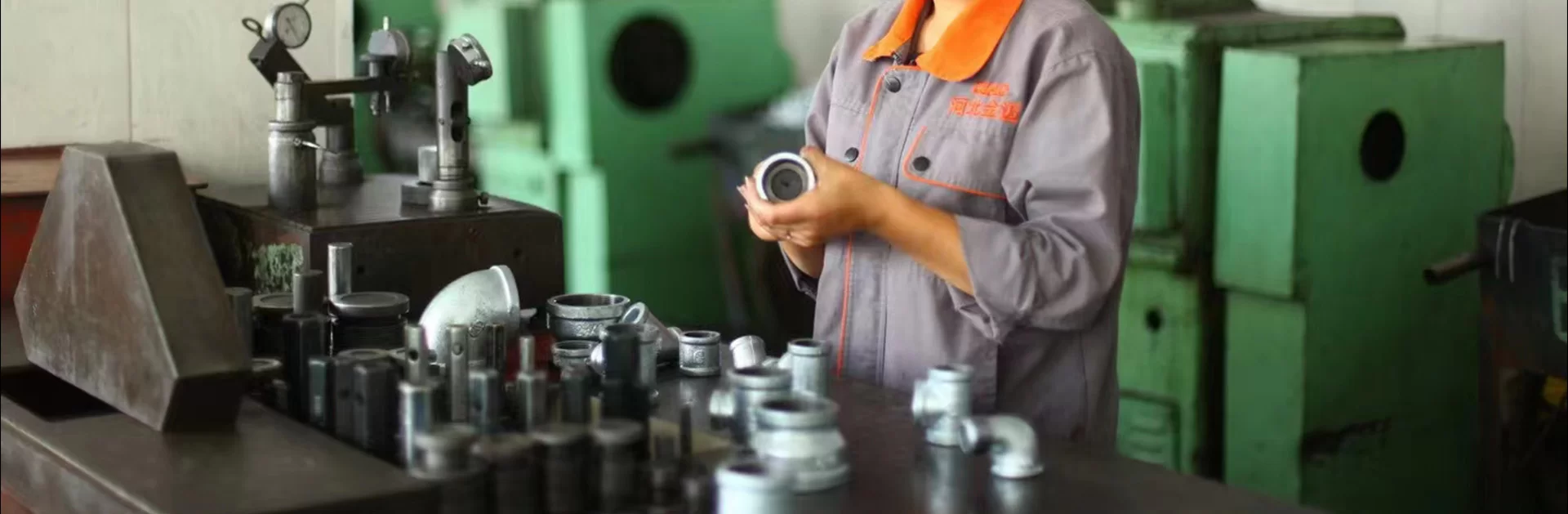
In the demanding world of industrial piping, the integrity of every connection determines the safety and efficiency of the entire system. galvanized structural pipe fittings serve as the critical junction points that ensure seamless transitions and robust stability in diverse environments, from commercial HVAC systems to heavy industrial plants. By combining high-strength materials with advanced protective coatings, these components solve the perennial challenge of corrosion and mechanical failure in fluid transport.
Understanding the technical nuances of these fittings is essential for engineers and procurement specialists who prioritize long-term reliability over short-term costs. The global shift toward more sustainable and durable infrastructure has placed a premium on precision-cast malleable iron and hot-dip galvanization. These processes ensure that the fittings can withstand extreme pressure and environmental stressors while maintaining a compact footprint.
This comprehensive guide explores the engineering excellence behind modern galvanized structural pipe fittings, detailing their structural advantages, material compositions, and real-world applications. By focusing on the synergy between ingenious design and strict quality control, we will illustrate how these fittings provide an economical yet highly efficient solution for pipe diameter reduction and system renovation across various global industries.

Ingenious Structural Design of Pipe Fittings
The efficiency of galvanized structural pipe fittings begins with a rational and compact architectural approach. By utilizing a large-diameter internal thread on the exterior and a small-diameter external thread on the interior, these fittings achieve a streamlined form factor that maximizes spatial efficiency without sacrificing strength. This specific configuration is ideal for complex piping networks where space is at a premium.
Beyond the external dimensions, the internal transition section is meticulously optimized for fluid dynamics. A smooth and fluid inner wall design significantly reduces turbulence as the medium changes diameter. This reduction in turbulence is critical because it minimizes pressure loss across the system, ensuring that pump efficiency is maintained and energy consumption is reduced throughout the facility's operation.
Superior Materials and Casting Craftsmanship
The foundation of high-performance galvanized structural pipe fittings lies in the use of high-strength malleable iron. Unlike standard cast iron, malleable iron undergoes a specific annealing process that removes brittleness, providing a level of toughness and ductility essential for components that must withstand mechanical vibrations and thermal expansion. This precision casting ensures that the structural stability remains intact even under high-pressure scenarios.
To combat the relentless threat of oxidation, a hot-dip galvanized surface treatment is applied. This process creates a thick, metallurgical bond of zinc that acts as a sacrificial anode, protecting the base iron from rust and corrosion. This makes these fittings exceptionally adaptable to humid, saline, or chemically active environments, effectively extending the maintenance cycle of the piping system.
Furthermore, the toughened, thick-walled design is a deliberate engineering choice to ensure superior pressure resistance. By increasing the wall thickness in critical stress zones, these fittings can handle sudden pressure spikes without risk of deformation or rupture, providing a long service life and reducing the likelihood of catastrophic leaks in critical infrastructure.
Installation Efficiency and Application Ease
One of the most significant advantages of utilizing galvanized structural pipe fittings is the elimination of complex installation requirements. Because these components rely on precisely machined threads, no specialized welding equipment or heavy machinery is required for assembly. Installers can simply screw the fittings into place, drastically reducing labor time and the potential for human error during the construction phase.
The precision of the threading is paramount; it ensures a tight, secure connection that minimizes the risk of seepage. When paired with appropriate sealing materials, the leak-proof effect is further enhanced, providing an airtight and watertight seal that is critical for high-pressure water supply or industrial gas lines. This reliability allows for a "set-it-and-forget-it" installation approach.
Due to their compact size, these galvanized structural pipe fittings are particularly suited for installation in constrained locations. Whether it is a narrow wall cavity in a building's drainage system or a tight equipment interface in an HVAC unit, the rational structure allows for a safe and secure connection where larger, bulkier fittings would be impossible to fit.
Rigorous Quality Control and Standardization
Quality assurance is not an afterthought but a core component of the production process for galvanized structural pipe fittings. Every single unit undergoes a rigorous battery of tests, including dimensional accuracy testing and high-pressure testing. By utilizing professional measuring tools to inspect threads, manufacturers ensure total interchangeability, meaning a fitting produced today will fit perfectly with a pipe manufactured by a different vendor following the same national standards.
This commitment to standardization means that these fittings meet and often exceed national standards for pipe components. This compliance is essential for passing building inspections and ensuring the safety of fire protection systems. By integrating strict quality control, the risk of failure at the connection point is virtually eliminated, providing peace of mind to system designers and facility managers alike.
Performance Comparison of Galvanized Structural Pipe Fittings
Global Applications in Modern Infrastructure
The versatility of galvanized structural pipe fittings makes them indispensable across a wide array of sectors. In building water supply and drainage systems, they are frequently used for the conversion of pipe diameters, allowing for a seamless transition from main lines to localized fixtures. Similarly, in the HVAC industry, these fittings are used to adapt equipment interfaces, ensuring that cooling and heating units are securely connected to the building's distribution network.
Beyond commercial construction, these components are vital for industrial pipe diameter reduction connections and fire protection system renovations. In industrial zones where corrosion is a constant threat due to chemical exposure, the galvanized coating provides a necessary shield. In fire safety systems, where reliability is non-negotiable, the high-pressure resistance of malleable iron ensures that water delivery remains consistent during emergency scenarios, safeguarding both lives and property.
Long-Term Value and Economic Advantages
From a financial perspective, investing in high-quality galvanized structural pipe fittings is a strategy of "spending less to save more." While cheaper alternatives may exist, the total cost of ownership is significantly lower due to the extended service life and reduced need for frequent replacements. The durability of malleable iron combined with zinc protection means fewer leaks and less downtime for maintenance, which is critical for businesses where operational continuity is paramount.
The economic value is also reflected in the installation phase. The "screw-in" nature of these fittings reduces the need for highly specialized labor and expensive welding certifications, lowering the initial capital expenditure of a project. This efficiency allows contractors to complete installations faster, accelerating the timeline from construction to operational status.
Ultimately, the value lies in the reliability. The psychological peace of mind knowing that every connection is safe and secure is an intangible but vital asset. By providing a robust solution that maximizes effect with a small size, these fittings offer an optimal balance of performance, reliability, and cost-effectiveness.
Future Innovations in Galvanized Fittings
As the industry moves toward "Green Building" and sustainable infrastructure, galvanized structural pipe fittings are evolving. Future innovations are focusing on even more environmentally friendly galvanization processes that reduce chemical waste while increasing coating adhesion. The integration of digital tracking, such as QR codes on fittings, is also becoming common, allowing facility managers to trace the origin, batch, and pressure test results of every component in their system.
Automation in precision casting is further refining the internal walls of these fittings, pushing the boundaries of fluid dynamics to achieve near-zero pressure loss. By leveraging AI-driven design, manufacturers can now optimize the wall thickness of galvanized structural pipe fittings to use the minimum amount of material required to meet the maximum pressure rating, reducing the carbon footprint of the production process.
Moreover, the rise of modular construction is driving the demand for pre-assembled fitting kits. These kits allow for the rapid deployment of piping networks in temporary industrial zones or post-disaster relief areas, combining the strength of iron with the speed of modular assembly.
Comparative Analysis of Galvanized Fitting Specifications
|
Feature Dimension
|
Malleable Iron (Galvanized)
|
Cast Iron (Uncoated)
|
Polymer/PVC
|
| Corrosion Resistance |
High (Zinc Layer) |
Low |
Very High |
| Pressure Capacity |
Excellent |
Moderate |
Low to Moderate |
| Mechanical Strength |
High (Toughened) |
Brittle |
Flexible/Low |
| Installation Speed |
Fast (Threaded) |
Moderate |
Fast (Solvent) |
| Service Life |
25+ Years |
10-15 Years |
Variable |
| Cost-Efficiency |
High (Long Term) |
Medium |
High (Short Term) |
FAQS
Malleable iron undergoes a specialized annealing process that transforms the brittle structure of white cast iron into a more ductile form. This means that galvanized structural pipe fittings made from malleable iron can absorb mechanical shocks and vibrations without cracking, whereas standard cast iron is prone to brittle fracture under stress, making malleable iron far safer for high-pressure industrial applications.
Hot-dip galvanization involves immersing the iron fitting in molten zinc. This creates a series of zinc-iron alloy layers topped with a pure zinc coating. This layer acts as a physical barrier against moisture and oxygen. More importantly, it provides cathodic protection; if the surface is scratched, the zinc will corrode preferentially to the iron, preventing rust from spreading to the structural core of the fitting.
Yes, absolutely. Thanks to their thick-walled, toughened design and precision casting, these fittings are engineered specifically for high-pressure environments. They meet national standards for dimensional accuracy and pressure resistance, ensuring that fire suppression systems can deliver water at the required flow rates and pressures without the risk of connection failure during an emergency.
No special tools are required. These fittings are designed for ease of installation using standard pipe wrenches. Because they feature precisely machined internal and external threads, they can be screwed directly into the pipeline. For an enhanced leak-proof seal, we recommend using standard sealing tapes or pipe dopes, which ensure a watertight connection without needing welding or brazing.
Pressure loss is often caused by turbulence at the point where a pipe changes diameter. Our galvanized structural pipe fittings feature an optimized transition section with a smooth internal wall. This minimizes the "friction" and turbulence as fluid moves from a larger to a smaller diameter, ensuring a more laminar flow and reducing the energy required to move fluids through the system.
Yes, they are ideal for such environments. The hot-dip galvanized coating is specifically designed to withstand corrosive atmospheres, including the salt-laden air of coastal regions. The combination of a thick zinc layer and the inherent strength of malleable iron makes them far more durable than uncoated or painted alternatives in harsh outdoor conditions.
Conclusion
In summary, galvanized structural pipe fittings represent the perfect intersection of material science and structural engineering. By utilizing precision-cast malleable iron and a robust hot-dip galvanized coating, these components provide an unmatched combination of corrosion resistance, pressure stability, and installation efficiency. From the fluid-dynamic optimization of their internal walls to the strict adherence to national quality standards, every detail is designed to ensure a secure, leak-proof connection that minimizes long-term operational costs.
As global infrastructure continues to evolve toward higher standards of safety and sustainability, the reliance on reliable piping components will only grow. We recommend that engineers and project managers prioritize the use of malleable iron galvanized fittings to ensure system longevity and operational safety. By choosing quality over convenience, you invest in a foundation that guarantees security for decades to come. Visit our website for more information: www.jinmaicasting.com