In the demanding world of industrial piping, the selection of components can dictate the entire lifespan of a facility's infrastructure. High-performance solutions like 1 2 galvanized pipe fittings are essential for maintaining structural integrity, especially in environments where moisture and chemical exposure are constant threats. Understanding the synergy between material strength and protective coatings is the first step toward reducing maintenance overhead and preventing costly system failures.
Across global industries—from petrochemical plants to marine engineering—the shift toward integrated components is accelerating. The need for precision-engineered parts that can handle high pressure while resisting extreme corrosion has led to the evolution of malleable iron fittings. These components are no longer just connectors; they are engineered assets designed to optimize fluid dynamics and ensure zero-leakage performance in critical paths.
Whether you are upgrading an existing network or designing a new installation, choosing 1 2 galvanized pipe fittings and advanced electrophoretic alternatives ensures a balance of durability and efficiency. By integrating cutting-edge coating technologies and finite element analysis, modern fittings now offer unprecedented stability, effectively solving the age-old conflict between operational pressure and environmental degradation.

The Engineering Evolution of 1 2 Galvanized Pipe Fittings
The transition from basic casting to precision-molded components has redefined the reliability of 1 2 galvanized pipe fittings. Traditionally, reducing elbows required separate components—a bend and a reducer—which increased the number of joints and, consequently, the probability of leaks. The modern integrated 90° reducing elbow eliminates these vulnerabilities by merging these functions into a single, seamless piece of malleable iron.
This evolution is not merely about convenience but about fundamental safety. By utilizing one-piece molded designs, engineers can effectively remove potential leakage sites, which is critical in high-pressure environments (up to 4.0 MPa). The integration of structural precision ensures that the fitting maintains its form and function even under the most rigorous industrial cycles.
Material Synergy and Structural Integrity
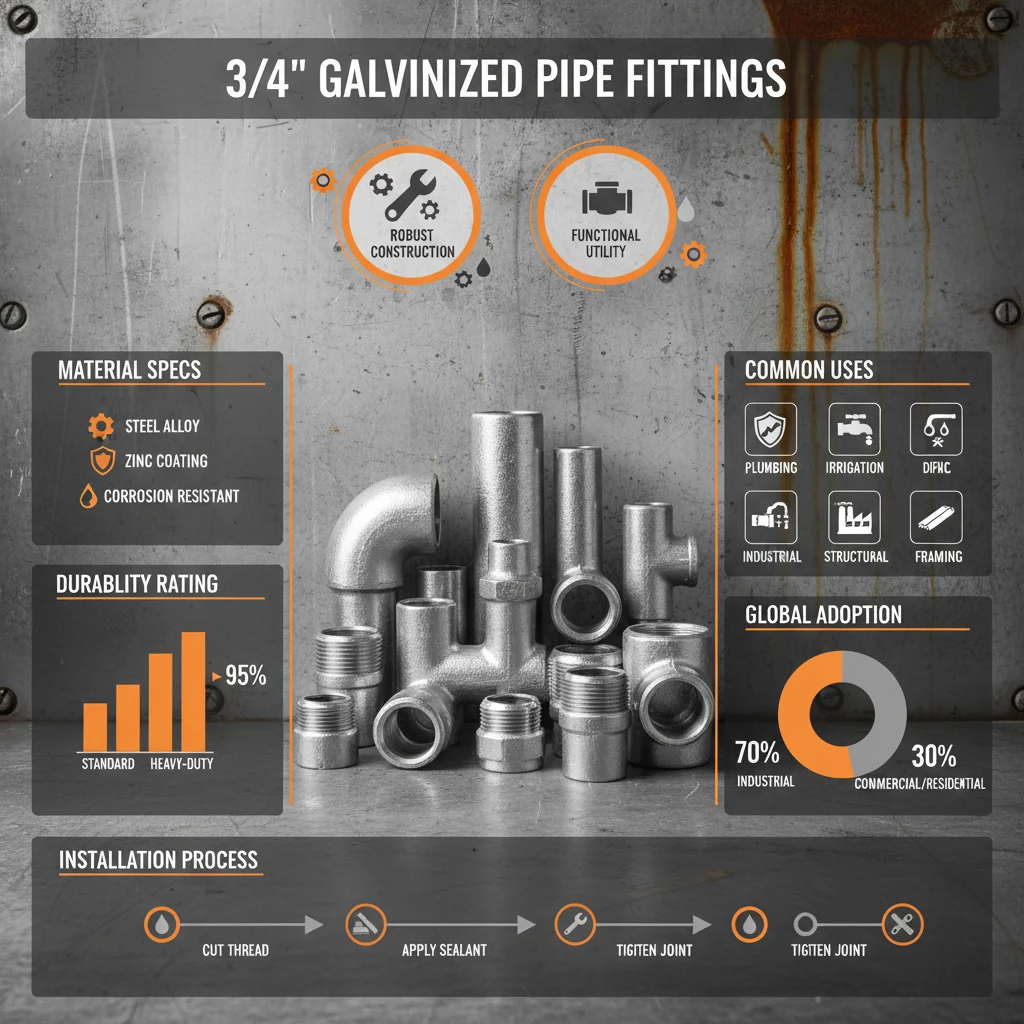
At the core of these high-performance fittings is premium malleable cast iron, a material chosen for its unique ability to balance hardness with ductility. Unlike standard cast iron, malleable iron undergoes a specific heat treatment process that allows it to absorb shocks and resist cracking under pressure pulses. This makes 1 2 galvanized pipe fittings an ideal choice for systems experiencing frequent vibration or temperature fluctuations.
To push the boundaries of structural strength, Finite Element Analysis (FEA) is now employed during the design phase. FEA allows engineers to simulate stress distribution across the fitting's geometry, ensuring that wall thickness is optimized. This results in a component that provides maximum structural strength without unnecessary weight, maintaining stability from -30℃ up to 130℃.
The synergy between the material's intrinsic properties and precision engineering leads to a product capable of withstanding 100,000 pressure pulse fatigue tests. This level of resilience ensures that the piping system remains operational over decades, reducing the need for emergency replacements and minimizing unplanned downtime in industrial plants.
Advanced Coating Technologies for Extreme Environments
While standard 1 2 galvanized pipe fittings provide basic protection, the introduction of epoxy electrophoretic coating has revolutionized corrosion defense. Unlike traditional dip-galvanizing or spray painting, electrophoresis ensures a 360° full-coverage layer that penetrates the inner walls of the fitting, creating a uniform barrier of 40-45μm.
This advanced coating process allows 1 2 galvanized pipe fittings to pass rigorous 30-day cyclic corrosion tests (CCT) and maintain salt spray resistance for over 1200 hours. By utilizing a Black Epoxy Electrophoresis combined with a PU Topcoat, the fittings are shielded from pH levels ranging from 4 to 10, making them suitable for aggressive chemical environments.
The technical advantage of this coating lies in its adhesion. Grade 0 adhesion standards ensure that the protective layer does not peel or flake under thermal expansion. This level of protection is essential for marine systems and coastal facilities where salt-laden air would otherwise degrade untreated metal components in a matter of months.
Optimizing Fluid Dynamics and Flow Efficiency
Beyond structural strength, the internal geometry of a fitting significantly impacts the overall energy efficiency of a piping system. Modern 1 2 galvanized pipe fittings are designed with a 1.5D curvature radius, which creates a more gradual transition for the fluid. This precision molding reduces turbulence and minimizes the pressure drop across the bend.
By optimizing the diameter reduction within the integrated elbow, fluid resistance is reduced by up to 40% compared to traditional two-piece setups. This efficiency translates directly into lower pumping costs and reduced wear on valves and pumps, as the fluid flow remains more laminar and stable throughout the system.
Fluid Resistance Comparison for 1 2 Galvanized Pipe Fittings
Global Industrial Applications and Use Cases
The versatility of 1 2 galvanized pipe fittings makes them indispensable across various high-stakes sectors. In chemical processing plants, where corrosive media are transported, the combination of malleable iron and epoxy coating prevents internal erosion and external oxidation. Similarly, in wastewater treatment facilities, these fittings handle the aggressive nature of treated effluents without succumbing to premature rust.
Marine cabin layouts and offshore platforms present a unique challenge: limited space combined with extreme salt spray. The integral reducing elbow design allows for tighter piping configurations without compromising safety. By reducing the number of joints in confined spaces, operators can ensure a more reliable system that is easier to inspect and maintain in remote industrial zones.
Quality Validation and Precision Manufacturing
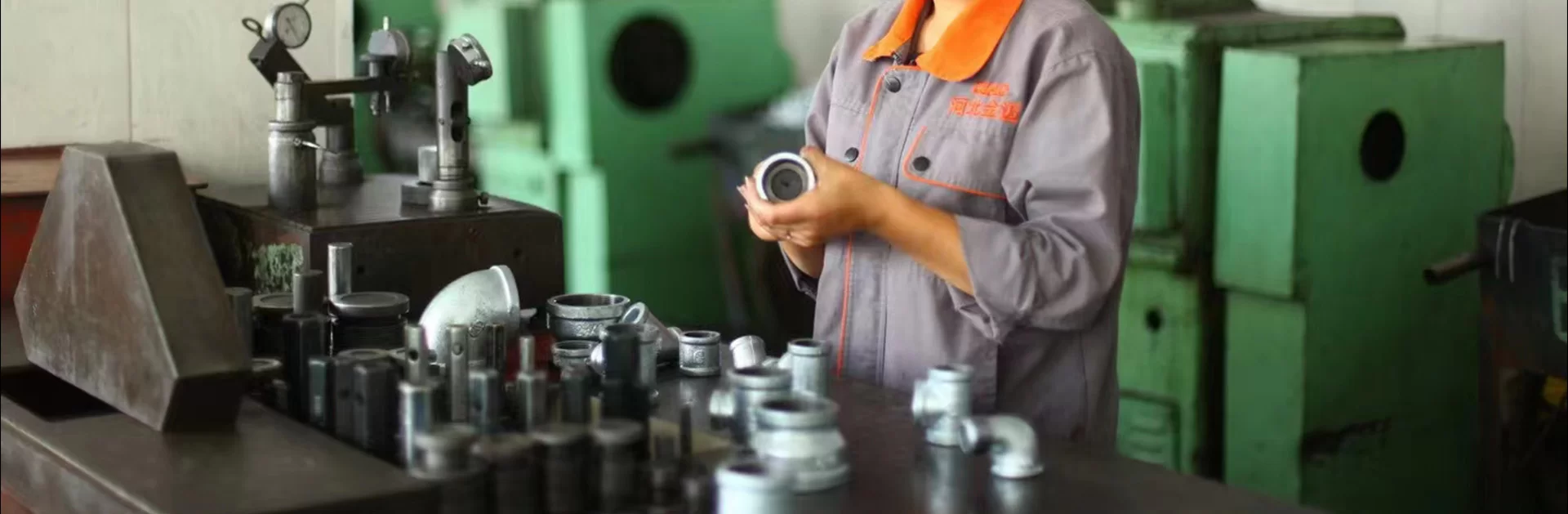
To guarantee zero-defect reliability, 1 2 galvanized pipe fittings undergo a rigorous multi-stage validation process. The first line of defense is 100% X-ray flaw detection during the casting phase. This ensures that there are no internal voids or casting defects that could become points of failure under high-pressure conditions (PN40).
Following casting, every component is subjected to a 7.2MPa water pressure test, held for 3 minutes. This testing pressure is significantly higher than the standard operating pressure of 4.0 MPa, providing a critical safety margin. Dimensional accuracy is verified using Coordinate Measuring Machines (CMM), ensuring micron-level precision for a perfect seal during installation.
The final stage of quality control focuses on the coating's integrity. Adhesion tests and thickness measurements (40-45μm) ensure that the electrophoretic layer is uniform. This comprehensive audit trail ensures that every piece of hardware delivered to the site meets global industrial standards, such as GB/T 3287.
Long-Term Value and Investment Return Analysis
When evaluating the cost of 1 2 galvanized pipe fittings, it is essential to look beyond the initial purchase price and consider the Total Cost of Ownership (TCO). Traditional fittings often require frequent maintenance and replacement due to corrosion at the joints. In contrast, integrated electrophoretic fittings extend the maintenance cycle by years, significantly reducing labor costs.
The reduction in fluid resistance (up to 40%) also provides a tangible energy saving over the life of the system. By decreasing the load on pumping equipment, facilities can reduce their electricity consumption and extend the service life of their primary machinery. This logical shift from a "lowest-cost" to a "highest-value" procurement strategy is key to industrial sustainability.
Ultimately, the reliability of an integral design minimizes the risk of catastrophic leaks, which can lead to environmental fines or operational shutdowns. The peace of mind provided by X-ray verified and high-pressure tested components creates a foundation of trust and safety for any industrial operation.
Comparison Analysis of Fitting Technologies and Lifecycle Value
| Fitting Type |
Leakage Risk |
Corrosion Resistance |
Life Cycle Cost |
| Standard Galvanized |
Moderate (Multiple joints) |
Standard (Dip-coated) |
High (Frequent replacement) |
| Electrophoretic Integrated |
Minimal (Integral design) |
Superior (360° Coverage) |
Low (Durability focus) |
| Black Malleable Iron |
Moderate |
Low (Prone to rust) |
Medium |
| PU-Coated Special |
Low |
High (Chemical focus) |
Medium-Low |
| Custom FEA Design |
Near-Zero |
Extreme |
Lowest (Max lifespan) |
| Standard Reducer Set |
High (Two-step joint) |
Standard |
High (Maintenance heavy) |
FAQS
Electrophoresis provides a uniform 360° full-coverage layer, including the internal walls, which traditional hot-dip galvanizing often misses. With a thickness of 40-45μm and salt spray resistance exceeding 1200 hours, it offers far superior protection against corrosive environments and prevents internal rust buildup.
By combining the 90° bend and the diameter reduction into one single molded piece, it eliminates the need for a separate reducer and elbow. This removes a potential leak point (the joint between the two), reducing the total number of connection sites and lowering the overall risk of failure in high-pressure systems.
Yes, the epoxy electrophoretic coating is specifically designed to withstand pH levels between 4 and 10. This makes these fittings highly effective for chemical piping and industrial wastewater applications where moderate acidity or alkalinity would typically corrode standard metal fittings.
These fittings are engineered for high-performance use, with an operating pressure of up to 4.0 MPa (PN40 level). They are also highly stable across a wide temperature range, from as low as -30℃ to as high as 130℃, ensuring reliability in both arctic and high-heat industrial settings.
While the standard industrial finish is black epoxy, specialized FDA-compliant coating options are available upon request. These are designed specifically for food and beverage processing to ensure no contamination while maintaining the structural benefits of malleable iron.
To maintain the integrity of the electrophoretic layer, we recommend using a nylon protective wrench during tightening to avoid scratching the surface. Additionally, it is professional practice to perform a pressure test 48 hours after installation to ensure a perfect seal before the system goes live.
Conclusion
In conclusion, the transition to high-precision, integrated components like 1 2 galvanized pipe fittings and their electrophoretic counterparts represents a critical upgrade for industrial piping. By combining the structural resilience of malleable cast iron, the fluid efficiency of a 1.5D curvature, and the impenetrable defense of epoxy coatings, these fittings solve the most pressing challenges of corrosion and leakage.
Looking forward, the integration of FEA and 100% X-ray validation will become the industry standard for all critical infrastructure. For engineers and facility managers, investing in these advanced solutions is not just a matter of technical preference, but a strategic move toward sustainability, safety, and significantly lower lifecycle costs. Visit our website for more professional solutions: www.jinmaicasting.com