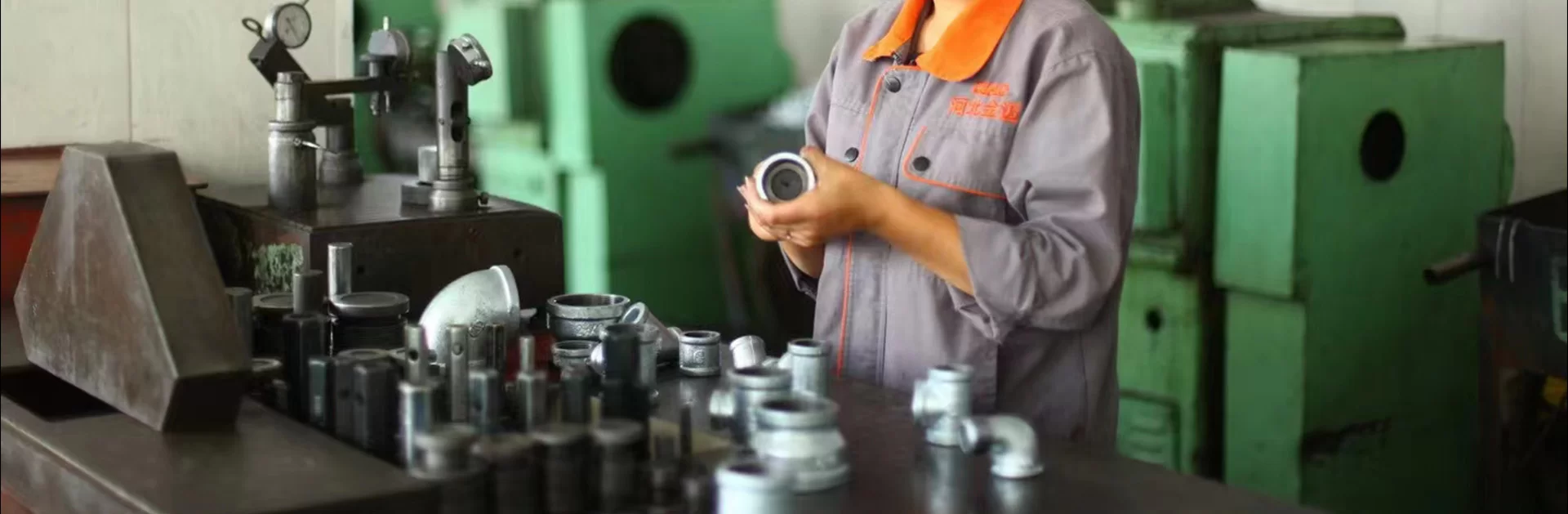
In the demanding world of industrial piping, the selection of durable components is critical for maintaining system integrity and operational safety. The use of 1 2 inch galvanized pipe fittings has long been a standard for those seeking a balance between cost-effectiveness and resistance to environmental degradation. Whether in residential plumbing or heavy-duty industrial frameworks, these fittings provide the necessary structural support to prevent leaks and withstand external pressures.
However, as industrial environments become more corrosive and the demand for longer service life increases, traditional galvanization is being challenged by advanced coating technologies. The evolution of materials, such as the shift toward malleable cast iron with electrophoretic protection, is redefining how we perceive the longevity of 1 2 inch galvanized pipe fittings. Understanding the intersection of material science and protective coatings is essential for engineers aiming to minimize downtime and maintenance costs.
Today, the industry is moving toward high-performance solutions that surpass the limitations of standard hot-dip processes. By implementing a "Triple Protection System," modern 1 2 inch galvanized pipe fittings and their advanced counterparts now offer unparalleled salt spray resistance and structural reliability. This transition ensures that critical infrastructure in coastal or chemical environments remains secure for decades rather than years.

The Material Foundation of 1 2 inch galvanized pipe fittings
The structural integrity of any piping system begins with the base material. For high-performance 1 2 inch galvanized pipe fittings, malleable cast iron is the preferred choice due to its exceptional tensile strength, often reaching ≥350MPa. This material provides the necessary toughness to resist impact and vibration, ensuring that the fittings do not crack under the mechanical stresses common in industrial installations.
By utilizing a high-strength base, these fittings can maintain a reliable working pressure of 4.5MPa, with a burst pressure exceeding 9MPa. This mechanical robustness is what separates professional-grade 1 2 inch galvanized pipe fittings from entry-level alternatives, providing a safety margin that is critical for high-pressure gas or liquid transport.
Advanced Coating Technologies and Triple Protection
While the base material provides strength, the coating provides the shield. Traditional 1 2 inch galvanized pipe fittings rely on a zinc layer, but modern engineering has introduced the Triple Protection System. This begins with an epoxy resin electrophoretic layer, typically 35-40μm thick, which ensures 360° coverage, including the internal threads and complex geometries where traditional dipping often fails.
Following the electrophoretic layer, a polyurethane transparent topcoat is applied. This layer acts as the first line of defense against UV radiation and atmospheric aging, preventing the epoxy from degrading over time. This synergy creates a barrier that is significantly more resilient than standard galvanization, effectively sealing the malleable iron from oxygen and moisture.
This advanced approach addresses the primary weakness of standard 1 2 inch galvanized pipe fittings: uneven coating thickness. Through cathode electrophoresis, the coating achieves uniform distribution even at sharp edges and corners, ensuring that no "weak spots" exist for corrosion to begin.
Fluid Optimization and Precision Engineering
Efficiency in a piping system is not just about the exterior; the interior geometry is equally vital. High-end 1 2 inch galvanized pipe fittings are now designed using CFD (Computational Fluid Dynamics) simulations to optimize the diameter transition curve, which minimizes turbulence and pressure drops as fluids move through the fitting.
Precision machining is applied to the inner walls of these 1 2 inch galvanized pipe fittings to achieve a roughness of Ra≤6.3μm. This smoothness reduces friction and prevents the accumulation of debris or scale, which is essential for maintaining flow rates in chemical and wastewater applications.
Furthermore, the threading process is held to a strict 6H level of accuracy. This ensures that 1 2 inch galvanized pipe fittings provide a leak-proof seal when mated with pipes, reducing the reliance on excessive sealants and ensuring a more stable mechanical connection across the entire assembly.
Performance Advantages in Harsh Environments
The true value of a fitting is revealed in the harshest conditions. Advanced 1 2 inch galvanized pipe fittings exhibit superior corrosion resistance, with salt spray testing showing endurance of ≥1000 hours. This is roughly three times the performance of standard hot-dip galvanizing, making them ideal for coastal engineering and offshore platforms where saline air is constant.
Beyond corrosion, thermal and mechanical stability are paramount. These fittings are engineered to withstand temperature shocks ranging from -30℃ to 130℃ without cracking, and have passed 1 million fatigue cycles, proving their reliability in high-vibration environments such as industrial pump rooms.
Comparative Durability Ratings for 1 2 inch galvanized pipe fittings
Global Application Scenarios and Use Cases
In coastal engineering, the deployment of 1 2 inch galvanized pipe fittings is widespread in piping systems for offshore platforms and ports. The ability to withstand high-salinity environments without premature oxidation ensures that critical water and fuel lines remain operational, reducing the frequency of dangerous underwater or over-water repairs.
Additionally, these fittings are essential in chemical environments and wastewater treatment plants. Because they can transport mildly corrosive gases and liquids, they are often specified for laboratory piping and hospital infrastructure, where hygiene and leak prevention are non-negotiable requirements.
Installation Guidelines for Maximum Longevity
To ensure that 1 2 inch galvanized pipe fittings reach their full potential, proper installation is mandatory. The first step is to verify that the pipe end face is completely flat and free of burrs, as any imperfection can create a gap in the seal or scratch the protective coating during assembly.
The use of matching protective gaskets is highly recommended to avoid damaging the electrophoretic layer during tightening. Furthermore, installers should avoid traditional Teflon tape debris; instead, applying a specialized sealant on the threaded parts of 1 2 inch galvanized pipe fittings ensures a cleaner and more reliable joint.
Finally, the use of a torque wrench is essential. Over-tightening can stress the malleable iron or compromise the coating adhesion, while under-tightening leads to leaks. Following the recommended torque specifications in the product manual and performing a pressure test post-installation are the final steps in a professional deployment.
Value Comparison: Electrophoresis vs Traditional Galvanizing
When analyzing the lifecycle cost of 1 2 inch galvanized pipe fittings, the initial purchase price is only a small part of the equation. Traditional hot-dip galvanized products often suffer from uneven thickness and faster degradation, leading to maintenance cycles every 5-7 years in harsh environments.
In contrast, electrophoretic coatings extend the service life by 2-3 times. By increasing the maintenance cycle to approximately 15 years, the total cost of ownership is reduced by nearly 30%. This is achieved through the elimination of frequent replacements and the reduction of unplanned system shutdowns.
Moreover, the environmental performance is significantly improved. The electrophoretic process is more controlled and produces less waste than traditional hot-dip galvanizing, making it the preferred choice for projects adhering to strict green building standards and ISO environmental certifications.
Economic and Technical Comparison of Coating Methods for Pipe Fittings
|
Analysis Dimension
|
Hot-Dip Galvanized
|
Electrophoresis + Topcoat
|
Performance Gain
|
| Salt Spray Resistance |
~300 Hours |
≥1000 Hours |
3.3x Increase |
| Coating Uniformity |
Variable/Drips |
360° Uniform |
High Consistency |
| Service Life |
5-8 Years |
15-20 Years |
2.5x Longevity |
| Maintenance Cost |
High (Frequent) |
Low (Infrequent) |
30% Reduction |
| UV Resistance |
Moderate |
Excellent |
Aging Resistant |
| Environmental Impact |
Moderate |
Low |
Eco-Friendly |
FAQS
Standard galvanized fittings use a hot-dip zinc process which can leave uneven coatings and is more prone to corrosion over time. Electrophoretic fittings utilize a Triple Protection System—including a precise epoxy layer and a UV-resistant topcoat—providing up to 1000 hours of salt spray resistance and 360-degree coverage, which significantly extends the service life in corrosive environments.
Yes. These fittings are manufactured from high-strength malleable cast iron with a tensile strength of ≥350MPa. They are rated for a working pressure of 4.5MPa and a burst pressure of ≥9MPa, making them suitable for high-pressure systems in commercial complexes, hospitals, and industrial plants.
To maintain the integrity of the coating, we recommend using matching protective gaskets during the assembly of 1 2 inch galvanized pipe fittings. Additionally, ensure that pipe ends are burr-free and use a torque wrench to avoid over-tightening, which can cause mechanical stress and coating failure.
Absolutely. Thanks to the polyurethane transparent topcoat and epoxy resin layer, these fittings are specifically designed for coastal engineering, offshore platforms, and ports. Their superior salt spray resistance ensures they withstand saline air far better than traditional galvanized options.
While traditional galvanized fittings may require inspection or replacement every few years, electrophoretic 1 2 inch galvanized pipe fittings are designed to extend the maintenance cycle to approximately 15 years, provided they are installed according to guidelines and operated within their rated pressure and temperature ranges.
Yes, our products are manufactured in accordance with GB/T 3287 and ISO 49 standards. Each batch undergoes rigorous chemical analysis, mechanical property testing, and multi-point coating thickness measurements to ensure global compliance and quality consistency.
Conclusion
The transition from traditional galvanization to advanced electrophoretic coating systems marks a significant leap in the durability and efficiency of 1 2 inch galvanized pipe fittings. By combining a high-strength malleable cast iron base with a Triple Protection System and CFD-optimized internal geometries, these components solve the age-old problems of uneven corrosion and pressure loss. The result is a piping solution that not only lasts longer but also reduces overall operational costs by significantly extending maintenance intervals.
As industrial requirements continue to evolve toward sustainability and extreme reliability, investing in high-specification fittings is no longer optional—it is a strategic necessity. Whether you are upgrading a wastewater plant or constructing a coastal facility, prioritizing precision engineering and advanced coatings will ensure the safety and longevity of your infrastructure. Visit our website to explore our full range of solutions: www.jinmaicasting.com