

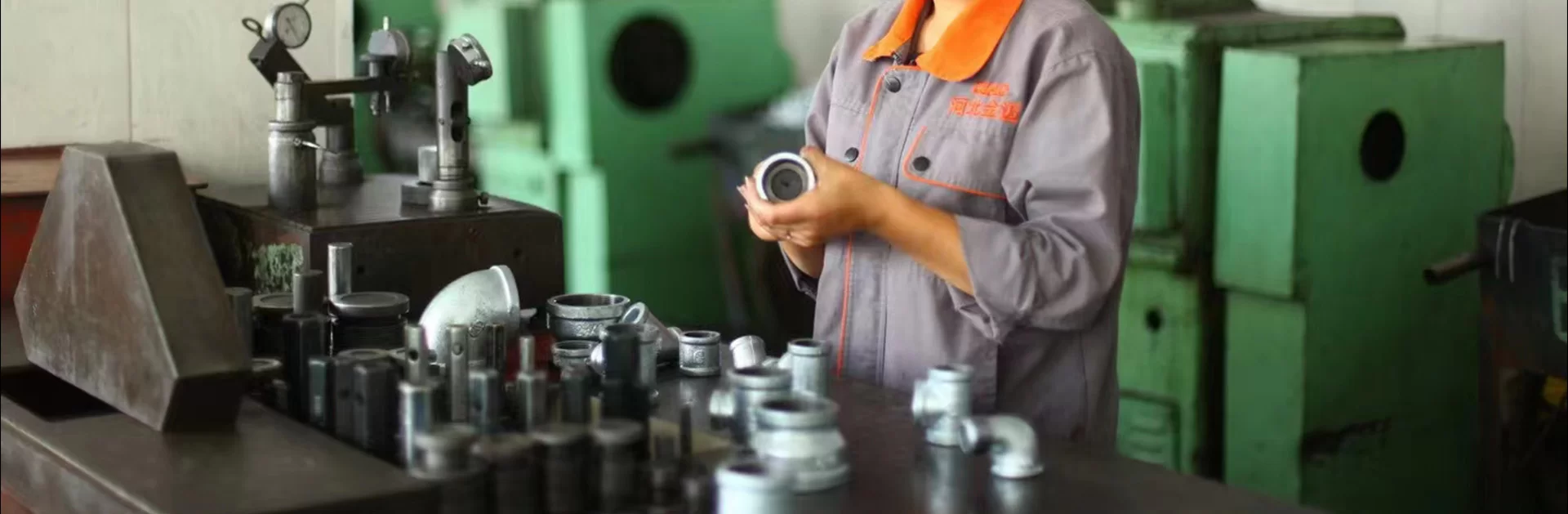

Ensuring the longevity of fluid transmission systems requires a strategic approach to component selection, particularly when dealing with corrosive environments. The integration of high-performance protective coatings on metallic fittings is not merely an additive feature but a fundamental necessity for maintaining system pressure and preventing premature failure. This guide examines the technical parameters and selection criteria essential for sourcing industrial-grade pipe connections that balance structural strength with surface resilience.
In heavy-duty industrial sectors, the transition from standard iron components to advanced electrophoretic or galvanized solutions addresses the critical problem of internal and external oxidation. For procurement officers and engineers, understanding the relationship between coating thickness, salt spray resistance, and fluid turbulence is key to reducing long-term operational costs. By focusing on the specific demands of chemical, marine, and HVAC systems, organizations can implement piping architectures that significantly extend maintenance cycles.
Readers will explore the engineering logic behind optimized curvature radii, the impact of C5-rated corrosion protection, and the rigorous testing protocols required for high-pressure safety. By analyzing the trade-offs between different surface treatments and material reinforcements, this article provides a technical framework for identifying suppliers capable of delivering zero-defect components. We will specifically analyze how precision machining and finite element analysis (FEA) contribute to the reliability of modern pipe fittings.
Industrial Standards for Protective Pipe Components
The reliability of industrial piping depends on the synergy between the base material and its protective layer. Malleable cast iron is frequently utilized due to its balance of ductility and strength; however, without advanced surface treatment, it remains susceptible to rapid degradation in humid or saline conditions. Modern industry standards now emphasize the shift toward full-immersion coatings, such as epoxy electrophoresis, which eliminate the "shadow effect" common in traditional spray-painting. When sourcing wholesale galvanized pipe fittings, the focus has evolved from simple zinc layers to complex multi-stage coating systems that include primers and PU topcoats to withstand extreme chemical exposure. This technical evolution is driven by the need for "fit-and-forget" installations in critical infrastructure where the cost of a single leak far outweighs the initial component investment. Consequently, the industry now prioritizes C5 corrosion ratings, ensuring that components can withstand salt spray tests exceeding 1200 hours, which is essential for marine and wastewater treatment environments.
Technical Evaluation of Corrosion-Resistant Fittings
Selecting a fitting requires a deep dive into the interaction between material science and fluid mechanics. The following analysis breaks down the seven critical dimensions of performance that define the value of a professional-grade piping component.
Surface Treatment Mechanisms
Electrophoretic coating differs from traditional galvanization by using an electric current to bond paint particles to the metal surface. This ensures a 360° full-immersion coverage, reaching the interior walls of the fitting where oxidation usually begins. A typical high-performance system consists of an epoxy primer and a PU topcoat, providing a consistent thickness of 40-50μm. This creates a non-porous barrier that isolates the malleable iron from corrosive media, achieving a C5 rating that is significantly superior to standard industrial coatings.
| Coating Type | Coverage Method | Corrosion Rating | Primary Benefit |
|---|---|---|---|
| Standard Galvanized | Dip/Spray | C2-C3 | Basic oxidation resistance |
| Epoxy Electrophoretic | Full Immersion | C5 | Internal & external sealing |
| PU Topcoat Hybrid | Multi-stage | C5+ | Enhanced UV and chemical resistance |
| Powder Coating | Electrostatic | C3-C4 | High impact resistance |
| Oil-coated Iron | Surface Dip | C1 | Short-term storage protection |
| Zinc-Nickel Alloy | Electroplating | C4 | High temperature stability |
Fluid Dynamic Efficiency
The geometry of a fitting directly affects the energy efficiency of a pumping system. A 45° "golden corner" design with a 1.5D curvature radius is engineered to maintain laminar flow and prevent the formation of eddies. Compared to traditional 90° elbows, this optimization can reduce pressure loss by up to 65%. By minimizing turbulence, the system experiences less internal erosion and lower energy consumption, which is critical for high-volume fluid transmission in HVAC and chemical plants.
Material Structural Integrity
Malleable cast iron provides the necessary impact resistance for industrial environments. To further enhance this, variable wall thickness technology—optimized through Finite Element Analysis (FEA)—is used to reinforce stress points. This ensures that the fitting can handle sudden pressure spikes without deformation. The resulting structural integrity allows for a higher safety margin, shifting the focus from mere compliance to long-term operational stability.
Pressure Bearing Capabilities
Standard working pressures for professional fittings are typically rated at 4.0MPa (PN40). However, the true quality of a manufacturer is revealed in the burst test. Utilizing reinforced casting techniques, high-grade elbows are often tested up to 7.2MPa to guarantee a safety factor that exceeds industry norms. This capacity is vital for systems transporting high-pressure fluids where a burst failure would lead to significant downtime or safety hazards.
Environmental Tolerance Limits
Operating temperature ranges are a critical constraint in material selection. High-performance malleable iron fittings are designed to operate reliably from -30℃ to 130℃. This wide thermal window ensures that the coating does not crack or peel during thermal expansion and contraction cycles. For marine applications, the combination of thermal stability and salt spray resistance prevents the "pitting" corrosion that typically plagues inferior metallic components.
Quality Validation Protocols
Zero-defect delivery is achieved through a multi-stage inspection process. Magnetic particle inspection (MPI) is used to detect internal structural flaws or porosity in the casting that are invisible to the naked eye. Additionally, Coordinate Measuring Machines (CMM) verify angle tolerances to within ±0.5°, ensuring a seamless fit during installation. This rigorous approach eliminates the risk of misalignment, which often causes stress concentrations and future leaks.
Procurement Specification Analysis
When evaluating suppliers, procurement teams should move beyond price-per-unit and look at the Total Cost of Ownership (TCO). Key specifications to verify include the actual salt spray test hours (e.g., ≥1200h for C5), the specific coating thickness (40-50μm), and the inner wall roughness (Ra ≤ 6.3μm). A supplier with a professional team and a large-scale facility (such as those exceeding 30,000 square meters) typically offers better consistency in batch production and more reliable quality control.
FAQ
Why is a 45° elbow preferred over a 90° elbow in fluid systems?
A 45° elbow creates a more gradual transition for the fluid, which significantly reduces turbulence and pressure loss—often by up to 65% compared to a 90° bend. This improved efficiency reduces the load on pumping equipment and decreases internal wear on the pipe walls, extending the overall lifecycle of the system.
What makes electrophoretic coating superior to standard galvanization?
Unlike standard galvanization, electrophoresis provides 360° full immersion coverage, ensuring that the interior of the fitting is as protected as the exterior. This achieves a C5 corrosion rating, which is essential for extreme environments like chemical plants or marine cabins where internal oxidation is a primary cause of failure.
How does the 1.5D curvature radius impact pipe performance?
The 1.5D optimized radius helps maintain laminar flow by preventing the formation of eddies and vortices that occur in tighter bends. This smooth flow path reduces friction and pressure drops, ensuring that the fluid reaches its destination with minimal energy loss and less impact on the fitting's internal coating.
What is the safety margin for the working pressure of these fittings?
The standard working pressure is 4.0MPa (PN40). However, to provide a robust safety margin, these components are typically tested to a burst pressure of 7.2MPa. This ensures that the fittings can safely handle unexpected pressure surges without risking a catastrophic rupture.
Can these fittings be used in extreme temperature environments?
Yes, these malleable iron fittings are engineered for temperatures ranging from -30℃ to 130℃. The combination of the base metal's properties and the thermal stability of the epoxy electrophoretic coating prevents degradation, making them suitable for both cryogenic and high-heat industrial applications.
What installation precautions prevent coating damage?
To preserve the integrity of the C5 protective layer, it is recommended to use nylon-coated wrenches during installation to avoid scratching the epoxy surface. Additionally, verifying that the medium flow direction aligns with the elbow's design will minimize internal turbulence and prolong the coating's life.
References and further reading
- ISO 12944: Corrosion protection of steel structures by protective paint systems - Classification of environments.
- ASTM A197/A197M: Standard Specification for Cupola-Malleable Iron Fittings.
- Fluid Mechanics Principles: Analysis of pressure drop in 45° vs 90° pipe bends.


