

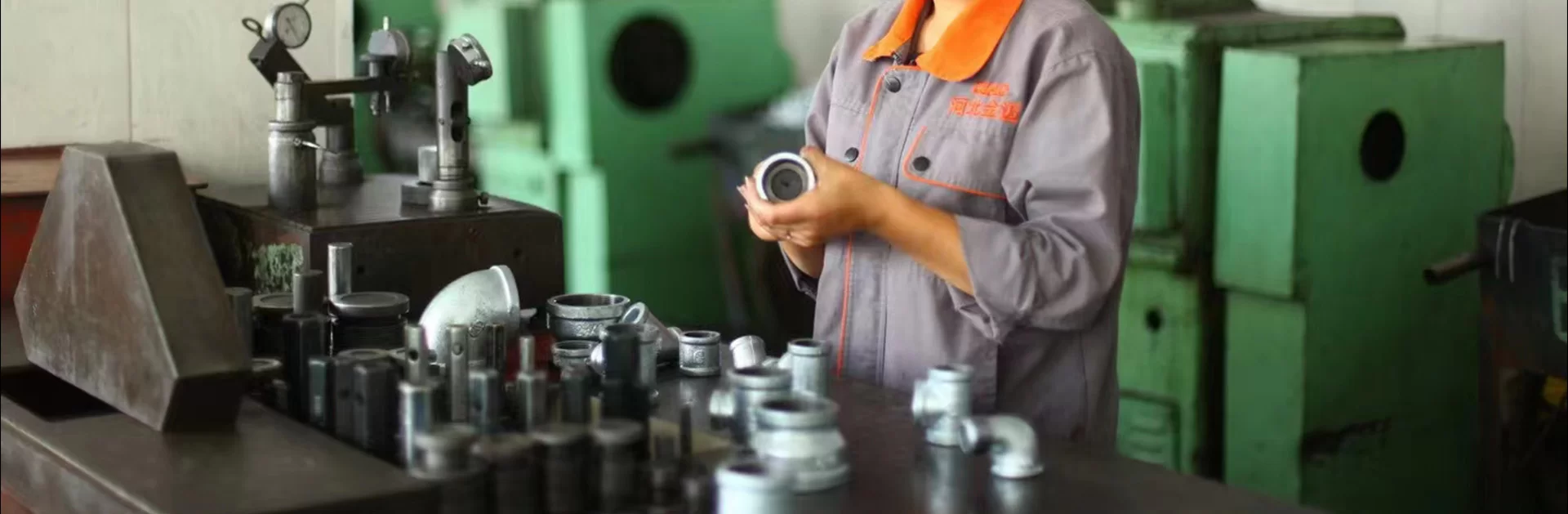

Ensuring a secure and efficient fluid transition in industrial piping requires components that balance structural strength with precise geometry. A China malleable iron pipe fitting provides a critical solution for diameter conversion and directional changes, offering superior ductility compared to standard cast iron. This article examines the technical specifications, material advantages, and procurement considerations essential for engineers and procurement managers selecting these components for high-pressure systems.
In B2B industrial environments, the choice of fitting can impact the entire lifecycle of a piping network, affecting everything from installation speed to long-term maintenance costs. Malleable iron, produced through a specific annealing process, eliminates the brittleness associated with gray iron, making it ideal for applications subject to vibration or moderate mechanical stress. Understanding the nuances of thread precision and galvanized coatings is vital for preventing system failures and ensuring compliance with international standards.
Readers will gain a comprehensive understanding of how to evaluate these fittings based on their internal taper optimization, surface treatment quality, and structural load capacity. By analyzing the relationship between material properties and application scenarios, this guide provides a technical framework for optimizing piping systems in water supply, drainage, and HVAC installations, while highlighting how manufacturing experience influences the reliability of the final product.
Malleable Iron Casting Fundamentals
Malleable iron is a specialized form of cast iron that has undergone a heat treatment process known as annealing. This transformation changes the microstructure of the metal, allowing it to withstand significant deformation without fracturing. For a China malleable iron pipe fitting, this property is essential because it allows the component to be tightened securely into a system without the risk of cracking under pressure. The manufacturing process typically involves casting white iron, which is then heated in a controlled atmosphere for several days to convert the iron carbides into temper carbon nodules.
From a technical perspective, this material is preferred over ductile iron in certain small-bore applications due to its excellent machinability and the ability to produce complex, thin-walled shapes with high precision. In the context of industrial distribution, these fittings are often used where a combination of strength and ease of installation is required. The ability to maintain tight tolerances on threads while providing a robust external shell makes these components a staple in building infrastructure and industrial piping. The result is a component that combines the cost-effectiveness of casting with the reliability of forged steel in many low-to-medium pressure scenarios.
Technical Procurement & Application Analysis
Selecting the correct fitting requires more than just matching the size; it involves an analysis of the fluid dynamics, environmental exposure, and mechanical requirements of the specific system. The following analysis breaks down the seven critical dimensions of fitting performance and selection.
Precision Diameter Transition Design
Effective diameter reduction is critical to avoid turbulence and pressure drops. High-quality reducing couplings utilize taper optimization on the inner walls to ensure a smooth transition of fluid. This reduces the risk of cavitation and erosion at the point of diameter change, which is particularly important when connecting valves or instruments of different specifications.
| Design Feature | Technical Requirement | Operational Impact | Evaluation Metric |
|---|---|---|---|
| Internal Taper | Smooth transition gradient | Reduced turbulence | Pressure drop (ΔP) |
| Thread Interface | Single/Double thread precision | Faster installation | Tolerance (mm) |
| Wall Thickness | Special thickened design | Higher pressure rating | Burst pressure |
| Symmetry | Balanced structural design | Flexible installation | Alignment accuracy |
| Thread Standard | National/International compliance | Universal compatibility | Gauge verification |
| Surface Finish | Low roughness interior | Minimized fluid friction | Ra value |
Structural Integrity & Load Bearing
The load-bearing capacity of a fitting is determined by the quality of the casting matrix. A dense, void-free malleable iron structure ensures that the component can handle the physical weight of the piping system and the internal hydraulic forces. This is especially critical in vertical piping runs where the fitting must support the weight of the pipes above it without distorting the threaded connections.
Corrosion Resistance & Surface Treatment
Environmental degradation is a primary cause of fitting failure. Full surface galvanized treatment is employed to create a protective zinc layer that resists oxidation and chemical corrosion. This is essential for components installed in damp basements, outdoor industrial sites, or HVAC systems where condensation is frequent, effectively extending the service life of the connection.
Leak-Proof Installation Mechanisms
Leakage often occurs due to poor thread machining or improper sealing. Precision-machined threads, when used with appropriate sealing materials, provide a robust barrier against fluid escape. Because these fittings require no welding, the risk of heat-affected zone (HAZ) failure is eliminated, allowing for a simpler and more reliable tightening process during field installation.
HVAC & Industrial Application Scenarios
These components excel in building water supply, drainage, and HVAC systems. Specifically, they are utilized where straight pipe connections require diameter conversion to interface with valves, sensors, or specialized equipment. Their ability to withstand the thermal cycling common in heating and cooling systems makes them more reliable than plastic alternatives in high-temperature environments.
Compatibility with Piping Materials
Malleable iron fittings are designed for universal compatibility with various pipe materials, including galvanized steel and black iron. The adherence to national standard tolerance requirements ensures that there is no gap or over-tightening during assembly, which maintains the integrity of the seal across different material batches and manufacturer sources.
Supplier Evaluation Criteria
When assessing a manufacturer, buyers should prioritize production scale and experience. For instance, a facility covering 40,000 square meters with decades of specialization indicates a capacity for consistent quality and large-volume stability. Verifying a supplier's export history to multiple countries often serves as a proxy for their ability to meet diverse international quality and threading standards.
FAQ
What is the primary difference between malleable iron and cast iron fittings?
The primary difference lies in the heat treatment. Standard cast iron is brittle and can crack under impact or excessive tightening. Malleable iron undergoes an annealing process that creates a more flexible, ductile structure, allowing the fittings to withstand mechanical stress and vibration without fracturing, which is critical for secure threaded joints.
How does galvanization improve the lifespan of these fittings?
Galvanization applies a layer of zinc to the iron surface. This layer acts as a sacrificial anode, meaning the zinc corrodes instead of the underlying iron. This is essential for fittings used in water supply and drainage systems where exposure to oxygen and moisture would otherwise cause rapid oxidation and eventual leakage.
Can these fittings be used in high-pressure industrial pipelines?
They are highly suitable for medium-pressure industrial applications. While not intended for extreme high-pressure oil and gas transmission, their thickened design and high-strength matrix make them ideal for HVAC, industrial water lines, and building utilities. Always verify the specific pressure rating of the fitting against your system requirements.
What should I look for to ensure a leak-proof installation?
Buyers should check for precision-machined threads and a lack of casting defects (such as blowholes) on the surface. During installation, the use of high-quality sealing tape or compound is necessary. Because these fittings are symmetrical and precisely threaded, they allow for flexible installation directions while maintaining a tight seal.
Why is internal taper optimization important for reducing couplings?
When fluid moves from a larger pipe to a smaller one, any abrupt change in diameter creates turbulence and pressure loss. Internal taper optimization smooths this transition, maintaining laminar flow. This reduces wear on the fitting and prevents energy loss in the pumping system, improving overall operational efficiency.
How do I evaluate the reliability of a large-scale manufacturer?
Look for indicators of institutional experience, such as the number of years in operation, total factory area, and global reach. A company that has supplied components to over 50 countries and employs a professional team of hundreds suggests a mature quality control system capable of meeting diverse international standards consistently.
References and further reading
- International Standards for Malleable Iron Casting - Material Specifications and Testing.
- Fluid Dynamics in Piping Systems: Impact of Transition Geometry on Pressure Loss.
- Industrial Galvanization Guidelines for Corrosion Protection in HVAC Systems.
Related Articles


