

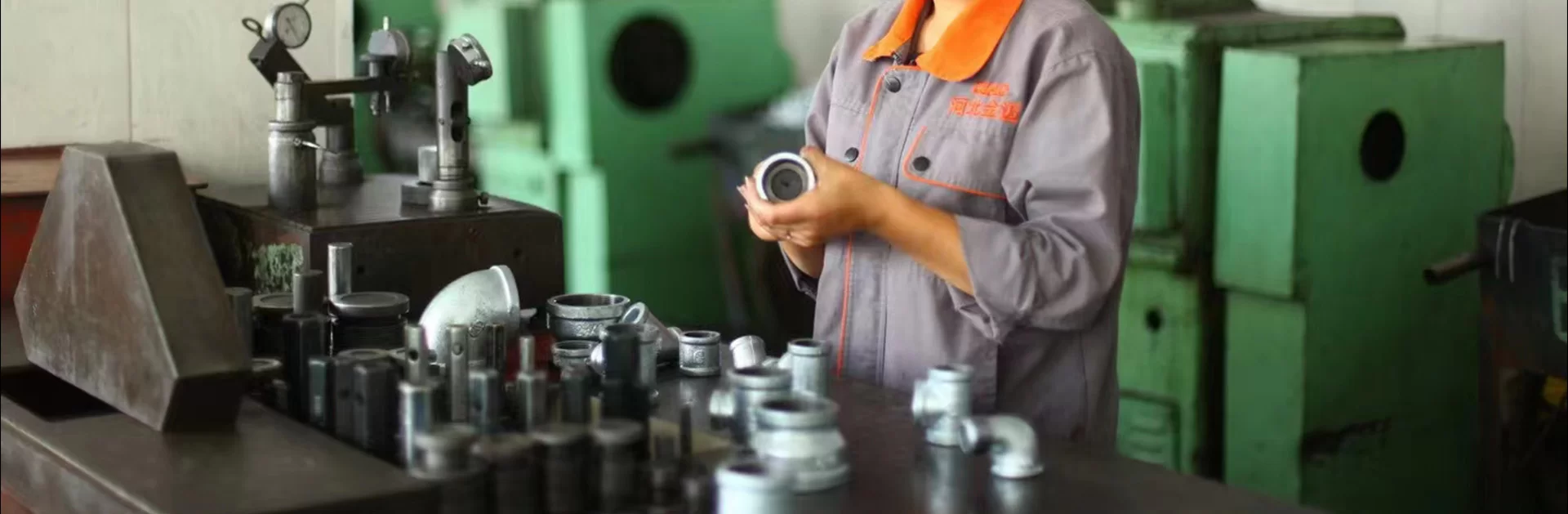

The selection of piping components is a critical decision in industrial infrastructure, where the balance between structural toughness and corrosion resistance determines the system's operational lifespan. For engineers and procurement officers, identifying high-performance China galvanized pipes and fittings requires an understanding of both material science and the environmental stressors the system will face. This article examines the technical advantages of malleable iron and hot-dip galvanization in modern fluid transport.
In B2B procurement, the focus has shifted from simple cost-per-unit to the Total Cost of Ownership (TCO). Leak-proof performance and the reduction of installation downtime are now primary drivers. By utilizing integral casting processes that eliminate the need for welding, industrial operators can significantly mitigate the risk of joint failure, which is the most common point of leakage in HVAC, fire protection, and water supply systems.
Readers will explore the specific technical criteria used to evaluate malleable iron fittings, the chemistry of sacrificial zinc coatings, and the practical implications of adhering to national threading standards. By the end of this analysis, project managers will have a clear framework for choosing components that ensure mechanical stability while minimizing long-term maintenance expenditures in demanding industrial environments.
Technical Fundamentals of Galvanized Piping Systems
At the core of industrial piping is the requirement for materials that can withstand both internal fluid pressure and external environmental degradation. Galvanized piping systems rely on the synergy between a robust metallic base—typically malleable iron or steel—and a protective zinc layer. Malleable iron is produced by heat-treating cast iron to remove carbon and rearrange the graphite structure, transforming a brittle material into one with high toughness and ductility. This property is essential for fittings that must endure vibration, thermal expansion, and mechanical impact without fracturing.
The galvanization process, specifically hot-dip galvanizing, involves immersing the iron components in molten zinc. This creates a metallurgical bond rather than a simple surface coating. The resulting zinc-iron alloy layers provide a dual mechanism of protection: a physical barrier that prevents moisture and oxygen from reaching the base metal, and cathodic protection, where the zinc acts as a sacrificial anode. In an industrial setting, this prevents the "pitting" corrosion that typically plagues untreated ferrous components, ensuring that the structural integrity of the connection remains intact over decades of service.
Industrial Procurement and Performance Evaluation
When evaluating suppliers, technical specifications must outweigh marketing claims. The transition from standard cast iron to premium malleable iron involves a significant leap in safety and reliability. The following analysis breaks down the seven critical dimensions that determine the suitability of these components for large-scale industrial projects.
Material Integrity and Malleable Iron
Malleable iron is engineered for high-stress environments where standard cast iron would fail due to brittleness. Its increased ductility allows the fittings to absorb energy and resist cracking under pressure surges. From a procurement perspective, ensuring the material grade is specifically "high-strength malleable iron" is the first step in avoiding catastrophic system failure in fire protection or high-pressure water lines.
| Material Type | Mechanical Property | Risk Factor | Recommended Use |
|---|---|---|---|
| Standard Cast Iron | High Brittleness | Cracking under impact | Low-pressure drainage |
| Malleable Iron | High Toughness | Minimal | High-pressure HVAC |
| Galvanized Steel | High Tensile Strength | Surface rust if scratched | Main supply lines |
| Wrought Iron | Moderate Ductility | Difficult to cast complex shapes | Legacy replacements |
| Electrophoretic Finish | Aesthetic/Light Corrosion | Lower barrier thickness | Indoor decorative piping |
| Hot-Dip Zinc | Sacrificial Protection | Zinc depletion over decades | Harsh industrial zones |
Corrosion Resistance via Hot-Dip Galvanizing
The effectiveness of a galvanized coating is measured by its thickness and uniformity. Hot-dip galvanizing is superior to electro-galvanizing because it creates a thicker layer that is more resistant to abrasion. In humid or chemically aggressive environments, this coating ensures that the iron fitting does not oxidize, preventing the buildup of rust scale inside the pipe, which would otherwise restrict fluid flow and increase pump energy consumption.
Integral Casting vs. Welding Processes
Traditional piping often requires welding to join complex sections, introducing potential weak points and requiring expensive X-ray testing for quality assurance. Integral casting produces a one-piece construction that is inherently more stable. By eliminating weld seams, the risk of stress-corrosion cracking is virtually removed, providing a leak-proof solution that reduces the need for frequent inspections and emergency repairs.
Threading Standards and Interchangeability
Interchangeability is a major operational requirement for B2B buyers. Fittings must adhere to strict national or international threading standards to ensure they fit seamlessly with externally threaded pipes. The use of "Go/No-Go" gauges during the manufacturing process is the only reliable way to verify that internal threads are precise, preventing cross-threading and ensuring a tight, mechanical seal without excessive sealant.
Application in High-Pressure Environments
In fire protection and industrial water systems, the ability to withstand pressure spikes is non-negotiable. Malleable iron fittings are pressure-tested to ensure they can handle the maximum operational loads of the system. Their symmetrical design distributes stress evenly across the fitting body, preventing the localized deformation that often leads to slow leaks in inferior components.
Installation Efficiency and Labor Costs
Labor is one of the highest costs in piping installation. Screw-on malleable iron fittings allow for rapid deployment using standard wrenches, bypassing the need for certified welders and the time-consuming process of joint preparation. This acceleration of the construction timeline can significantly reduce the overall project budget while maintaining a high standard of structural integrity.
Lifecycle Maintenance and Durability
The long-term value of galvanized malleable iron lies in its low maintenance requirements. Because the material is resistant to impact and the coating is resistant to rust, the interval between system overhauls is extended. This durability is particularly valuable in inaccessible locations, such as ceiling-mounted HVAC lines or underground utility conduits, where replacement costs are exponentially higher than the initial purchase price.
FAQ
Why is malleable iron preferred over standard cast iron for fittings?
Malleable iron undergoes a specific heat treatment process that reduces the brittleness associated with standard cast iron. This increases the material's toughness and ductility, making it far more resistant to mechanical impact and high-pressure surges, which prevents the sudden cracking often seen in standard cast iron components.
What is the primary advantage of hot-dip galvanizing for industrial pipes?
Hot-dip galvanizing creates a thick, chemically bonded zinc coating that provides both a physical barrier and cathodic protection. This ensures that the base iron is protected from rust and corrosion even in humid or chemically aggressive industrial environments, significantly extending the lifespan of the piping system.
How do I ensure that the fittings will be compatible with my existing pipes?
Compatibility is ensured by verifying that the fittings are manufactured to national pipe fitting standards. You should request confirmation that the supplier uses Go/No-Go gauges for thread inspection, which guarantees that the internal threads will match standard externally threaded pipes without gaps or misalignment.
Are these fittings suitable for fire protection systems?
Yes. Because they are pressure-tested for stability and manufactured from high-strength malleable iron, these fittings provide the necessary reliability and structural integrity required for high-pressure fire protection, HVAC, and industrial water pipelines.
What is the difference between galvanized and electrophoresis finishes?
Galvanized fittings use a thick zinc layer for heavy-duty corrosion resistance in harsh environments. Electrophoresis provides a more uniform and decorative finish, which is ideal for environments requiring specific industrial aesthetics or where only light corrosion protection is needed.
Do these fittings require specialized tools for installation?
No specialized tools are required. Due to the standard internal thread design, basic wrenches are sufficient to tighten the fittings onto threaded pipes. This simplicity reduces labor costs and allows for rapid deployment without the need for welding equipment.
References and further reading
- International Standards for Malleable Iron Pipe Fittings - Material Grade and Pressure Testing Guidelines.
- Industrial Coating Handbook: The Chemistry of Hot-Dip Galvanizing and Cathodic Protection.
- HVAC Engineering Manual: Fluid Dynamics and Connection Stability in High-Pressure Systems.


