
Material Selection Guide for Malleable Iron Pipe Fittings

Industrial piping design depends fundamentally on material selection when confronting extreme structural and thermal loads. Premium Malleable Iron is deployed across building water supply, high-pressure HVAC, fire protection, and municipal water supply where reliable mechanical ductility under operational stress is required. Unverified factory claims frequently obscure the underlying realities of fluid dynamics and thermal expansion within large-scale installations. Comprehensive material evaluation must prioritize verifiable physical performance and environmental site conditions above superficial marketing narratives.
Mechanical ductility determines whether a piping network absorbs hydraulic shocks or suffers catastrophic brittle failure. Operating parameters inside high-pressure systems demand raw materials capable of withstanding continuous stress cycles without fracture. Procurement decisions guided by rigorous technical criteria protect facility integrity far better than unverified manufacturer assertions.
Industrial Application Scenarios for Premium Malleable Iron
Building water supply networks and high-pressure HVAC installations depend on structural components that maintain dimensional stability under continuous fluid force.
Operational Demands in Municipal and Fire Networks
Rigid performance criteria govern both fire protection systems and municipal water supply networks, requiring assemblies that withstand sudden pressure differentials without structural compromise.
Heavy fire fighting systems and municipal distribution lines rely on components capable of enduring severe hydraulic shock.
Specific performance data regarding maximum operating thresholds remains to be confirmed with the supplier based on project-level volumetric requirements and fluid temperatures.
Mechanical Ductility and Stress Absorption
Material flexibility governs whether a piping layout absorbs severe mechanical shocks or undergoes catastrophic brittle fracture during operational pressure spikes.
Heavy industrial manufacturing plants require this specific material behavior to maintain joint integrity when thermal expansion and mechanical vibration occur simultaneously.
Procurement teams evaluate these performance boundaries directly against site specifications to verify that selected components match the intended physical environment.
Surface Treatment and Atmospheric Corrosion Prevention
Mitigating Environmental Degradation During Transit and Storage
Surface treatment selection dictates whether heavy industrial installations suffer premature degradation during transit and long-term outdoor staging.
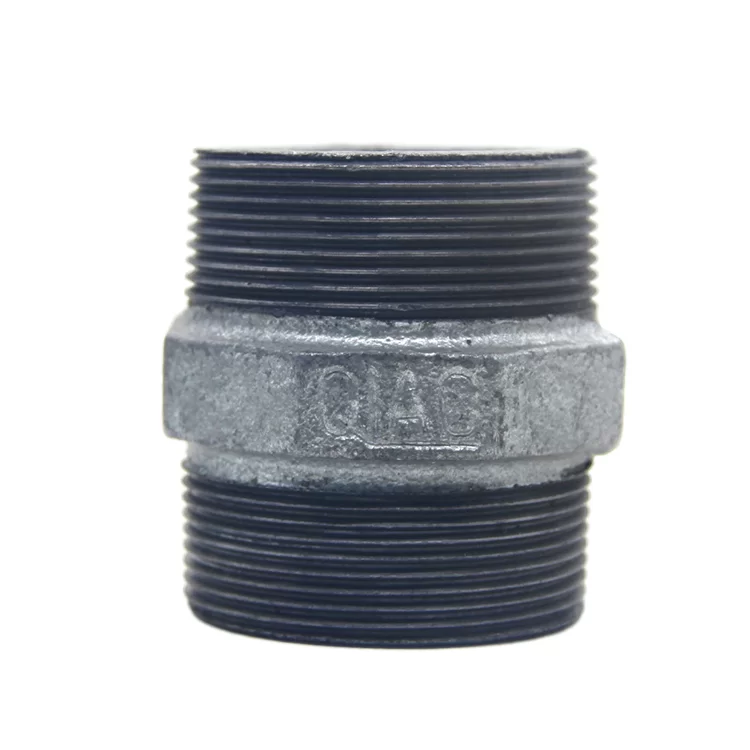
Black finishes offer basic protection against immediate handling damage while components await final integration inside controlled facility environments. However, installations subjected to continuous moisture require more robust barriers.

Hot-Dipped Galvanized Deployments in Industrial Yards
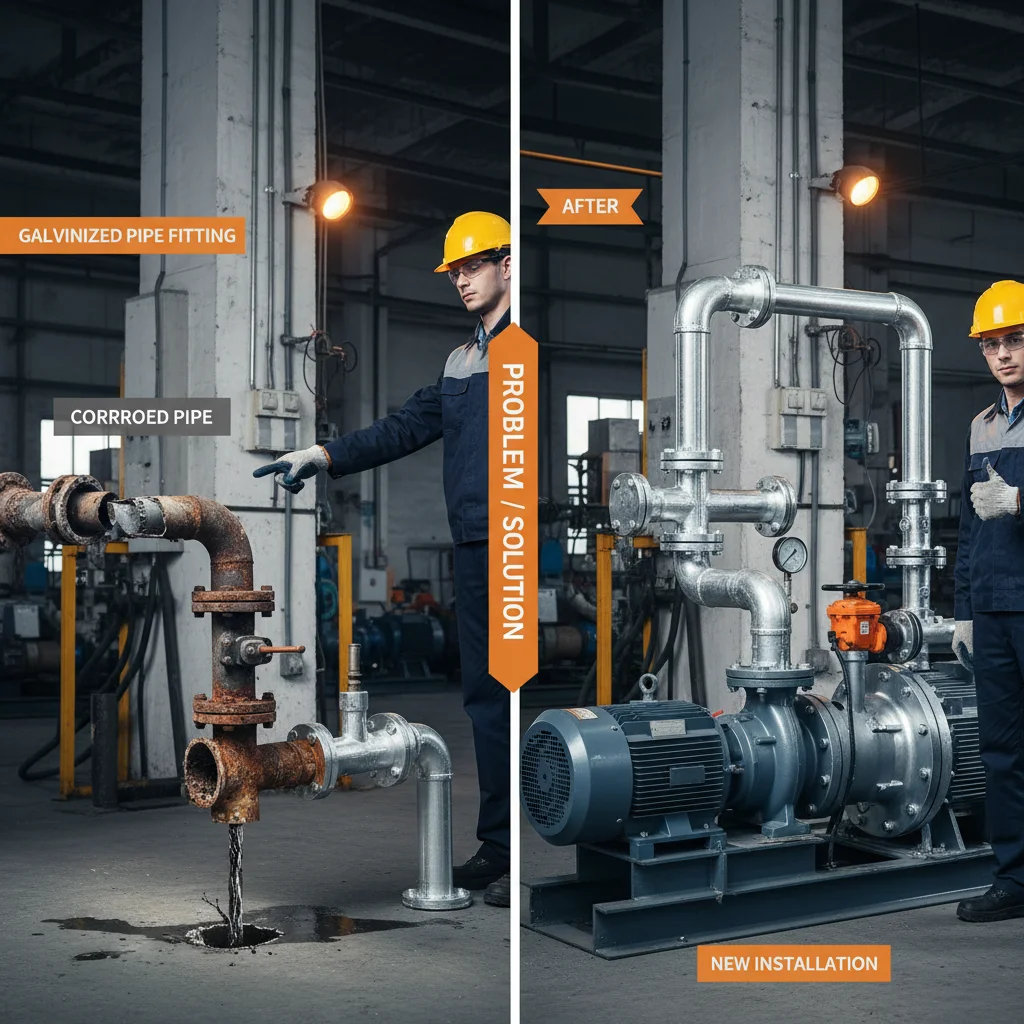
Hot-dipped galvanized treatments create a metallurgical bond that shields components from aggressive atmospheric oxidation during extended maritime shipping and open-air yard staging. Procurement teams managing heavy industrial plants must weigh ambient humidity levels against baseline coating costs to prevent localized pitting before operational startup.
| material | application | industry | Moisture Exposure Note |
|---|---|---|---|
| Premium Malleable Iron | building water supply and drainage | building water supply | Requires supplementary coating for prolonged outdoor exposure |
| Premium Malleable Iron | high-pressure HVAC engineering | high-pressure HVAC engineering | Requires moisture evaluation based on facility location and transit duration |
| Premium Malleable Iron | heavy industrial manufacturing plants | heavy industrial manufacturing plants | Suitable for humid conditions without immediate secondary treatment |
Logistical Safeguards for Warehousing and Staging
Unprotected metal surfaces degrade rapidly when exposed to industrial fallout and coastal humidity, making proper coating selection a primary factor for asset longevity. Operators eliminate costly premature replacements by specifying exterior treatments tailored strictly to local weather patterns.
Logistical planning must account for maritime transport humidity and extended port staging periods before installation takes place.
Aligning Material Choice with Site Operating Conditions
Global Network Compatibility
Procurement engineers must evaluate compatibility with global piping networks by aligning material choice with specific site conditions rather than relying on unverified factory claims. System integration depends on verifying dimensional tolerances and thread configurations against legacy infrastructure found in overseas municipal water supply installations.
Foreign project sites often feature mixed metallic lines, making precise thread compatibility a critical factor to prevent fluid leakage during high-pressure cycles. Material ductility dictates how well threaded joints absorb residual mechanical stress when connected to rigid structural supports.
Operating Pressure Verification
Anchor technical inquiries in actual operating pressures rather than unverified claims when specifying assemblies for heavy industrial manufacturing plants and building water supply networks. Fluid velocity and temperature extremes govern whether the selected grade maintains structural stability under sustained mechanical load.
System designers must cross-reference maximum hydraulic thresholds against project-specific flow requirements. Sourcing teams prioritize verified mechanical performance over ambiguous supplier brochures, ensuring that piping networks withstand transient pressure spikes without joint separation.
High-Pressure Deployment Strategies
Quality assurance protocols require direct verification of thermal annealing quality and mechanical ductility under operational stress. Facility operators protect critical infrastructure by demanding documentation that reflects actual site load conditions rather than idealized laboratory metrics.
When deploying components in heavy industrial plants, procurement teams weigh material resilience against potential hydraulic shock. Sourcing decisions ultimately depend on specific project variables such as volumetric flow demands, fluid temperature ranges, and destination port logistics.
Thread Integrity and Thermal Annealing Quality
Thermal Annealing and Brittle Fracture Control
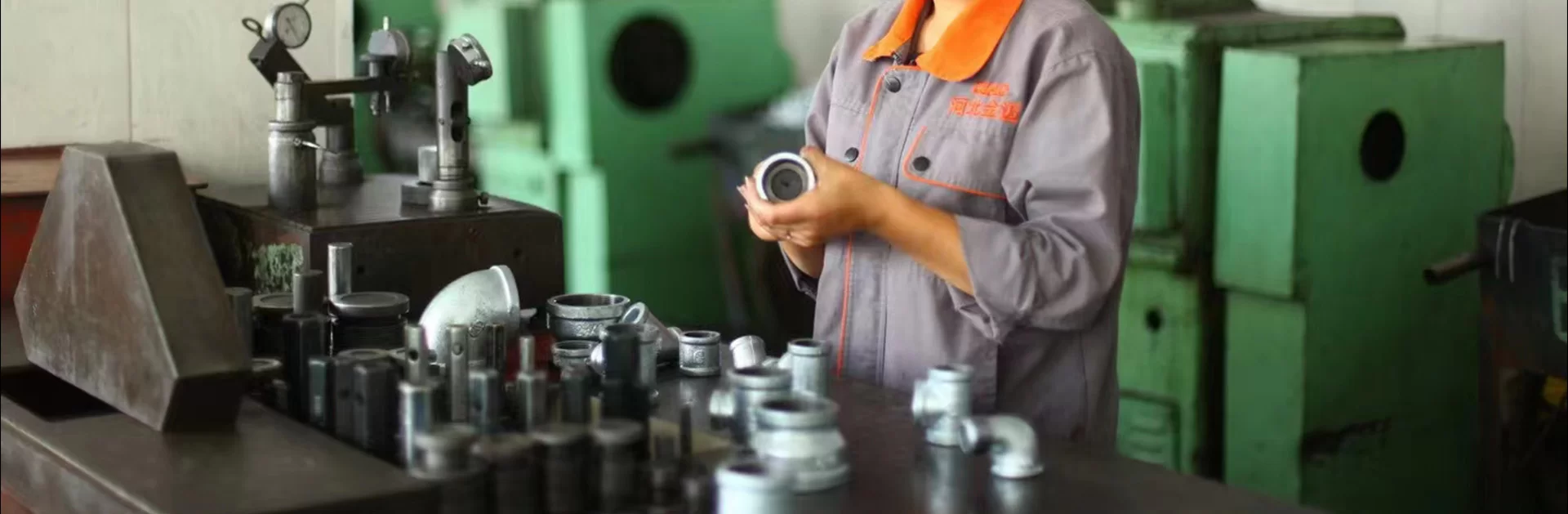
Thermal annealing processes alter microcrystalline structures to eliminate internal casting stresses, directly preventing brittle fracture when iron elements encounter thermal shock. Controlled cooling cycles govern the transition phase, ensuring that the finished molecular matrix retains high elasticity under heavy loads. Pipe networks subject to thermal fluctuations rely entirely on this metallurgical stabilization to avoid catastrophic splitting during sudden temperature shifts.
Without sufficient thermal soaking time, internal stresses remain locked within the casting wall, leaving the component vulnerable to sudden shattering under minimal mechanical impact. Depending on furnace temperature profiles and quenching duration, unannealed iron exhibits high hardness paired with zero forgiveness against stress concentrations. Operational safety parameters dictate that every production batch must undergo precise thermal cycling before deployment in critical infrastructure.
Thread Integrity and Cyclic Pressure Endurance
Thread geometry and precision machining depth determine whether a threaded connection maintains structural seal integrity during continuous pressure cycles. Consistent pitch tolerances prevent stress localization along the helical flanks, stopping micro-fractures from propagating through the fitting wall. Continuous pulsation within fluid conduits tests the thread interface constantly, requiring exact dimensional accuracy to distribute mechanical forces evenly across the entire engagement length.
Loose tolerances or irregular thread depths create localized stress risers, accelerating joint degradation whenever fluid pressure oscillates rapidly. Maintenance logs frequently trace leakage events back to poorly cut threads that flex under continuous operating strain rather than gripping uniformly. Sourcing teams evaluate thread profile uniformity to ensure that installed junctions withstand long-term vibrational fatigue without loosening.

Mechanical Behavior During Sudden Water Hammer Events
Rapid valve closures generate severe hydraulic shock waves, forcing connected pipe fittings to absorb instantaneous pressure spikes far exceeding normal operating levels. Premium malleable iron responds to these dynamic surges by flexing microscopically without fracturing, converting kinetic shock energy into minor elastic deformation. This inherent elasticity protects rigid system infrastructure from catastrophic rupture when unexpected flow blockages occur upstream.
Rigid materials lacking ductile energy absorption capabilities crack instantly when subjected to extreme water hammer events. Facility operators rely on the specific deformation capacity of ductile iron components to isolate shock waves and preserve adjacent valve assemblies. Depending on flow velocity and pipe diameter, the magnitude of hydraulic shock dictates the precise mechanical strain imposed on every junction.
Logistical Planning and Bulk Transport Risk Management
Freight Parameters and Maritime Logistics Variables
Heavy iron fittings generate substantial cargo weight and high density, requiring careful attention to stowage factors during ocean transit. Vessel operators restrict deadweight tonnages per hold based on vessel stability and hull stress limits. Bulk orders of heavy industrial components demand precise coordination of container stuffing plans to prevent deck collapse or localized hull deformation.

Managing Handling Losses in Bulk Supply Chains
Rigid handling protocols directly minimize loss rates for high-density metallic cargo during port operations. Terminal handling equipment and crane lifting speeds must accommodate extreme mass concentration without damaging export packaging. Unforeseen port congestion and rough sea states increase dynamic loads on palletized cargo, making sturdy strapping and rust-inhibitive wrapping mandatory for heavy industrial plants importing overseas batches.
Scheduling Delivery Based on Project Site Parameters
Comprehensive procurement schedules must account for seasonal freight rate volatility, weather routing delays, and final inland trucking distances from the destination port to the operating site. Bulk iron orders distributed across multiple vessel departures reduce supply chain vulnerability compared to single-shipment strategies. Total landed costs fluctuate depending on container weight restrictions and project volume requirements determined by final site delivery targets.
Procurement Strategy and Specification Verification
Synthesizing Performance Metrics for Technical Evaluation
Engineering evaluations depend on correlating mechanical ductility with surface finish requirements before finalizing procurement schedules. When examining components destined for active fluid networks, technical teams analyze how thermal annealing quality interacts with continuous pressure cycles. Operating thresholds vary directly depending on the designated target port, the requested volume tier, and the specific installation environment.
Empirical oversight requires matching factory specifications against verifiable site demands rather than accepting generalized marketing descriptions. Experienced buyers establish verification workflows that cross-reference surface treatment methods with atmospheric exposure risks during transit and temporary storage. This analytical alignment prevents premature joint degradation across heavy industrial manufacturing plants.
Framework for Verifying Factory Specifications
Systematic verification protocols guide purchasing departments through the complex parameters governing threaded malleable iron assemblies. Technical inquiries must be structured around specific physical phenomena and operating pressures rather than unsupported factory assertions. Rigorous compliance frameworks support long-term infrastructural reliability under active service loads.
| Application Domain | Primary Stress Factor | Moisture Exposure Note |
|---|---|---|
| Building Water Supply | Continuous fluid force | Requires supplementary coating for prolonged outdoor exposure |
| High-Pressure HVAC | Thermal expansion cycles | Standard finish acceptable for indoor conditioned spaces |
| Fire Protection Systems | Sudden pressure differentials | Black finish adequate for enclosed sprinkler rooms |
| Municipal Water Networks | Hydraulic shock events | Hot-dipped galvanized option recommended for buried layouts |
Mitigating Procurement Risks in Complex Networks
Eliminating unverified documentation from purchasing workflows safeguards critical infrastructure against unexpected structural failures. Technical teams audit factory output by demanding direct empirical evidence of thread integrity and mechanical ductility before commercial agreements are locked. Documenting these operational variables ensures that delivered components match intended physical loads across municipal and industrial installations.
Frequently Asked Questions
Surface treatments prevent atmospheric corrosion during transit and storage stages across logistics channels. Material selection depends on environmental exposure levels, where prolonged outdoor storage requires supplementary protective layers to maintain surface integrity.
Technical evaluation requires aligning material choices with actual site operating pressures rather than relying on unverified claims. Sourcing leads cross-reference dimensional standards and fluid dynamics requirements against project-specific layout demands.
Thermal annealing affects structural behavior under stress and prevents joint failure during water hammer events. Engineers assess these mechanical properties to ensure the fittings withstand continuous fluid force without undergoing brittle fracture.
Bulk shipments of iron fittings involve standard maritime transit factors and handling loss rates that vary by destination port and order volume. Sourcing schedules must account for shipping durations and port handling conditions to avoid installation delays.
Installations across building water supply and high-pressure HVAC engineering utilize these components to handle active operational stress. Municipal water networks and heavy industrial manufacturing plants similarly rely on these fittings for structural reliability.
Conclusion
Auditing active procurement files prevents costly post-installation failures in complex municipal and industrial networks. Engineering teams must systematically review material ductility metrics, thermal annealing records, and protective surface finishes against the specific demands of each project site.
Project requirements dictate whether selected fittings match environmental stress levels. Dimensional specifications and exact order volumes remain dependent on destination port parameters, regional distribution logistics, and the specific volume tiers required by the destination facility.