


Industrial piping networks require a delicate balance between structural integrity and budgetary constraints. When engineers search for discount black pipe fittings, the objective is rarely just the lowest price, but rather the optimization of "cost-per-lifecycle." Understanding the metallurgical properties of malleable iron is essential to ensure that reduced procurement costs do not lead to premature system failure or expensive leak-related downtime.
In the context of B2B procurement, "discount" options often vary wildly in quality. From HVAC interfaces to high-pressure fire protection networks, the choice of fitting material directly impacts the fluid dynamics and safety of the entire installation. The transition from standard cast iron to toughened malleable iron represents a significant jump in impact resistance and durability, making it the preferred choice for demanding industrial environments.
This guide provides a technical framework for evaluating high-performance piping components. Readers will learn how to distinguish between material grades, the importance of hot-dip galvanization in extending service life, and the specific criteria needed to evaluate a supplier's manufacturing capacity to ensure consistency across bulk shipments.
Value Engineering in Industrial Piping
Value engineering in the piping industry involves analyzing the function of every component to maximize performance while minimizing unnecessary costs. For black pipe fittings, this means focusing on the annealing process of malleable iron. Unlike grey cast iron, which is brittle and prone to cracking under stress, malleable iron undergoes specialized heat treatment to remove carbon clusters. This results in a material that can withstand significant mechanical shock and high internal pressures. By sourcing precision-cast components, project managers can reduce the need for expensive over-specification—using exactly the right material for the required pressure rating rather than defaulting to more expensive alloys where they aren't needed. This strategic approach allows for a reduction in total project expenditure without compromising the safety margins of the industrial network.
Procurement Guide for Malleable Iron Components
Procuring bulk piping components requires a rigorous assessment of technical specifications and manufacturer reliability. The following dimensions are critical for ensuring that discounted procurement does not compromise operational stability.
Material Property Analysis
The core value of a fitting lies in its metallurgical composition. High-strength malleable iron provides the necessary ductility to prevent sudden fractures. When comparing materials, it is essential to evaluate the impact resistance and the wall thickness, which determine the fitting's ability to handle pressure surges without deformation.
| Material Type | Mechanical Property | Typical Risk | Best Application |
|---|---|---|---|
| Standard Cast Iron | Brittle / Low Ductility | Cracking under impact | Low-pressure drainage |
| Malleable Iron | High Impact Resistance | Surface oxidation if uncoated | Industrial water/gas |
| Galvanized Iron | Corrosion Resistant | Coating peel-off if low quality | HVAC / Fire Protection |
| Carbon Steel | Very High Strength | High susceptibility to rust | Extreme high-pressure |
| Stainless Steel | Excellent Corrosion Resistance | High procurement cost | Chemical processing |
| Alloy Steel | Specialized Performance | Difficult installation | Extreme temperatures |
Precision Threading Standards
The reliability of a screw-in connection depends entirely on thread precision. Fittings must adhere to National or ISO standards to ensure full interchangeability. Precision-machined threads allow for rapid installation and a tighter seal, reducing the reliance on excessive sealant and minimizing the risk of cross-threading during bulk assembly.
Galvanization and Corrosion Life
To combat oxidation in humid or industrial environments, hot-dip galvanization is the industry benchmark. Unlike cold galvanizing, the hot-dip process creates a metallurgical bond between the zinc and the iron. This thick coating provides a sacrificial anode layer, ensuring that the structural iron remains intact even if the surface is scratched during installation.
Fluid Dynamic Optimization
Internal wall smoothness is a frequently overlooked factor in piping efficiency. Fittings with a smooth fluid-dynamic finish and optimized diameter transitions significantly reduce turbulence. This minimization of pressure loss means that pumps operate more efficiently, leading to lower energy costs over the system's operational lifecycle.
Application-Specific Selection
Different environments dictate different fitting priorities. In fire protection networks, pressure resistance is the primary driver. In HVAC systems, corrosion resistance and ease of installation are paramount. Selecting fittings based on these specific operational requirements prevents the common mistake of using under-specified components in high-stress zones.
Installation Efficiency Factors
Labor costs often exceed material costs in large-scale piping projects. Compact designs and precision-engineered threads facilitate faster installation in tight spaces. Using components that do not require specialized heavy tools for basic assembly can significantly shorten project timelines and reduce the overall cost of implementation.
Supplier Capability Assessment
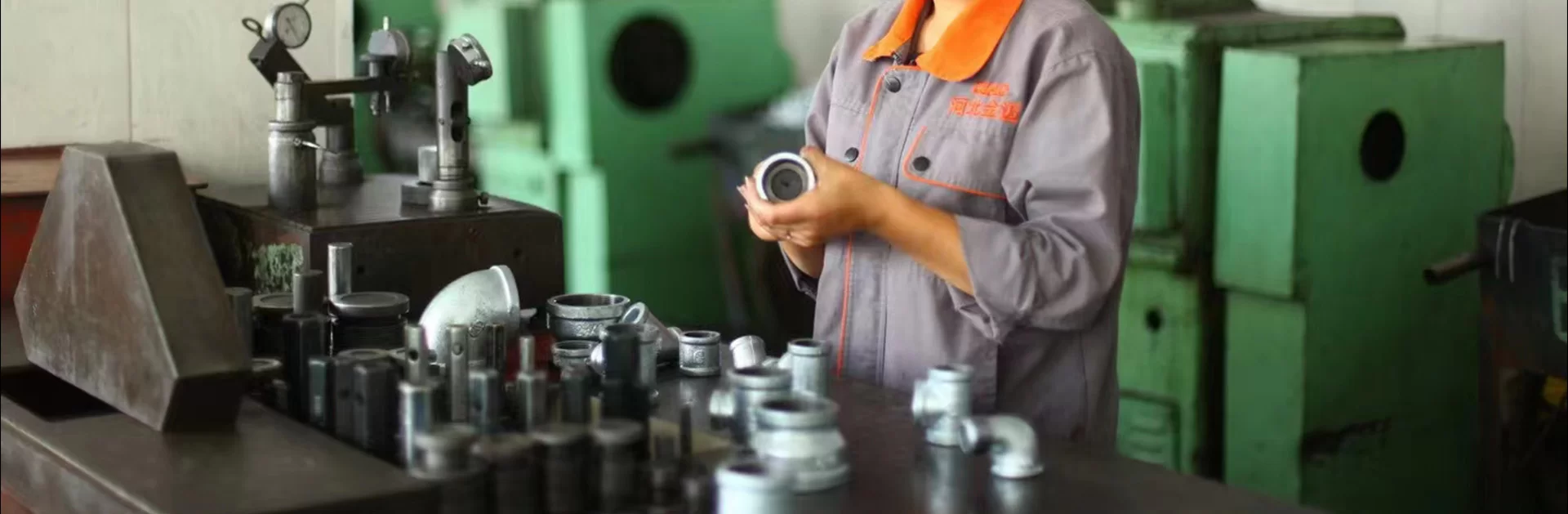
A reliable supplier should demonstrate integrated quality control. Key indicators include automated pressure testing and dimensional accuracy auditing. HEBEI JINMAI CASTING Co., Ltd. leverages decades of experience and a 36,000 square meter facility to maintain these standards, ensuring that bulk orders are consistent across thousands of units.
FAQ
What is the primary technical difference between malleable iron and grey cast iron?
The primary difference is the annealing process. Malleable iron is heat-treated to transform the brittle graphite flakes of grey iron into tempered nodules. This change significantly increases the material's ductility and impact strength, allowing it to handle high pressures and mechanical shocks that would cause grey iron to shatter.
How does hot-dip galvanizing extend the life of pipe fittings?
Hot-dip galvanizing submerges the fitting in molten zinc, creating a thick, chemically bonded layer. This layer acts as a physical barrier against moisture and oxygen and provides cathodic protection; the zinc corrodes preferentially to the iron, preventing rust from penetrating the structural wall of the fitting even in corrosive industrial climates.
Are these fittings suitable for fire protection systems?
Yes, they are highly suitable. Due to their high pressure resistance and structural stability, malleable iron fittings are often used in fire protection pipeline renovations and diameter conversions. Their ability to maintain a leak-proof seal under high pressure makes them a safe choice for critical safety infrastructure.
What should I check to ensure a leak-proof threaded connection?
Beyond ensuring the threads meet ISO or National standards, users should utilize high-quality sealing materials such as PTFE tape or specialized pipe sealants. While precision threads provide the mechanical fit, the sealant fills the microscopic gaps between the male and female threads to ensure a 100% airtight and watertight seal.
How can I evaluate if a supplier can handle large-scale B2B orders?
Evaluate the supplier's production scale, their quality assurance protocols, and their export history. A manufacturer with a large facility (e.g., over 30,000 square meters), a professional team, and experience shipping to dozens of countries is more likely to maintain dimensional consistency and meet delivery deadlines for bulk shipments.
Why is internal wall smoothness important for industrial piping?
Rough internal walls create turbulence and friction, which lead to pressure drops across the system. By using fittings with a smooth fluid-dynamic finish, the energy required to move fluids is reduced. This increases the overall efficiency of the piping network and reduces the wear and tear on pumping equipment.
References and further reading
- International Organization for Standardization (ISO) - Pipe Threading and Casting Standards.
- Industrial Piping Design Handbook - Fluid Dynamics and Pressure Loss Analysis.
- ASTM International - Standard Specifications for Malleable Iron Pipe Fittings.


